Tag Archives: Ona

Rising temperatures pose ‘extreme danger’ to Muslims on Hajj pilgrimage

It’s not always easy to have faith — especially when your faith might involve trekking through temperatures upwards of 120 degrees Fahrenheit.

For the world’s estimated 1.8 billion Muslims — roughly a quarter of the world’s population — making a once-in-a-lifetime pilgrimage to Mecca is considered a religious duty. Hajj, as the ritual is called, brings millions of people to the Saudi Arabian holy city each year. But according to a new study, climate change could lead to an increase in temperatures and humidity along the heart of the route, putting many devotees in “extreme danger” of developing heat-related illnesses.

“When it comes in the summer in Saudi Arabia, conditions become harsh, and a significant fraction of these activities are outdoors,” Elfatih Eltahir, MIT engineering professor and lead author of the study, said in a press release.

When the Hajj falls in the summer — the timing of the annual migration changes every year due as it depends on the lunar calendar — it may not be safe for participants to remain outdoors during the trip. This year, the Hajj fell in August, and temperatures in Mecca averaged about 109 degrees F (43 degrees C). Saudi officials cautioned visitors that temperatures could reach as high as 122 degrees F (50 degrees C) on some days.

While rising temperatures along the traditional holy route are worrying, Saudi Arabia has some time to prepare for the increased danger. Each year the Hajj occurs about 11 days earlier, so there will only be the occasional stretch of five to seven years where the pilgrimage falls during the hottest summer months. According to the study, the Hajj won’t fall during the summer again until 2047. In the meantime, researchers are arguing for Saudi Arabia to introduce countermeasures or restrictions on participation in the pilgrimage, warning of an even more severe toll on human health. But even with mitigation measures in place, Eltahir says, “it will still be severe.”

“It is time for the Muslim community to become the leaders in the fight, with not just countries such as Bangladesh and Pakistan under threat now, but increasingly the holy site of Mecca.” Tufail Hussain, director of Islamic Relief U.K. told Sky News in response to the study.

“If we don’t act now, not only will people suffer the impact of more frequent and intense disasters, but our children born from today will no longer be able to perform the sacred duty of Hajj.”

View original – 

Rising temperatures pose ‘extreme danger’ to Muslims on Hajj pilgrimage

Posted in Accent, alo, Casio, Eureka, FF, GE, LG, ONA, Uncategorized | Tagged , , , , , , , , | Comments Off on Rising temperatures pose ‘extreme danger’ to Muslims on Hajj pilgrimage

Lights In the Sky & Little Green Men – Hugh Ross, Kenneth Samples & Mark Clark

READ GREEN WITH E-BOOKS

Lights In the Sky & Little Green Men

A Rational Christian Look at UFOs and Extraterrestrials

Hugh Ross, Kenneth Samples & Mark Clark

Genre: Astronomy

Price: $9.99

Publish Date: October 24, 2002

Publisher: Reasons To Believe

Seller: DIY Media Group DBA BookBaby


Lights in the Sky and Little Green Men presents a fresh look at UFOs and extraterrestrials.

See original article here: 

Lights In the Sky & Little Green Men – Hugh Ross, Kenneth Samples & Mark Clark

Posted in alo, Anchor, Anker, FF, GE, LAI, LG, ONA, oven, PUR, Uncategorized | Tagged , , , , , , , | Comments Off on Lights In the Sky & Little Green Men – Hugh Ross, Kenneth Samples & Mark Clark

Are farmers setting the Amazon ablaze in support of Bolsonaro?

Farmers are reportedly setting fire to the Amazon rainforest to show support for Brazilian President Jair Bolsonaro’s policy of opening up protected areas to private ownership. According to a widely disseminated article in a small newspaper, Folha do Progresso, the organizers of this “Day of Fire” are hoping that 2019 sets a record for burning.

Ranchers and farmers routinely use fire in tropical agriculture to clear land for planting and cattle pastures, but the practice had slowed before Bolsonaro took office in January. Brazil’s space research agency reported this week that fires have increased 84 percent this year compared to the dry season last year. On Monday, smoke from rampant fires plunged Sao Paulo into darkness in the afternoon.

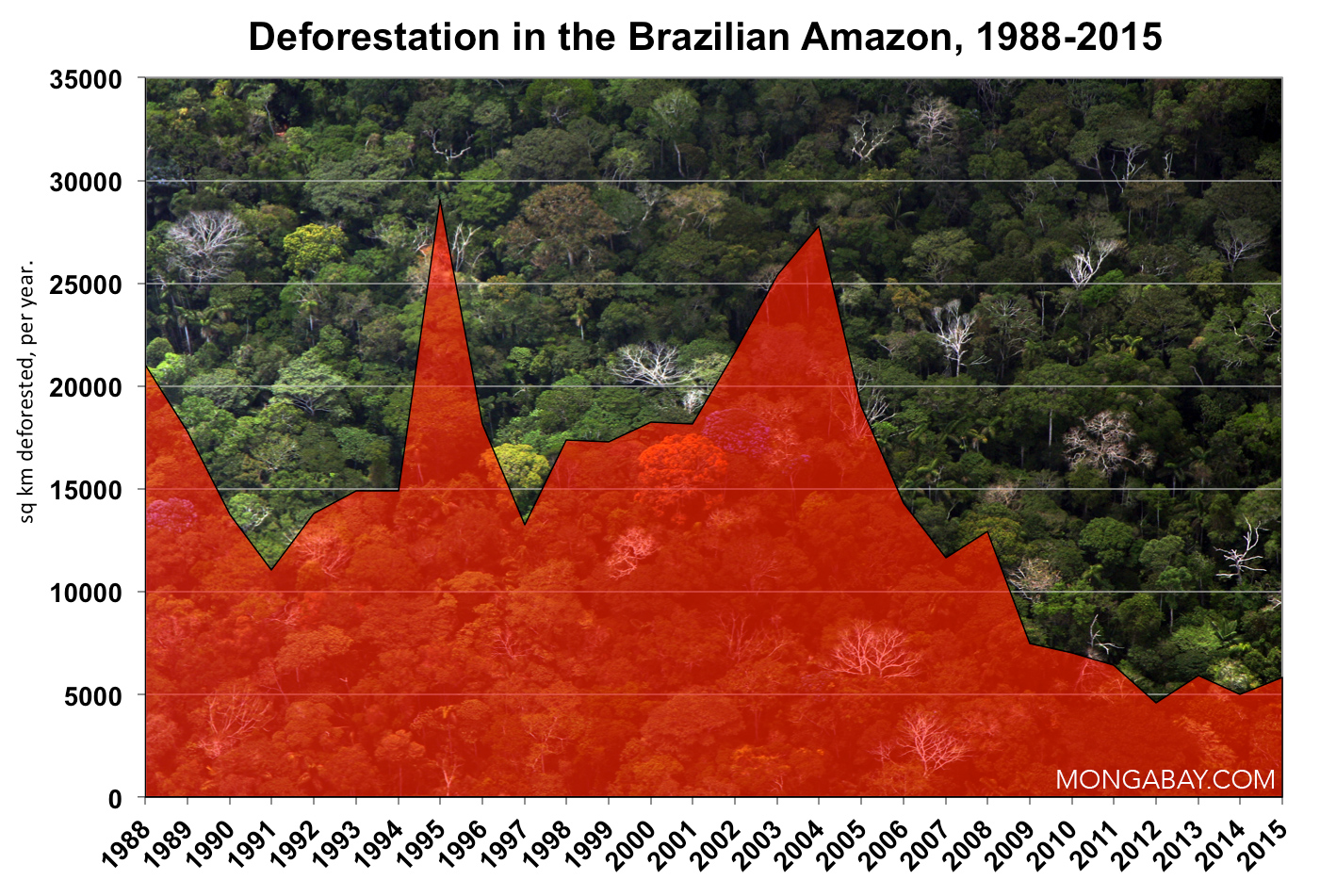
Many news outlets have said the 74,000 fires Brazil has seen this year sets a record, but that’s based on statistics that only date back to 2013. And deforestation is actually down from its peak in the 1980s. The real, undisputable news here is that there’s been a spike in fires and deforestation under Bolsonaro. And given the Amazon rainforest’s important role in capturing carbon emissions, the stakes seem much higher.

Christian Poirier, a program director for the nonprofit Amazon Watch, said that farmers were clearly emboldened by Bolsonaro to burn forests. “The fires currently ravaging the Amazon are directly related to President Bolsonaro’s anti-environmental rhetoric, in which he errantly frames forests and forest protections as impediments to Brazil’s economic growth. Farmers and ranchers understand the president’s message as a license to commit arson with wanton impunity, in order to aggressively expand their operations into the rainforest.”

Bolsonaro isn’t exactly taking credit, saying he had a “feeling” that the fires were set by nonprofit environmental groups trying to make his government look bad.

There’s been a huge growth in Brazil’s farms, especially after President Donald Trump’s trade war sent China — the top buyer of U.S. soybeans — shopping in South America. But the farm boom won’t improve the lives of poor Brazilians if it depends on dismantling environmental protections, said Toby Gardner, the director of nonprofit Trase. He sees Brazil trending toward “apparent disregard for devastating effects of environmental degradation seen from the recent and unprecedented spate of wildfires, set by landowners to clear forest for agriculture,” he said in an email.

Brazil’s massive forests are a critical part of the Earth’s life support system. The Amazon holds some 17 percent of the world’s plant-based carbon, and fires release that greenhouse gas. It’s home to millions of unique species and people. Fires are also burning in Brazil’s Cerrado — the central savanna — and its other forests.

“We think this Day of Fire really captures the craziness of what is going on in Brazil — deforestation for the sake of it, as an act of political demonstration,” said Alex Armstrong of the environmental group Mighty Earth in an email. Mighty Earth and other organizations think big corporations can prevent deforestation by promising not to buy crops from Brazilian farmers who burn forests. Some corporations, such as the grain-trading giant Cargill, say they need a supportive government in Brazil before they can act.

It’s worth noting that Grist could not independently confirm that farmers have set fires as a demonstration: Every story and source interviewed about the Day of Fire pointed to the same article based on an interview with an anonymous source. But the space agency observed a spate of fires in the region where farmers reportedly planned their protest. And a government prosecutor has opened an investigation into the reported Day of Fire.

Source article – 

Are farmers setting the Amazon ablaze in support of Bolsonaro?

Posted in Accent, alo, FF, G & F, GE, LG, ONA, Uncategorized | Tagged , , , , , , , , | Comments Off on Are farmers setting the Amazon ablaze in support of Bolsonaro?

Plants That Can Kill – Stacy Tornio

READ GREEN WITH E-BOOKS

Plants That Can Kill

101 Toxic Species to Make You Think Twice

Stacy Tornio

Genre: Nature

Price: $11.99

Publish Date: September 19, 2017

Publisher: Skyhorse Publishing

Seller: OpenRoad Integrated Media, LLC


A National Outdoor Book Award–winning author looks at the dangerously poisonous plants that may be in your garden—“a must-read for every gardener!” (Diane Blazek, executive director, All-America Selections and National Garden Bureau)   In this follow up to her fascinating book, Plants You Can’t Kill , journalist and gardening writer Stacy Tornio now takes a look at plants that can actually kill you if you’re not careful.   Here, gardening enthusiasts of all levels will learn about common plants that are toxic, dangerous, and even deadly. And some of them will surprise you, such as daffodils, irises, tulips, mistletoe, and even fruits and vegetables like cherries, rhubarb, and some tomatoes.   And while the level of toxicity may vary, all are considered deadly in one way or another to wild animals, family pets, and even humans. But with its colorful, easy-to-read format, Plants That Can’t Kill will introduce readers to what these plants look like, smell like, feel like, and sometimes even taste like.   Full of fun facts and fascinating history, this is “an essential guide to common garden plants that can cause harm―and even kill―so we can keep children, pets, and ourselves safe” (Stephanie Rose, creator of GardenTherapy.ca and award-winning author of Garden Made ).

Visit site – 

Plants That Can Kill – Stacy Tornio

Posted in alo, Anchor, FF, GE, LAI, LG, ONA, oven, PUR, Skyhorse Publishing, Ultima, Uncategorized | Tagged , , , , , , , , , | Comments Off on Plants That Can Kill – Stacy Tornio

College Physics – OpenStax

READ GREEN WITH E-BOOKS

College Physics

OpenStax

Genre: Physics

Price: $5.99

Publish Date: May 24, 2019

Publisher: Vividing Inc.

Seller: Vividing Inc.


Welcome to College Physics, an OpenStax resource created with several goals in mind: accessibility, affordability, customization, and student engagement—all while encouraging learners toward high levels of learning. Instructors and students alike will find that this textbook offers a strong foundation in introductory physics, with algebra as a prerequisite. It is available for free online and in low-cost print and e-book editions. Vividing Activilization is a reliable and scalable platform specially designed for creating the next generation, high quality, interactive, mobile first digital contents that can be mass produced and easily delivered to any devices with a special emphasis on Exam & Assessment products. This book is created by Vividing Inc. using proprietary platform that is interactive, personal, mobile, and open to all digital devices. This book is intent to deliver the original contents except with the addition of interactive features. The makers of the books believes this next generation books brings joys to the reading whereas providing readers an interactive, convenient, effective and mobile first experience.

This article:

College Physics – OpenStax

Posted in alo, Anchor, FF, GE, LAI, LG, ONA, oven, PUR, Uncategorized | Tagged , , , , , , , , , , , | Comments Off on College Physics – OpenStax

The climate-inspired detente on the Colorado

For the first time in history, low water levels on the Colorado River have forced Arizona, Nevada, and Mexico to cut back the amount of water they use. It’s the latest example of climate change affecting daily life, but also an encouraging sign that people can handle a world with less: These orderly cutbacks are only happening because seven U.S. states and Mexico had agreed to abide by conservation rules when flows subside, rather than fight for the last drops.

“It is a new era of limits,” said Kevin Moran, who directs the Environmental Defense Fund’s Colorado River efforts.

The Colorado River is a vital source of water for the American West, sustaining some 40 million people and 5.5 million acres of farmland. And it’s been under enormous stress. Since 2000, the watershed has been, to put it mildly, dry. The region is suffering the worst 20-year drought in modern times.

A Bureau of Reclamation study of Colorado River levels, released Thursday, triggered the cutbacks. The Rocky Mountains finally turned white with heavy snow last winter, but despite a galloping spring runoff, drought persists and bathtub-ringed reservoirs in the Grand Canyon are low. In its study, the Bureau highlighted the unique circumstances: “This 20-year period is also one of the driest in the 1,200-year paleo record.”

Rising temperatures brought on by rising carbon emissions are partly to blame. “Approximately one‐third of the [Colorado River] flow loss is due to high temperatures now common in the basin, a result of human caused climate change,” wrote scientists Brad Udall and Jonathan Overpeck in a study published in 2017 that anticipated water will only become scarcer in the future.

But these water-use reductions are also an example of people binding themselves to rules to deal with scarce resources, rather than going to court, or war. The cutbacks come from an agreement hammered out by the Southwestern states and Mexico to impose limits on themselves.

“It’s not necessarily well known or talked about, but this collaboration between the states and Mexico is one of the most successful cross-border water management stories in the world,” Moran said.

Over the long course of history, the various parties have fought each other over water, but found that cooperation simply works better, Moran said. By working together, they’ve already managed to reduce the amount of water drawn for the last five years from the lower Colorado River Basin. In fact, they’ve cut back more in each of those years more than required by their agreement in 2020, said John Fleck, the director of the University of New Mexico Water Resources Program, who wrote the book Water is for Fighting Over, on the history of conflicts over the Colorado River.

“It puts the lie to the idea that water use is just going up and up and up: It’s been on a downward trend for a decade and a half at a time when population is increasing and agriculture is as productive as ever,” Fleck said. “We’re beyond the Malthusian math that suggests we’re going to run out of water and die.”

The region will need to go further to keep up with climate change and refill reservoirs, Fleck said. But the progress so far leaves him hopeful that people can resolve conflicts over scarce resources in this new era of limits.

“The key, I think, is for the water users to realize that you can have healthy, successful communities with declining water,” Fleck said. That opens up the space for collaboration, and allow them to get beyond the old myth that water is for fighting over.”

See original article:  

The climate-inspired detente on the Colorado

Posted in Accent, alo, FF, GE, LG, ONA, Uncategorized, Wiley | Tagged , , , , , , , , , , | Comments Off on The climate-inspired detente on the Colorado

We’ve got another ozone problem, and it’s not what you think

Most of us know ozone as that benevolent stratospheric layer that absorbs the sun’s harmful UV light and keeps us safe. In the 1980s, scientists found a “hole” in the ozone layer — really just a large section that was getting precariously thin — caused by the use of potent chemicals called CFCs. The world took action and rapidly banned CFCs, effectively solving the problem.

But the beneficial ozone up in the stratosphere has an evil cousin, and it’s right here on the ground. A new study funded by the Environmental Protection Agency found that ground-level ozone — the main ingredient in smog — is on the rise, an issue that could have pretty severe public health consequences. Even a relatively small spike in ozone pollution where you live (just three parts per billion) has a similar effect on your lungs as smoking a pack of cigarettes a day for 29 years, according to the authors of the study.

This small increase in ozone ramps up your risk of emphysema, a form of chronic lung disease that can lead to hospitalization and death. Researchers from universities around the country kept tabs on more than 7,000 adults in six U.S. cities over a period of 18 years for the study, which was published in the journal JAMA.

Unlike the ozone layer, which is a naturally occurring part of the stratosphere, ground-level ozone is formed when pollutants from things like cars, chemical plants, and refineries react with sunlight. And beyond the obvious pollution sources, guess what’s making ground-level ozone even worse?

“What we will be seeing with climate change is an increase in the sunlight part of the equation,” said Joel Kaufman, one of the authors of the study. “Ozone increases with more sunshine, heat waves, and so forth.”

That’s not to say we can’t do something about smog. In fact, we already have. Since the Clean Air Act was implemented in 1970, pollution at the ground level has been reduced. Unfortunately, the Trump administration is in the process of rolling back environmental policies aimed at improving air quality. So it doesn’t look like we’ll be solving the ground-level ozone problem, or the climate crisis, anytime soon.

See original article: 

We’ve got another ozone problem, and it’s not what you think

Posted in Accent, alo, FF, GE, LG, ONA, Uncategorized | Tagged , , , , , , , , , | Comments Off on We’ve got another ozone problem, and it’s not what you think

A romance novel about Hurricane Maria exists. Here’s why.

Nothing puts a damper on one’s romantic life like a Category 5 hurricane. That’s just one of the obstacles faced by 20-year-old former sex worker Dolores “Dulce” Garcia, the sugar daddy-dealing protagonist of the new book Side Chick Nation. As she tries to outrun her past by going from Miami to the Caribbean, she ultimately lands in Puerto Rico just in time for Hurricane Maria.

Climate change and colonialism don’t typically make for a sexy beach read, but Side Chick Nation, the fourth installment in UC Berkeley lecturer Aya de León’s Justice Hustlers feminist heist series, attempts to do just that — weaving action and romance into the vivid backdrop of Puerto Rico’s stilting recovery from Hurricane Maria.

Dulce, the titular “side chick,” is a world-weary pragmatist; she answers the call from a past sugar daddy looking to, well, “reconnect,” all while lying to Zavier, the man with whom she has actually fallen for after just a few dates. After Hurricane Irma slows the flow of sugar daddies in Puerto Rico to a trickle, she finds herself sleeping in a storage unit in San Juan, waiting for the next storm — Maria — to hit.

In the aftermath of the hurricane, she serves as a witness to both the heartbreaking reality of climate change and the exploitation that can ensue. She notes the international businessmen who flock to the island to manipulate the destruction for their own financial gain, making shady use of relief funds and devastating the island even more. De León draws parallels between Dulce’s experience as a “side chick” and Puerto Rico’s relationship with the mainland, which cheerfully exploits the U.S. territory in good times but abandons it when it is in need.

For me, as a Puerto Rican transplant who has reported on Puerto Rico’s recovery after Maria, I was intrigued by the novel’s premise. I talked with de León, who teaches creative writing at UC Berkeley, about Side Chick Nation and why she chose popular fiction as a means to get folks riled up about the climate crisis.

The following interview has been edited for length and clarity.

Image courtesy of Aya de León

Q.Why did you write this book? What do you hope readers get out of it?

A. The biggest takeaway that I really want for everyone has to do with Hurricane Maria and the crisis of climate and colonialism in Puerto Rico. I’m hoping people feel that intersection at a level of empathy. Part of what I was thinking of when I was writing was, in the future when this book comes out, the hurricane will have receded from the headlines and yet the humanitarian crisis in Puerto Rico will be ongoing. I just wanted to make sure that folks could connect to these human stories, this unprecedented level of this devastation at this intersection.

Something that was also super important to me for this book is [to reach] an audience that includes young women of color. I really like the idea of young women of color thinking of themselves as activists around issues like the climate. Being a part of the Puerto Rican diaspora and watching the island get hit made it clear to me that climate change is the top political priority. Climate is something that affects everybody and affects people of color even more. The perception of environmentalism is that it’s a white movement — and that’s not actually true. So I wanted to push back on that.

Q.Where did you get the idea to set the fourth installment of your Justice Hustlers series in a post-Maria Puerto Rico?

A. I was writing another book at the time. I had outlined it and started to work on it. Then, the hurricane hit and I was like, “Oh my god, I have to write about the hurricane!” It occurred to me that the biggest platform that I have was this Justice Hustlers series. I wasn’t sure how to make it make sense with the rest of the series, but I remembered one character from a previous book — Dulce. One of the things I was reading at the time was Salvage the Bones, a novel about Hurricane Katrina. It made me think: what does it mean for the audience to know what’s gonna happen while the characters don’t know?

Q.You went to Puerto Rico to research this book. What was that like?

A. I had not been back to Puerto Rico for a decade. I visited in 2018 about a year after Hurricane Maria hit. It was really intense to be back. One of the things that was so profound is that the whole island has signs of Post Traumatic Stress Disorder. There was some sort of emotional chill because people had been deeply impacted in a lot of ways.

I mostly was in San Juan where things looked more or less back to normal. Still, stores were closed and traffic lights were knocked out — and that was almost a year later! I rented a car and drove around the interior of the island, where I saw lots of FEMA tarps blue roofs. I definitely got a sense of the devastation. That was key for me — to just go and just bear witness. It was less about information and more about being present with the community.

Q.The book deals with a lot of really intense issues like colonialism and disaster capitalists while also telling this gripping, feminist romance storyline. Do you think popular fiction in general, might be the way to get people to understand the complex relationship between disparity and climate crisis?

A. I think popular fiction and fiction, in general, has always played that role. It’s hard to empathize with a historical event, but it’s easy to empathize with an individual. And that’s what I wanted — for people to connect. What does it mean to have your homeland devastated, your people devastated? Ultimately, I’m writing romantic suspense but I’m thinking of suspenseful situations that relate to big political situations — like Hurricane María.

Q. Can you tell me about the challenges of writing about disaster?

A. I just had to cry a lot. I had to grieve a lot. And I had to hold off feelings like being unworthy or unable or not up to the task. Here we have this thing that changed the Puerto Rican people, and here I am, this sort of west coast, mixed-heritage diaspora Puerto Rican who is like the second generation born in the U.S. How could I possibly be the person to write this book? Ultimately it’s just the reality of the disaster. Maybe I’m not the right person, but I’m the person with a book contract and I can’t write about anything else.

The hurricane changed stuff for everyone in the diaspora. We have to show up, and what I have to bring to the table is a book that is a popular fiction approach. This may be the story for people that aren’t gonna read Naomi Klein’s Battle for Paradise — although I hope everybody will read that too! I wanted the message to get to the places where I already had a platform. I can’t imagine having written about anything else. This is the story of my people right now.

More:  

A romance novel about Hurricane Maria exists. Here’s why.

Posted in Accent, alo, Everyone, FF, GE, LG, ONA, Paradise, Ultima, Uncategorized | Tagged , , , , , , , | Comments Off on A romance novel about Hurricane Maria exists. Here’s why.

The climate change ‘tipping point’ has already arrived for these 70 U.S. counties

For years now now, we’ve been hearing warnings about 2 degrees Celsius of warming — the global average cautioned against as part of the 2015 Paris accord. But according to a Washington Post interactive published on Tuesday, that so-called “tipping point” has already arrived in many towns across the country.

The earth is warming at an uneven rate. The Post looked at 100+ years of data from over 3,000 U.S counties and found that over 70 have already exceeded 2 degrees C of warming above pre-industrial levels. That translates to 34 million people (roughly 1 in 10 Americans) living in regions that are heating especially rapidly.

So where are the U.S. hot spots? The counties that have already reached 2 degrees C or warming are spread throughout the U.S., but there are some regional trends. The fastest-warming state in the country is Alaska, which may come as no surprise given its recent spate of heat waves and wildfires. In the Lower 48, Rhode Island’s average temperature increase is the first to pass 2 degrees Celsius, with other parts of the Northeast, including New Jersey, Connecticut, Maine, and Massachusetts, not far behind.

While the east coast has been sizzling this summer, the Post found that most regional increases were driven by warming winter temperatures, not summer heat waves. That’s means lakes can’t freeze (causing algae blooms, in some cases) and pests don’t die as per usual in certain historically cold regions. Less snow and ice also means those regions are less able to reflect solar radiation during winter, further feeding into the warming cycle.

The freezing point “is the most critical threshold among all temperatures,” David A. Robinson, New Jersey state climatologist and professor at Rutgers University’s department of geography, told the Post.

Scientists aren’t yet sure why the Northeast is warming so quickly. But experts say these 2-degree C hotspots are like little pieces of the future here in the present, showing us what’s coming.

Of course, climate catastrophes aren’t just about higher average regional temperatures. Cold, heat, flood, drought, and sea-level rise all pose significant risks to U.S. communities, according to a newly released analysis by the group Clever Real Estate. And bad news: The report found that many of the cities most at risk to the impacts of climate change are also the least prepared for it.

Clever Real Estate

There’s some concerning crossover between the Post’s list of rapidly warming counties and the areas identified by Clever Real Estate’s analysis (which was compiled by Eylul Tekin, a Ph.D. candidate at Washington University in St. Louis’ Memory Lab). Four of the top five cities with the “lowest degree of readiness” are located in Southern California (Anaheim, San Bernardino, Santa Ana, and Riverside). The counties in question have reached between 1.8 degrees C and 2.1 degrees C of warming compared to pre-industrial levels.

Parts of New Jersey also didn’t fare well on either list. Essex County has already hit the 2 degrees C warming mark, and Newark snagged the fifth spot on the list of places with the “largest difference between risk and readiness scores.”

So in short, there’s already a lot to sweat in many parts of the U.S. (which is even more reason to take climate action now). To get a better sense of the way your specific area is being affected, check out the two studies we mentioned here and here.

Originally posted here:  

The climate change ‘tipping point’ has already arrived for these 70 U.S. counties

Posted in Accent, alo, FF, GE, LG, ONA, solar, Uncategorized | Tagged , , , , , , , , , , | Comments Off on The climate change ‘tipping point’ has already arrived for these 70 U.S. counties

The Case Against Reality: Why Evolution Hid the Truth from Our Eyes – Donald Hoffman

READ GREEN WITH E-BOOKS

The Case Against Reality: Why Evolution Hid the Truth from Our Eyes

Donald Hoffman

Genre: Science & Nature

Price: $14.99

Publish Date: August 13, 2019

Publisher: W. W. Norton & Company

Seller: W.W. Norton & Company, Inc.


Can we trust our senses to tell us the truth? Challenging leading scientific theories that claim that our senses report back objective reality, cognitive scientist Donald Hoffman argues that while we should take our perceptions seriously, we should not take them literally. How can it be possible that the world we see is not objective reality? And how can our senses be useful if they are not communicating the truth? Hoffman grapples with these questions and more over the course of this eye-opening work. Ever since Homo sapiens has walked the earth, natural selection has favored perception that hides the truth and guides us toward useful action, shaping our senses to keep us alive and reproducing. We observe a speeding car and do not walk in front of it; we see mold growing on bread and do not eat it. These impressions, though, are not objective reality. Just like a file icon on a desktop screen is a useful symbol rather than a genuine representation of what a computer file looks like, the objects we see every day are merely icons, allowing us to navigate the world safely and with ease. The real-world implications for this discovery are huge. From examining why fashion designers create clothes that give the illusion of a more “attractive” body shape to studying how companies use color to elicit specific emotions in consumers, and even dismantling the very notion that spacetime is objective reality, The Case Against Reality dares us to question everything we thought we knew about the world we see.

Excerpt from: 

The Case Against Reality: Why Evolution Hid the Truth from Our Eyes – Donald Hoffman

Posted in alo, Anchor, ATTRA, FF, GE, Hoffman, LAI, LG, ONA, oven, PUR, Uncategorized, W. W. Norton & Company | Tagged , , , , , , , , , , , | Comments Off on The Case Against Reality: Why Evolution Hid the Truth from Our Eyes – Donald Hoffman