Tag Archives: top stories

Which Is More Evil: Coke or Pepsi?

Mother Jones

<!DOCTYPE html PUBLIC “-//W3C//DTD HTML 4.0 Transitional//EN” “http://www.w3.org/TR/REC-html40/loose.dtd”>

In response to a recent lawsuit, the Grocery Manufacturers Association recently revealed the source of $7.2 million in dark money contributions it had solicited to fight Washington’s Initiative 522, a measure on next week’s ballot that would require food companies to label products with ingredients made from genetically modified organisms. Pepsi was the largest contributor to the trade group’s anti-labeling effort, donating $1.6 million. Coca-Cola wasn’t far behind, chipping in another $1 million.

If you don’t like GMOs, then you probably shouldn’t drink either of America’s leading soda brands. But let’s say Coke and Pepsi products are your only options. How do the two soda giants compare on the social responsibility index? Here’s our totally subjective guide to the relative malevolence of America’s favorite pop-making multinationals.

deadliness in excess

cosal.es

Coke: Guzzling between 6 and 10 liters of Coke daily contributed to the sudden death this February of 31-year-old Natasha Harris of New Zealand, according to her coroner’s report.

Pepsi: Nobody would ever drink this much Pepsi.

Most evil: Coke

Sketchy marketing

Coke: Faces an ongoing class-action lawsuit over the health claims of Glacéau Vitaminwater, which contains eight tablespoons of sugar per bottle. Vitamins? Not so much.

Pepsi: In 2011, settled a $9 million class-action lawsuit over Naked Juice’s claims to contain “all natural” and “non-GMO” ingredients.

Most evil: Tie

Paramilitary death squad hiring?

International Action Center to Stop the War in Colombia

Coke: Two of its bottlers hired a Colombian paramilitary group to murder union organizers, according to a 2001 lawsuit filed in the US by the United Steelworkers union. The case was dismissed in 2009, but these and similar allegations in Guatemala, have sparked boycotts and street protests. Coke denies the claims.

Pepsi: Do people in Latin America even drink Pepsi?

Most evil: Coke

orangutan endangering

Alex Aw/Flickr

Coke: Loved by orangutans, apparently.

Pepsi: Contributes to the killing of orangutans by purchasing conflict palm oil, the Rainforest Action Network alleges.

Most evil: Pepsi

racism

Coke

Coke: In 2000, paid $156 million to 2,000 current and former African-American employees to settle what was then the largest racial discrimination case ever.

Pepsi: Last year paid $3.1 million to resolve a federal charge that it discriminated against 300 African-American job applicants.

Most evil: Coke (Pepsi’s case was more recent, but Coke’s was waaay bigger)

Sexism

Edible Apple

Coke: An interactive online ad that ends, in one scenario, with a woman standing next to a bed in her underwear, was lambasted by Sweden’s sexist ad watchdog for portraying women as “pure sex objects.”

Pepsi: To promote an energy drink, released an iPhone app (above) that coaches men on pickup lines and encourages those who “score” to post details such as name, date, and comments to Facebook and Twitter.

Most evil: Pepsi (Objectifying women = bad. Posting names of sexual conquests online = ick!)

Public-Relations LAMENESS

Coke: Funded a (now discredited) Harvard scientist: One of the sweets’ industry’s biggest allies, he touted sugar as perfectly healthy.

Pepsi: Has funded astroturf-y groups like the Heartland Institute, which questions “how bad the obesity problem is.”

Most evil: Coke (People take Harvard seriously. The Heartland Institute, not so much.)

pro-Gluttony Lobbying

New Yorkers For Beverage Choice

Coke: Spent $9.4 million lobbying against a tax on sugary beverages.

Pepsi: Spent $9.2 million lobbying against the tax.

Most evil: Tie

Evicting farmers from their land

CJ Chanco/Flickr

Coke: Criticized by Oxfam for its links to land disputes that have driven subsistence farmers into poverty.

Pepsi: ditto.

Most evil: Tie

Replacing Jesus with a cola-chugging fat guy

Coca-Cola

Coke: Coca-Cola ads that first appeared in 1931 in the Saturday Evening Post and other national magazines popularized the modern image of Santa Claus as a pudgy guy dressed in red. The rest is history.

Pepsi: Pushes an alternative image of Santa as a party dude who secretly drinks Pepsi when he’s on summer vacation at the beach.

Most evil: Pepsi (At least Coke used its Polar Bears to draw attention to global warming.)

Shameless spin

Coke: Its ad (above) about fighting America’s obesity epidemic may have actually contributed to the problem by spinning Coca-Cola products as components of a healthy lifestyle. Critics responded with a parody video that ends with the exhortation: “Don’t drink Coke.”

Pepsi: “We firmly believe companies have a responsibility to provide consumers with more information and more choices so they can make better decisions,” PepsiCo CEO Indra Nooyi wrote in a PR essay that appeared in one of the country’s most respected annual reports on obesity. Huh?

Most evil: Coke (There’s a reason the parody video has more YouTube views than the actual ad.)

And the winner is . . .

Index of Soda Evil

Now about that Izze you’re drinking… Oh, dang! PepsiCo owns Izze, too.

Continue reading – 

Which Is More Evil: Coke or Pepsi?

Posted in FF, G & F, GE, LAI, LG, ONA, PUR, Uncategorized, Venta | Tagged , , , , , , , , , | Comments Off on Which Is More Evil: Coke or Pepsi?

Meet the Data Brokers Who Help Corporations Sell Your Digital Life

Mother Jones

<!DOCTYPE html PUBLIC “-//W3C//DTD HTML 4.0 Transitional//EN” “http://www.w3.org/TR/REC-html40/loose.dtd”>

Serving (up) the single ladies

Datalogix tracks the spending habits of more than 110 million households using sources such as store loyalty cards. It partners with Twitter and Facebook to assess whether groups of users buy the cooking gear or brand of shampoo advertised on their social-media pages. Datalogix doesn’t know that a certain Mother Jones journalist bought a quart of Ben & Jerry’s Chocolate Therapy after changing her Facebook status back to “single,” but it can help determine whether a targeted group of twentysomething professional women who left relationships bought that ice cream.

Opt out? You can do so on the company’s website, but the request takes 30 days to process and each household member must opt out separately.

Companies that sell similar info: Acxiom, Epsilon, BlueKai, V12 Group


Where Does Facebook Stop and the NSA Begin?


Privacy Is Dead, Long Live Transparency!


Timeline: How We Got From 9/11 to Massive NSA Spying on Americans


Meet the Data Brokers Who Help Corporations Sell Your Digital Life


Six Ways to Keep the Government Out of Your Files

Dude, where’s my car?

TLO, a “background research” company, uses technology that scans and reads license plates collected by cameras mounted on parking garages, roads, and bridges from coast to coast. The company claims to have collated more than 1 billion time-stamped reports containing photographs and specific locations of vehicles, which TLO markets to law enforcement agencies, law firms, and data brokers.

Opt out? Not unless you can limit your driving to dirt roads.

Companies that sell similar info: MVTRAC, Vigilant Solutions

Cheap credit scores and…Baby Einstein videos?

With credit reports on at least 299 million consumers, Experian doesn’t just hold the key to whether you’ll get a car loan or home mortgage: It also sells “life-event” data to advertisers, marketing a database that is “updated weekly with the names of expectant parents and families with newborns,” and new homeowners, among other information.

Opt out? Experian allows users to opt out online or by phone but notes that “will not eliminate all targeted advertising.”

Companies that sell similar info: Equifax, TransUnion

Location is everything

As you surf the web, Neustar uses your computer’s IP address to determine your area code, postal code, time zone, whether you’re at home or at work, and whether you’re using your phone. They then sell this data to companies that point ads at you: “Want to meet singles in Washington, DC?”

Opt out? You can do so on Neu­star’s site, although you’ll have to do it again each time you switch browsers or get a new computer.

Companies that sell similar info: MaxMind, Digital Envoy

Background checks on steroids

You’ve seen Intelius’ ads if you’ve ever Googled your eighth-grade crush. The company sells data using more than 20 billion records on individuals, including bankruptcies, arrests, and address histories, mostly culled from public records such as driver’s license databases and court documents. Intelius also collects relevant content from “blogs or social networking sites.”

Opt out? You’ll need to send a state-issued ID card or driver’s license via fax or US mail, and wait 7 to 14 days.

Companies that sell similar info: Spokeo, PeopleFinders, BeenVerified.com

This article: 

Meet the Data Brokers Who Help Corporations Sell Your Digital Life

Posted in alo, FF, GE, LAI, LG, ONA, Uncategorized, Venta | Tagged , , , , , , , , | Comments Off on Meet the Data Brokers Who Help Corporations Sell Your Digital Life

Where Does Facebook Stop and the NSA Begin?

Mother Jones

<!DOCTYPE html PUBLIC “-//W3C//DTD HTML 4.0 Transitional//EN” “http://www.w3.org/TR/REC-html40/loose.dtd”>

“That social norm is just something that has evolved over time” is how Mark Zuckerberg justified hijacking your privacy in 2010, after Facebook imperiously reset everyone’s default settings to “public.” “People have really gotten comfortable sharing more information and different kinds.” Riiight. Little did we know that by that time, Facebook (along with Google, Microsoft, etc.) was already collaborating with the National Security Agency’s PRISM program that swept up personal data on vast numbers of internet users.


Where Does Facebook Stop and the NSA Begin?


Privacy Is Dead, Long Live Transparency!


Timeline: How We Got From 9/11 to Massive NSA Spying on Americans


Meet the Data Brokers Who Help Corporations Sell Your Digital Life


Six Ways to Keep the Government Out of Your Files

In light of what we know now, Zuckerberg’s high-hat act has a bit of a creepy feel, like that guy who told you he was a documentary photographer, but turned out to be a Peeping Tom. But perhaps we shouldn’t be surprised: At the core of Facebook’s business model is the notion that our personal information is not, well, ours. And much like the NSA, no matter how often it’s told to stop using data in ways we didn’t authorize, it just won’t quit. Not long after Zuckerberg’s “evolving norm” dodge, Facebook had to promise the feds it would stop doing things like putting your picture in ads targeted at your “friends”; that promise lasted only until this past summer, when it suddenly “clarified” its right to do with your (and your kids’) photos whatever it sees fit. And just this week, Facebook analytics chief Ken Rudin told the Wall Street Journal that the company is experimenting with new ways to suck up your data, such as “how long a user’s cursor hovers over a certain part of its website, or whether a user’s newsfeed is visible at a given moment on the screen of his or her mobile phone.”

There will be a lot of talk in coming months about the government surveillance golem assembled in the shadows of the internet. Good. But what about the pervasive claim the private sector has staked to our digital lives, from where we (and our phones) spend the night to how often we text our spouse or swipe our Visa at the liquor store? It’s not a stretch to say that there’s a corporate spy operation equal to the NSA—indeed, sometimes it’s hard to tell the difference.

Yes, Silicon Valley libertarians, we know there is a difference: When we hand over information to Facebook, Google, Amazon, and PayPal, we click “I Agree.” We don’t clear our cookies. We recycle the opt-out notice. And let’s face it, that’s exactly what internet companies are trying to get us to do: hand over data without thinking of the transaction as a commercial one. It’s all so casual, cheery, intimate—like, like?

But beyond all the Friends and Hangouts and Favorites, there’s cold, hard cash, and, as they say on Sand Hill Road, when the product is free, you are the product. It’s your data that makes Facebook worth $100 billion and Google $300 billion. It’s your data that info-mining companies like Acxiom and Datalogix package, repackage, sift, and sell. And it’s your data that, as we’ve now learned, tech giants also pass along to the government. Let’s review: Companies have given the NSA access to the records of every phone call made in the United States. Companies have inserted NSA-designed “back doors” in security software, giving the government (and, potentially, hackers—or other governments) access to everything from bank records to medical data. And oh, yeah, companies also flat-out sell your data to the NSA and other agencies.

To be sure, no one should expect a bunch of engineers and their lawyers to turn into privacy warriors. What we could have done without was the industry’s pearl-clutching when the eavesdropping was finally revealed: the insistence (with eerily similar wording) that “we have never heard of PRISM”; the Captain Renault-like shock—shock!—to discover that data mining was going on here. Only after it became undeniably clear that they had known and had cooperated did they duly hurl indignation at the NSA and the FISA court that approved the data demands. Heartfelt? Maybe. But it also served a branding purpose: Wait! Don’t unfriend us! Kittens!

O hai, check out Mark Zuckerberg at this year’s TechCrunch conference: The NSA really “blew it,” he said, by insisting that its spying was mostly directed at foreigners. “Like, oh, wonderful, that’s really going to inspire confidence in American internet companies. I thought that was really bad.” Shorter: What matters is how quickly Facebook can achieve total world domination.

Maybe the biggest upside to l’affaire Snowden is that Americans are starting to wise up. “Advertisers” rank barely behind “hackers or criminals” on the list of entities that internet users say they don’t want to be tracked by (followed by “people from your past”). A solid majority say it’s very important to control access to their email, downloads, and location data. Perhaps that’s why, outside the more sycophantic crevices of the tech press, the new iPhone’s biometric capability was not greeted with the unadulterated exultation of the pre-PRISM era.

The truth is, for too long we’ve been content to play with our gadgets and let the geekpreneurs figure out the rest. But that’s not their job; change-the-world blather notwithstanding, their job is to make money. That leaves the hard stuff—like how much privacy we’ll trade for either convenience or security—in someone else’s hands: ours. It’s our responsibility to take charge of our online behavior (posting Carlos Dangerrific selfies? So long as you want your boss, and your high school nemesis, to see ’em), and, more urgently, it’s our job to prod our elected representatives to take on the intelligence agencies and their private-sector pals.

The NSA was able to do what it did because, post-9/11, “with us or against us” absolutism cowed any critics of its expanding dragnet. Facebook does what it does because, unlike Europe—where both privacy and the ability to know what companies have on you are codified as fundamental rights—we haven’t been conditioned to see Orwellian overreach in every algorithm. That is now changing, and both the NSA and Mark Zuckerberg will have to accept it. The social norm is evolving.

Source: 

Where Does Facebook Stop and the NSA Begin?

Posted in alo, FF, GE, LAI, LG, ONA, ProPublica, PUR, Uncategorized, Venta | Tagged , , , , , , , , , , | Comments Off on Where Does Facebook Stop and the NSA Begin?

Privacy Is Dead, Long Live Transparency!

Mother Jones

<!DOCTYPE html PUBLIC “-//W3C//DTD HTML 4.0 Transitional//EN” “http://www.w3.org/TR/REC-html40/loose.dtd”>

Thanks to Edward Snowden, we’ve learned a lot over the past few months about the breathtaking scope and depth of US government surveillance programs. It’s going to take a while to digest all the details he’s disclosed, but in the meantime it might be a good idea to step back and ask some pointed questions about what it all means—and what kind of country we want to live in.


Where Does Facebook Stop and the NSA Begin?


Privacy Is Dead, Long Live Transparency!


Timeline: How We Got From 9/11 to Massive NSA Spying on Americans


Meet the Data Brokers Who Help Corporations Sell Your Digital Life


Six Ways to Keep the Government Out of Your Files

What keeps the NSA’s capabilities from being abused in the future?
With only a few (albeit worrying) exceptions, Snowden’s documents suggest that today the NSA is focused primarily on foreign terrorism and mostly operates within its legal limits. But the agency has built an enormous infrastructure that sweeps up email, phone records, satellite communications, and fiber-optic data in terabyte quantities—and if history teaches us anything, it’s that capabilities that exist will eventually be used. Inadvertent collection of US communications is required by law to be “minimized,” but even now there are plenty of loopholes that allow the NSA to hold on to large quantities of domestic surveillance for its own use and the use of others. And there’s little to keep it from covertly expanding that capability in the future. All it would take is another 9/11 and a president without a lot of scruples about privacy rights.

What kind of independent oversight should the NSA have?
Right now, oversight is weak. There are briefings for a few members of Congress, but the NSA decides what’s in those briefings, and one leaked report revealed that the agency has set out very specific guidelines for what its analysts may divulge to “our overseers.” That caginess extends to the FISA court charged with making sure NSA programs remain within the law: In a 2011 opinion recently released by the Obama administration, the court noted that the NSA had misled it about the specific nature of a surveillance program for the third time in three years.

No organization can adequately oversee itself. If the NSA is allowed to decide on its own what it reveals to Congress and to the courts, then it’s under no real oversight at all.

What happened to the Fourth Amendment?
Back in 1979, the Supreme Court ruled that although a warrant is required to tap a telephone line, none is needed to acquire phone records. This means that police don’t need a warrant to find out whom you’ve been calling and who’s been calling you.

Whatever you think of this ruling, it was fairly limited at the time. Today it’s anything but. The NSA now sweeps up records of every single phone call made in the United States under the authority of Section 215 of the Patriot Act, which gives it power to obtain any “tangible thing” that’s relevant to a terrorist investigation. Did Congress mean for that section to be interpreted so broadly? Rep. Jim Sensenbrenner (R-Wis.), one of the authors of the Patriot Act, doesn’t think so. But the NSA does, and the FISA court has backed it up.

Another law, Section 702 of the FISA Amendments Act, allows the NSA to obtain access to vast categories of online communications without a warrant. It’s supposed to apply only to foreigners, but via errors and loopholes plenty of Americans end up being targeted too. In fact, one of the loopholes specifically allows the agency to use domestic data collected “inadvertently” if it shows evidence of a crime being or “about to be” committed. This provides a pretty obvious incentive to gather up bulk domestic communications in hopes of finding evidence of imminent activity. And the practice isn’t limited to national security cases: The Drug Enforcement Administration, for example, has a special division dedicated to using intelligence intercepts in drug cases, a fact that it routinely conceals from courts and defense attorneys.

What all this means is that the traditional constitutional requirement of a particularized warrant—one targeted at a specific person—is fast becoming a relic. In the NSA’s world, they simply collect everything they can using the broad powers they’ve been given, then decide for themselves which records they’re actually allowed to read. Is that really what we want?

Does all this surveillance keep us safer?
There’s no way to know for sure, since virtually everything about the NSA’s programs is classified. But shortly after the publication of the first Snowden documents, the head of the NSA told Congress that its surveillance programs had “contributed” to understanding or disrupting 50 terrorist plots—10 of them domestic—since 9/11. That amounts to less than one domestic plot per year. Of the handful he described, the most significant one involved a Somali immigrant who sent a few thousand dollars back to fighters in Somalia.

When you narrow things down to just the NSA’s collection of domestic phone records—perhaps its most controversial program—things get even shakier. In 2009, a FISA court judge who had received detailed reports on the program expressed open skepticism that it had accomplished much. And two US senators who have seen classified briefings about all 50 plots say that the phone records played “little or no role” in disrupting any of them. If this is the best case the NSA can make, it’s fair to ask whether its programs are worth the cost, either in money or in degraded privacy.

What about corporate surveillance?
Government eavesdropping isn’t the only thing we have to worry about. We’re also subjected to steadily increasing data collection from private actors. It’s true that, unlike a government, a corporation can’t put you on a no-fly list or throw you in jail. But there are at least a couple of reasons that corporate surveillance can be every bit as intrusive as the government variety—and possibly every bit as dangerous too.

First, if Target can analyze your shopping habits to figure out if you’re pregnant—and it can—another company might figure out that you’re in the early stages of Alzheimer’s disease and then start badgering you to buy worthless insurance policies. Multiply that by a thousand and “targeted advertising” doesn’t seem quite so benign anymore.

Second, there’s nothing that prevents the government from buying up all this information and combining it with its programs into an even bigger surveillance octopus. That was the goal of the Orwellian-named Bush-era program known as Total Information Awareness. It was officially killed after a public outcry, but as we now know, it never really went away. It just got split apart, renamed, and dumped into black budgets.

Even the NSA itself is in on the action: The Wall Street Journal reported earlier this year that the agency collects more than just phone records and data packets. Via internet service providers and financial institutions, it also gathers web search records, credit card transactions, and who knows what else. In addition, the NSA has long maintained a deep collaboration with the leading-edge data mining companies of Silicon Valley. And why not? As the New York Times put it, both sides realize that “they are now in the same business.”

Can we save privacy?
I call this the “David Brin question,” after the science fiction writer who argued in 1996 that the issue isn’t whether surveillance will become ubiquitous—given technological advances, it will—but how we choose to live with it. Sure, he argued, we may pass laws to protect our privacy, but they’ll do little except ensure that surveillance is hidden ever more deeply and is available only to governments and powerful corporations. Instead, Brin suggests, we should all tolerate less privacy, but insist on less of it for everyone. With the exception of a small sphere within our homes, we should accept that our neighbors will know pretty much everything about us and vice versa. And we should demand that all surveillance data be public, with none restricted to governments or data brokers. Give everyone access to the NSA’s records. Give everyone access to all the video cameras that dot our cities. Give everyone access to corporate databases.

This is, needless to say, easier said than done, and Brin acknowledges plenty of problems. Nonetheless, his provocation is worth thinking about. If privacy in the traditional sense is impossible in a modern society, our best bet might be to make the inevitable surveillance more available, not less. It might, in the end, be the only way to keep governments honest.

Originally posted here – 

Privacy Is Dead, Long Live Transparency!

Posted in FF, GE, LG, ONA, Safer, Uncategorized, Venta | Tagged , , , , , , , | Comments Off on Privacy Is Dead, Long Live Transparency!

How You Pay Farmers To Watch Their Crop Shrivel Up and Die

Mother Jones

<!DOCTYPE html PUBLIC “-//W3C//DTD HTML 4.0 Transitional//EN” “http://www.w3.org/TR/REC-html40/loose.dtd”>

In 2011, Eric Herm’s cantaloupes exploded.

A fourth-generation cotton farmer in West Texas, Herm was experimenting with a home garden to help feed his family during the onset of a drought in the area. Blistering heat, including 100 degree days as early as May, was wilting Herm’s cotton—and in the end, it turned his melons into pressure cookers.

Most of Herm’s neighbors have lost their cotton crop the last three of four growing seasons—part of the most severe regional drought in more than 50 years. According to the National Oceanic and Atmospheric Administration, 2012 temperatures in the US were the hottest in recorded history. And a May 2013 report by the American Meteorological Society’s Journal of Climate concluded that “human-induced climate change” played a statistically significant role in the record-breaking temperatures of 2011, adding that the period from October 2010 to September 2011 “was Texas’s driest 12-month period on record.”

With the exception of scattered irrigation, most farmers in West Texas practice “dryland” farming, meaning they’re entirely dependent on rain. Rainfall on Herm’s acreage had previously averaged 17 inches a year, but in 2011 and 2012 the annual averages were 3 and 8 inches, he said. Even the driest years of the Dust Bowl, which lasted off and on from 1930 to 1940, brought about 9 to 14 inches of rain to Herm’s region, according to Natalie Umphlett of the Nebraska-based High Plains Regional Climate Center.

“In the back of my mind I’m wondering, ‘where do I go if things get that bad,'” Herm said back in May, while planting for the 2013 growing season. “If we do not make a crop this year, I’m going to have to a real serious look at the future.”

The latest news is not reassuring. As of October 2013, more than 80 percent of Herm’s neighbors declared their cotton a failure and collected crop insurance claims, subsidized by US taxpayers.

If recent research by the US Department of Agriculture is any indication, the crop failures will be a sign of the future. In a February 2013 report, the agency rounded up relevant scientific findings from 56 experts from federal service, universities, and non-government organizations. The results cast doubt on the viability of the US heartland in the age of warming—and not just for dryland cotton. “Continued changes by mid-century and beyond,” the report said, “are expected to have generally detrimental effects on most crops and livestock.” Among other problems, “weed control costs total more than $11 billion a year in the US. Those costs are expected to rise with increasing temperatures and carbon dioxide concentrations.”

Interviews with more than a dozen climatologists, agronomists, agro-economists, and agricultural statisticians have generally echoed the USDA’s prognosis: after about 30 years, greenhouse gas concentrations will reach critical enough levels to significantly disrupt agriculture. But even the next ten years will probably prove challenging for American farmers, because the weather will be more variable. As Columbia University associate professor of international and public affairs Wolfram Schlenker put it, “there’s more certainty that there will be less certainty.”

In any case, taxpapyers are on the hook for climate-related disruption of US food production—mainly in annual outlays for crop insurance. In February 2013, the same month that the USDA released its bleak assessment on global warming, the Government Accountability Office released a statement warning about the federal government’s “fiscal exposure to climate change,” including the crop insurance program.

Based on USDA data, if the current version of the farm bill were extended ten years into the future, even without expansions under debate, crop insurance would cost $8.41 billion per year, or $84.1 billion total, according to Jim Langley of the Congressional Budget Office. With the expansions the projected costs rise to about $99 billion. And that figure does not account for recent climate-related impacts on crop yields, including the drought of 2011 and 2012 in Texas and the midwest.

“We treated those two years as outliers,” said Langley. “We don’t explicitly take into account climate change. It’s not like something dramatic is going to happen in next ten years. We assume weather going to be normal.”

To be sure, it’s hard to turn estimates about climate impacts on agriculture, and by extension crop insurance outlays into hard numbers. And there’s no consensus that taxpayers will pay more than projected. Advocates of crop insurance claim that the program works better than disaster relief. “It forces farmers to manage risk before, not after it happens, which saves taxpayers money,” Tom Zacharias, president of National Crop Insurance Services, an industry group, has written.

Continue Reading »

This article is from: 

How You Pay Farmers To Watch Their Crop Shrivel Up and Die

Posted in alo, FF, GE, LAI, LG, ONA, Uncategorized, Venta | Tagged , , , , , , , | Comments Off on How You Pay Farmers To Watch Their Crop Shrivel Up and Die

Here’s Another Way the GOP Is Undermining Obamacare

Mother Jones

<!DOCTYPE html PUBLIC “-//W3C//DTD HTML 4.0 Transitional//EN” “http://www.w3.org/TR/REC-html40/loose.dtd”>

Scott Messick is a 54-year-old retired health insurance consultant from Conroe, Texas. His wife runs a small yarn shop. They’re both on his former employer’s health insurance plan for retirees, and Messick says that he and his wife together pay $964 a month in premiums, and a $12,000 annual deductible (the amount of money they have to pay out-of-pocket each year before the insurer will pay any expenses). Starting in January, their premiums will shoot up to $1,283 a month, he says. Earlier this month, Messick logged on to the federal insurance exchange website to shop for a new plan. (The federal government’s health insurance website has so many problems that many Americans are not able to register for the site, let alone compare plans. But Messick got through.) Although the Messicks’ income is too high to qualify for a subsidy, they found a plan that would save them $6,000 a year in premium payments, and another $5,000 or so on their deductible. Despite the fact that Obamacare could cut their health care costs almost in half, the Messicks might not switch plans. Why? Because Republicans might repeal the law. “My wife is concerned that Republicans will try to get rid of this thing, and if they do, we’ve jumped out of a retiree plan,” Messick says. “We’d be left with nothing.”

Many retiree health plans stipulate that you can only enroll in the plan once, and if you drop coverage—say, by buying cheaper insurance on the exchange—you’re out for good. “The door swings one way,” Messick explains.

That one-way door could be a problem for many Americans if Obamacare is repealed, says Tim Jost, a healthcare law scholar at Washington and Lee University School of Law who has consulted with the administration on the implementation of the law. If people like the Messicks buy cheaper insurance on the exchange and Republicans gut the Affordable Care Act, insurance industry prices and practices could return to what they were pre-Obamacare. That means insurers could go back to rejecting older folks, who tend to have chronic health problems, or charging them astronomical prices. Messick has chronic back problems; his wife has suffered a minor stroke and has migraines. “Both my wife and I are uninsurable” in the private market, Messick says, adding that a few years ago he ran an “experiment” and tried to purchase insurance outside of his employer plan and was “turned down flat.”

Continue Reading »

Read more: 

Here’s Another Way the GOP Is Undermining Obamacare

Posted in alo, FF, GE, LAI, LG, ONA, PUR, Uncategorized, Venta | Tagged , , , , , , , , | Comments Off on Here’s Another Way the GOP Is Undermining Obamacare

Jeremy Scahill: Obama Presidency Marred by Legacy of Drone Program

Mother Jones

<!DOCTYPE html PUBLIC “-//W3C//DTD HTML 4.0 Transitional//EN” “http://www.w3.org/TR/REC-html40/loose.dtd”>

This story first appeared on the TomDispatch website.

On January 21, 2013, Barack Obama was inaugurated for his second term as president of the United States. Just as he had promised when he began his first campaign for president six years earlier, he pledged again to turn the page on history and take US foreign policy in a different direction. “A decade of war is now ending,” Obama declared. “We, the people, still believe that enduring security and lasting peace do not require perpetual war.”

Much of the media focus that day was on the new hairstyle of First Lady Michelle Obama, who appeared on the dais sporting freshly trimmed bangs, and on the celebrities in attendance, including hip-hop mogul Jay-Z and his wife, Beyoncé, who performed the national anthem. But the day Obama was sworn in, a US drone strike hit Yemen. It was the third such attack in that country in as many days. Despite the rhetoric from the president on the Capitol steps, there was abundant evidence that he would continue to preside over a country that is in a state of perpetual war.

In the year leading up to the inauguration, more people had been killed in US drone strikes across the globe than were imprisoned at Guantánamo. As Obama was sworn in for his second term, his counterterrorism team was finishing up the task of systematizing the kill list, including developing rules for when US citizens could be targeted. Admiral William McRaven had been promoted to the commander of the United States Special Operations Command (SOCOM), and his Special Ops forces were operating in more than 100 countries across the globe.

Continue Reading »

See more here:  

Jeremy Scahill: Obama Presidency Marred by Legacy of Drone Program

Posted in Citizen, FF, GE, LG, ONA, Uncategorized, Venta | Tagged , , , , , , , | Comments Off on Jeremy Scahill: Obama Presidency Marred by Legacy of Drone Program

Election Over, the Mormon Church Quietly Re-enters the Gay Marriage Fight

Mother Jones

<!DOCTYPE html PUBLIC “-//W3C//DTD HTML 4.0 Transitional//EN” “http://www.w3.org/TR/REC-html40/loose.dtd”>

Reports that the Mormon Church had given up the fight over gay marriage were premature. Earlier this year, Mother Jones and other news outlets noted the Church of Jesus Christ of Latter-Day Saints was making a concerted effort to mend its tortured relationship with gay members and their families and to stay out of divisive political fights over gay marriage. The church sat out virtually every state ballot measure on the issue in 2012, helping assure that marriage equality bills passed in Maryland, Maine, Minnesota and elsewhere. It launched a website, mormonsandgays.org, to urge better treatment of LGBT members. Mormons even marched in pride parades in Salt Lake City.

Now that the 2012 election is over, and Mitt Romney, the nation’s most famous Mormon, is no longer running for president, it seems the church is back in the ring. This week, the Hawaii state legislature began a special session to consider a bill that would legalize gay marriage in the state. The church is actively working to kill that measure.

Continue Reading »

Original post – 

Election Over, the Mormon Church Quietly Re-enters the Gay Marriage Fight

Posted in FF, GE, LG, ONA, Uncategorized, Venta | Tagged , , , , , , , | Comments Off on Election Over, the Mormon Church Quietly Re-enters the Gay Marriage Fight

4 Reasons You Should Worry About Another Sandy

Mother Jones

<!DOCTYPE html PUBLIC “-//W3C//DTD HTML 4.0 Transitional//EN” “http://www.w3.org/TR/REC-html40/loose.dtd”>

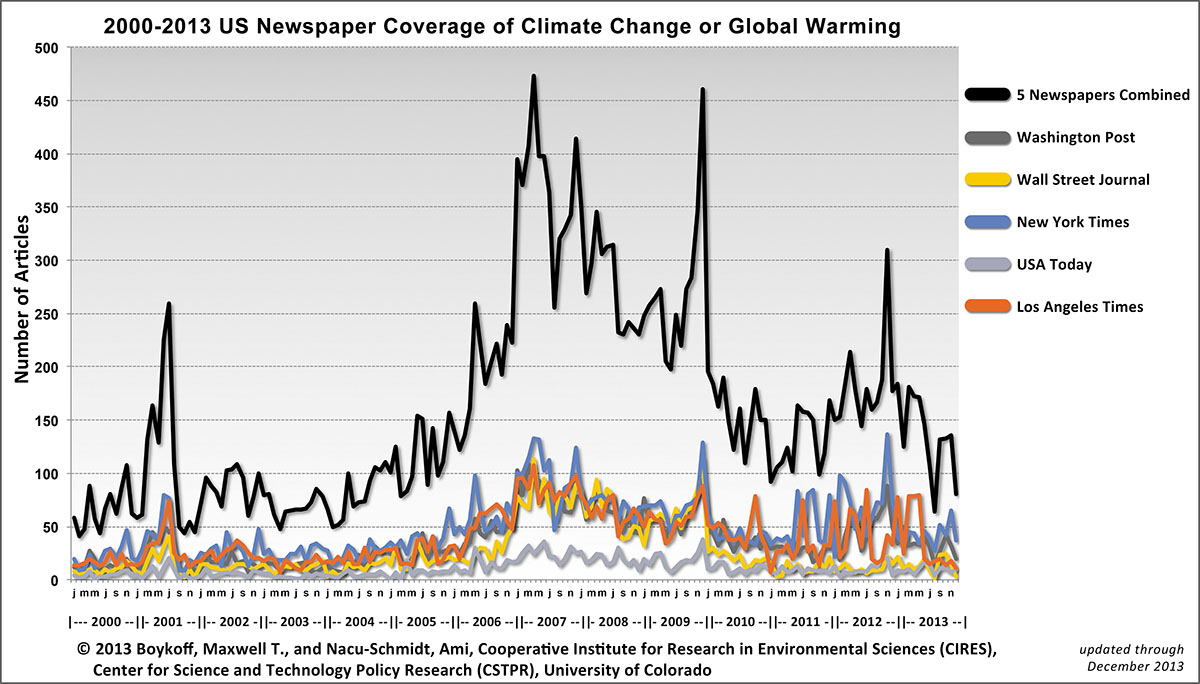
One year ago, when Superstorm Sandy devastated much of New Jersey and New York City, the event sparked an intense national discussion about an issue that had gone mysteriously un-discussed during the presidential campaign: climate change. According to research by media scholar Max Boykoff of the University of Colorado, there was actually more media coverage of climate change in leading U.S. newspapers following Sandy than there was following the recent release of the United Nations’ Intergovernmental Panel on Climate Change’s Fifth Assessment Report.

Why? According to NASA researchers, Sandy’s particular track made it a 1-in-700 year storm event. It was, to put it mildly, meteorologically suspicious.

So now, with a year’s distance and a lot of thought and debate, what can we say about climate change and Sandy—and hurricanes in general? A lot, as it turns out. Here’s what we know:

1. Sea level rise is making hurricanes more damaging—and Sandy is just the beginning. The most direct and undeniable way that global warming worsened Sandy is through sea level rise. According to climate researcher Ben Strauss of Climate Central, sea level in New York harbor is 15 inches higher today than it was in 1880, and of those 15 inches, eight are due to global warming’s influence (the melting of land-based ice, and the thermal expansion of seawater as it warms). And that matters: For every inch of sea level rise, an estimated 6,000 additional people were impacted by Sandy who wouldn’t have been otherwise. That’s why Strauss told me last year, in the wake of the storm, that there is “100 percent certainty that sea level rise made this worse. Period.”

And what’s true for Sandy is true for every hurricane that makes landfall. While numerous other factors, such as the tidal cycle, also affect the size of a given storm’s surge, global warming is now a measurable part of the total impact. And the more seas rise in the future, the worse the impact gets—and the more likely future Sandys become. “Coastal communities are facing a looming sea level rise crisis, one that will manifest itself as increased frequency of Sandy-like inundation disasters in the coming decades along the mid-Atlantic and elsewhere,” as a recent American Meteorological Society report put it. In fact, a recent analysis by Mother Jones, using data from Climate Central and the National Climate Assessment, finds that by the end of the century the chance of Sandy-level flooding in Lower Manhattan in any given year increases to 50 percent.

2011’s Hurricane Irene caused widespread flooding damage due to heavy rains in New England. Jim Greenhill/Flickr

2. Hurricane rainfall will also be more damaging in the future due to global warming. The principal flooding damage from Sandy came through its storm surge, not its heavy rains. But in other devastating storms, that won’t necessarily be the case. Hurricanes are, at minimum, a triple threat, and can damage lives and property through rainfall, through storm surge, and due to their powerful winds.

We can say with some confidence that global warming is generating more rainfall in storms like Sandy. The reason is simple: Warmer air holds more water vapor, due to basic physics. “For 1 degree Fahrenheit, it’s something like 5 percent more moisture in the atmosphere,” as climate scientist Kevin Trenberth of the National Center for Atmospheric Research has put it.

Extreme precipitation events in the US are already on the rise, and this trend, like sea level rise, is expected to continue in the future. According to the National Oceanic and Atmospheric Administration’s Geophysical Fluid Dynamics Laboratory, by the end of the 21st century we should expect a roughly 20-percent increase in hurricane rainfall.

3. Hurricanes may also be more intense in the future. A knottier issue involves whether the average hurricane is already more intense (in other words, having higher wind speeds) than it was in the past due to global warming—or whether it will be in the future. This is the question that gets the most press attention, even as it also remains among the hardest to answer.

2005’s Hurricane Wilma, the strongest Atlantic hurricane ever recorded. NASA/Wikimedia Commons

If you want to go with the conservative (and somewhat dated) scientific view, then the latest IPCC assessment says there is “low confidence” that hurricanes have already gotten more intense due to global warming. The IPCC also says it is “more likely than not” that this will occur by the second half of this century, at least in two major basins that have a lot of hurricanes—the North Atlantic and the Western North Pacific (where they’re called typhoons).

The IPCC, however, has a cutoff date and as a result, cannot always cite the most cutting-edge research. That includes one recent paper suggesting that hurricanes are already more intense, as the global population of storms has shifted towards more Category 4 and 5 storms, and proportionately less Category 1 and Category 2 storms. This issue remains heavily debated within the scientific community, however.

4. Will there be more hurricane left turns into New Jersey? But where things get really scientifically tricky is the matter of storm paths. One of the reasons that Sandy was so devastating is that it, in effect, swung left and slammed into the US East Coast. That’s exceedingly rare behavior for an Atlantic hurricane. By the time they reach the mid-latitudes, most of these storms “recurve” to the northeast, a path that often ensures that they miss land.

That pattern was interrupted in the case of Sandy, however, by what is called a “blocking” event: A ridge of high pressure over Greenland that drove the storm westward, leading to this devastating track:

The bizarre track of Superstorm Sandy. Cyclonebiskit/Wikimedia Commons

So will such atmospheric blocks become more likely in the future?

Officially, the IPCC says no. Or rather, in scientist speak: “there is medium confidence that the frequency of Northern and Southern Hemisphere blocking will not increase, while trends in blocking intensity and persistence remain uncertain.” However, a number of researchers disagree with this assessment, most notably Jennifer Francis of Rutgers, who argues that the rapid warming of the Arctic is leading to a more loopy jet stream and, thus, more blocking patterns. This, too, is likely to be a hotly debated issue in the coming years.

So we already know global warming is making hurricanes more dangerous, through sea level rise and rainfall if nothing else. We don’t know everything, yet: But we know more than enough to be worried.

Continue at source:

4 Reasons You Should Worry About Another Sandy

Posted in alo, FF, GE, LG, ONA, Ringer, Springer, Uncategorized, Venta | Tagged , , , , , , , | Comments Off on 4 Reasons You Should Worry About Another Sandy

MAP: 9 States Besides Texas That Are Making It Harder for Women to Vote

Mother Jones

<!DOCTYPE html PUBLIC “-//W3C//DTD HTML 4.0 Transitional//EN” “http://www.w3.org/TR/REC-html40/loose.dtd”>

Women have been allowed to vote in the United States since 1920, after the passage of the 19th Amendment. But fast-forward to 2013, and plenty of states’ laws have a provision that makes it harder for women who are married or divorced to cast a ballot.

When Americans all over the country head to the polls on November 5 to vote on mayoral candidates, ballot initiatives, gubernatorial races, and even members of Congress, they will be up against a new kind of voter ID law that has mostly cropped up in 2012 and 2013 and disproportionately affects women—as well as transgender voters and anyone else with a name change.

Controversial voter ID laws, which GOP proponents say are intended to prevent the (pretty much non-existent) crime of voting fraud, are nothing new, and they have been criticized for targeting low-income voters, young people, and minorities. But Texas’s newly enforced voter ID law has put a spotlight on another group of voters that will be disproportionately affected by these rules. Not only must Texas voters present government-issue photo IDs to vote, but now poll workers are required under the law to check these IDs against an official voting registry to determine if the two names “substantially” match. That means that a woman who updated her voter registration when she got married, but not her driver’s license or passport (and vice versa), could face additional hurdles in getting her ballot counted.

The Texas law may have drawn extra scrutiny because of the state’s reputation for being a battleground in the “war on women”—but it’s just one of many to adopt this type of provision. At least 9 other states’ voting laws, most enacted in 2012 or 2013, use similar language. That doesn’t count the 24 additional states with other kinds of voter ID laws, including some with looser photo ID rules that are still potentially problematic for women. In 2006, the Brennan Center found that 34 percent of voting-age women do not possess a proof-of-citizenship document that reflects their legal name, although updated statistics on photo IDs are hard to come by. And Slate points out that the law doesn’t just affect Democrats, as Republican women are more likely change their names.

“We need Americans to understand that even though this particular ‘war on women’ isn’t out in the light, women are quietly being disenfranchised in the dark—they just might not know it yet,” says Judith Browne Dianis, co-director of the the Advancement Project, a civil rights organization.

Voter ID laws can be sorted into three categories—ones that require non-photo ID, like a bank statement, ones that require a photo ID (usually government-issued); and ones that require photo ID and include language about how the name on that ID must match the name in the voter registration database (like Texas). Here’s a map showing all of these categories and whether or not the laws are in place for this upcoming election. For even more in-depth information on your state, head over to the National Conference of State Legislatures.)

In every single one of these states, minorities, low-income voters, and young people—who tend to vote Democratic and are least likely to have up-to-date identification—are targeted. But married or divorced women who have changed their names are also affected in the states above that require photo identification—since the name on their ID, which women often wait to update until it expires, has to match their voter registration. The Advancement Project’s legal team told Mother Jones that the states that require poll workers to check the voter registration list for a match make it the most difficult for women, since poll workers have more explicit legal instructions.

Regardless of what’s on the books, interpretation is largely left up to the poll workers, who have a lot of power over whether someone gets a ballot. In less strict states, for example, poll workers can choose to have someone sign a sworn affidavit rather than show ID. In Texas, if the voter registration list reads “Jane Smith” but the woman’s ID says “Jane Doe Smith”—then that qualifies as a “substantial match” and the voter only has to sign an affidavit swearing to his or her identity for her vote to be counted. But if Jane’s ID still has her maiden name, “Jane Doe,” and the poll worker isn’t sure, the ballot will only be counted if, within six days, Jane can dig up a $20 marriage or divorce certificate and find time to get a new ID that matches the name she registered with. (In Dallas, poll workers have been bending the rules so that voters can re-register under their married names.) Pennsylvania also gives six days to obtain a new ID, and Mississippi only gives five.

These scenarios aren’t merely hypothetical. In 2011, a 96-year-old Georgia woman was denied the right to vote because she didn’t have her marriage certificate. And in Pennsylvania, the state’s ID law is on hold until a pending lawsuit is resolved. One of the plaintiffs is a woman who couldn’t vote because her marriage certificate was in Hebrew, and she couldn’t get a new ID that reflected her changed name, thus, her name didn’t match the voter registration list. (Women who obtained common law marriages could have similar problems.) Another plaintiff is a transgender man who presented both a driver’s license and passport, but was rejected because of his photograph.

“Voter ID laws discriminate against trans communities and many marginalized communities who struggle to obtain access to consistent, accurate and updated identity documents,” says Sasha Buchert, staff attorney at the Transgender Law Center. “Often there are huge barriers for updating documents.” In Texas, for example, a transgender person needs to bring a court order to the DMV.

For those heading to the polls, Kelly Ceballos, a spokesperson for the League of Women Voters, says the most important thing is for voters to get educated—Texas, for example, is reducing or eliminating the cost of getting a birth certificate copy in some counties—and not get discouraged. “It is important to participate in the democratic process and the way to do that is to go to the polls and cast a ballot,” she says.

Judith Browne Dianis hopes that women voters will start realize that “you’re being disenfranchised because you weren’t paying attention. Maybe you thought this was something that was just affecting people of color, or low-income people, but it’s impacting your voice and your ability to participate on the issues that matter to you.”

For more data on voter ID laws and who they affect, click here.

Additional reporting by Nina Liss-Schultz.

Link: 

MAP: 9 States Besides Texas That Are Making It Harder for Women to Vote

Posted in Citizen, FF, GE, LAI, LG, ONA, Uncategorized, Venta | Tagged , , , , , , , , | Comments Off on MAP: 9 States Besides Texas That Are Making It Harder for Women to Vote