Tag Archives: antarctic

Will the U.S. and New Zealand cave on plans for the world’s biggest marine reserve?

Will the U.S. and New Zealand cave on plans for the world’s biggest marine reserve?

Russia is almost as far away from the Antarctic as you can get without climbing aboard a spaceship, but it still wants to make sure it can fish the living hell out of Antarctic waters.

cortto

The Ross Sea in the Antarctic.

The U.S. and New Zealand have been pushing plans to create the world’s largest marine reserve, 890,000 square miles in the Ross Sea, an Antarctic bay in the Southern Ocean teeming with spawning fish, whales, seals, penguins, and other wildlife.

But that proposal was thwarted by Russia during the last two meetings of the multi-nation Commission for the Conservation of Antarctic Marine Living Resources. (Russia also blocked a separate bid by Australia and Europe to establish a similar but slightly smaller chain of reserves nearby in East Antarctica.) Chile, China, Japan, Korea, and Norway, also members of the commission, share some of Russia’s concerns about the economic impacts of fishing restrictions in the Antarctic.

Now comes word that New Zealand will likely propose a smaller reserve to accommodate the Russians. From Fairfax NZ, which operates newspapers in New Zealand:

[New Zealand Prime Minister John] Key said today officials are working on a new plan, ahead of talks in Tasmania next month. …

“This is the second attempt to get change, and if we are going to get change we are probably going to make some alterations,” he said today. …

[I]nsiders are speculating that as much as 40 per cent of the sanctuary, including important spawning grounds in the north, will be cut.

Environmentalists are calling for New Zealand and the U.S. to stand strong.

“It would be a missed opportunity to retreat from US Secretary of State John Kerry’s commitment earlier this year to the Ross Sea,” Andrea Kavanagh, director of The Pew Charitable Trusts’ Southern Ocean sanctuaries project, said in a statement. “We ask that US and New Zealand officials hold the line. The Ross Sea is one of the most beautiful and pristine areas left on Earth and we are urging governments to protect it.”

John Upton is a science fan and green news boffin who tweets, posts articles to Facebook, and blogs about ecology. He welcomes reader questions, tips, and incoherent rants: johnupton@gmail.com.Find this article interesting? Donate now to support our work.Read more: Politics

See the original post: 

Will the U.S. and New Zealand cave on plans for the world’s biggest marine reserve?

Posted in ALPHA, Anchor, FF, G & F, GE, ONA, solar, solar panels, Uncategorized | Tagged , , , , , , , , , | Comments Off on Will the U.S. and New Zealand cave on plans for the world’s biggest marine reserve?

Antarctica’s permafrost is melting

Antarctica’s permafrost is melting

NASA’s Marshall Space Flight Center

Antarctica.

Things are getting ugly on Earth’s underside.

Antarctic permafrost, which had been weathering global warming far better than areas around the North Pole, is starting to give way. Scientists have recorded some of it melting at rates that are nearly comparable to those in the Arctic.

Scientists used time-lapse photography and LiDAR to track the retreat of an Antarctic ice cliff over a little more than a decade. They reported Wednesday in the journal Scientific Reports that the cliff was “backwasting rapidly.” The permafrost that made up the cliff was found to be disappearing nearly 10 times more quickly than was the case during recent geological history. And the rate of melting is picking up pace. From the Los Angeles Times:

Cliff-face measurements of the buried ice in the four-mile-long Garwood Valley revealed melt rates that shifted from a creeping annual rate of about 40,000 cubic feet per year over six milleniums, to more than 402,000 cubic feet last year alone. … (That’s a leap from the capacity of about eight standard railroad boxcars to 77.)

The scientists also monitored the weather at the cliff and found that rising air temperatures were not to blame for the melt. Rather, they think it was caused by growing amounts of dark debris on the surface of the ice and snow that absorbed the sun’s rays.

How did the debris get there? During sudden bursts of warmth brought to the area by strong winds from other regions, ice expanded and cracked and sometimes broke up, throwing the dark debris up to the surface.

Scientific Reports

Monitoring equipment placed in front of the cliff.

If temperatures in the valley eventually start to rise, as expected with global warming, then things could get really watery. From the L.A. Times again:

[The scientists] found that changing patterns of soil erosion altered the amount of solar radiation absorbed in the area, known as the albedo effect, adding about two watts of energy per square meter. (That’s about the power of a candle style lightbulb radiating on less than a third of a sheet of plywood.)

“It doesn’t sound like much to crank up two watts at a time but when you add this up over the last several decades, it’s enough to tip the balance in Garwood from having buried ice in equilibrium to having accelerated melting,” [said geologist Joseph Levy, lead author of the study]. “It’s serious because when you think about permafrost thaw in the Arctic and Antarctic peninsula, usually people think about air temperature. But the dry valley has been in a cooling trend that started about 20 years ago.”

Adding a small rise in temperature, as predicted by climate models, would cause a wide swath of the valley to melt, Levy warned. …

That type of accelerated melt could become typical at the fringes of much larger areas, such as Antarctica’s ice sheets and the land ice in Greenland. Unlike the dry valley thaw, those melts would contribute significantly to rising sea levels.

The scientists reported on the results of studies of just one Antarctic ice cliff, but their findings suggest that similar frozen features across swaths of the southern continent are also vulnerable. “Garwood Valley ice cliff recession may be a leading indicator of more widespread landscape change,” they wrote in the paper. Such changes could “transform low elevation and coastal Antarctic landscapes by the close of the century.”

John Upton is a science fan and green news boffin who tweets, posts articles to Facebook, and blogs about ecology. He welcomes reader questions, tips, and incoherent rants: johnupton@gmail.com.

Find this article interesting? Donate now to support our work.Read more: Climate & Energy

Also in Grist

Please enable JavaScript to see recommended stories

View original article – 

Antarctica’s permafrost is melting

Posted in alo, Anchor, Dolphin, FF, G & F, GE, LG, ONA, solar, solar power, Uncategorized | Tagged , , , , , , , , | Comments Off on Antarctica’s permafrost is melting

Seas may rise 10 yards during centuries ahead

Seas may rise 10 yards during centuries ahead

Shutterstock

The future view from your favorite beach.

Sea-level rise is currently measured in millimeters per year, but longer-term effects of global warming are going to force our descendants to measure sea-level rise in meters or yards.

Each Celsius degree of global warming is expected to raise sea levels during the centuries ahead by 2.3 meters, or 2.5 yards, according to a study published Monday in Proceedings of the National Academy of Sciences.

The world is currently trying (and failing) to reach an agreement that would limit global warming to 2 degrees Celsius. Business-as-usual practices could yet raise temperatures by 4 (or even more) degrees Celsius.

Multiply 2.5 yards by 4 and you are left with the specter of tides that lap 10 yards higher in the future than today. That’s 30 feet, the height of a three-story building. For comparison, the seas rose less than a foot last century.

Here is a chart from the new study that illustrates long-term sea-level rise projections under four warming scenarios:

PNASClick to embiggen.

Now, it’s important to note that the new study looks at sea-level rise over the next 2,000 years. The study doesn’t make predictions for how rapidly the seas will rise during that time frame; it just lays out what is possible in the long term. From the study:

On a 2000-year time scale, the sea-level contribution will be largely independent of the exact warming path during the first century. At the same time, 2000 years is a relevant time scale, for example, for society’s cultural heritage.

The difference between this study and others, some of which have foretold less dramatic rises in water levels, is the extent to which it considers ice-sheet melting.

Compared with the amount of water locked up in the world’s glaciers, which are melting rapidly, Earth’s two ice sheets hold incredibly vast reservoirs. The Antarctic ice sheet alone could inundate the world with 60 yards of water if it melted entirely. And then there’s the Greenland ice sheet, which suffered an unprecedented melt last summer.

The ice sheets are not yet melting as dramatically as the glaciers, insulated as they are by their tremendous bulk. In fact, the melting glaciers and the melting ice sheets are contributing roughly equally to today’s rising seas, despite the differences in their overall bulk.

But a hastening decline of the ice sheets is inevitable as accumulating greenhouse gases take their toll.

The authors of the new study, led by the Potsdam Institute for Climate Impact Research, analyzed sea levels and temperatures from millennia past, combining those findings with climate models to get a glimpse of the shifting coastlines of the future. From the study:

[C]limate records suggest a sea-level sensitivity of as much as several meters per degree of warming during previous intervals of Earth history when global temperatures were similar to or warmer than present. While sea-level rise over the last century has been dominated by ocean warming and loss of glaciers, the sensitivity suggested from records of past sea level indicates important contributions from the Greenland and Antarctic ice sheets.

The study’s lead author, Potsdam researcher Anders Levermann, said the results reveal the inevitability of rising water levels as heat accumulates on Earth.

“Continuous sea-level rise is something we cannot avoid unless global temperatures go down again,” he said in a statement. “Thus we can be absolutely certain that we need to adapt. Sea-level rise might be slow on time scales on which we elect governments, but it is inevitable and therefore highly relevant for almost everything we build along our coastlines, for many generations to come.”

John Upton is a science fan and green news boffin who tweets, posts articles to Facebook, and blogs about ecology. He welcomes reader questions, tips, and incoherent rants: johnupton@gmail.com.

Find this article interesting? Donate now to support our work.Read more: Climate & Energy

Also in Grist

Please enable JavaScript to see recommended stories

View original post here – 

Seas may rise 10 yards during centuries ahead

Posted in alo, Anchor, Dolphin, FF, G & F, GE, LG, ONA, solar, solar power, Uncategorized | Tagged , , , , , , , , , | Comments Off on Seas may rise 10 yards during centuries ahead

Thousands of Species Found in a Lake Cut Off From the World for Millions of Years

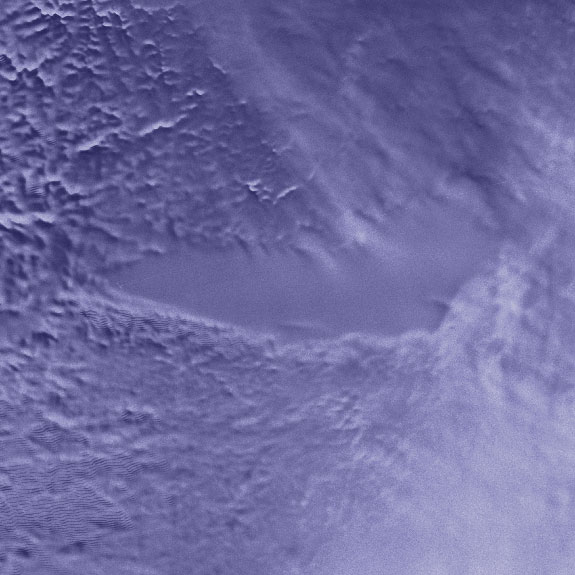
Lake Vostok lies beneath 2.4 miles of the Antarctic Eastern Ice Sheet. Photo: NASA / GSFC

In a lake cut off from the world for maybe as much as 15 million years, beneath 2.4 miles of Antarctic glacier ice, scientists have discovered as many as 3,507 different species representing everything from bacteria and fungi to, maybe, even more complex multicellular life.

In 1956, Russian scientists set up the Vostok research station on a relatively flat patch of ice in the heart of Antarctica’s eastern ice sheet. Research soon showed that the reason the terrain was so smooth was because the camp was resting far above a giant lake—subglacial Lake Vostok. Starting around 35 million years ago, ancient climate change turned Antarctica from a green landscape into an icy one. The change in climate trapped Lake Vostok beneath the growing East Antarctic Ice Sheet, and, as the sea receded, the lake was cut off from the ocean.

Two decades ago, Russian scientists began the long project of drilling down into Lake Vostok, a mission they finally completed in February 2012. With the drilling done, the work of trying to figure out if anything is alive down there began.

Scientists working with water from Lake Vostok have found genetic material that they think represents up to 3,507 different species, they report in a recent paper. The genetic material came from lake water that had frozen to the bottom of the Antarictic glacier. Comparing the genetic material against a database of species from around the world that have had their genes sequenced the scientists say that more than a thousand of these line up with known lifeforms. The identified species were mostly bacteria, though there were also some eukaryotes (mostly fungi), and there were two species of archaea. NBC’s Alan Boyle describes what the genes might mean:

The sequences included close matches for various types of fungi as well as arthropods, springtails, water fleas and a mollusk. What’s more, some of the bacteria from the sample are typically found in fish guts — suggesting that the fish they came from may be swimming around in the lake.

…”While the current conditions are different than earlier in its history, the lake seems to have maintained a surprisingly diverse community of organisms,” the researchers wrote. “These organisms may have slowly adapted to the changing conditions in Lake Vostok during the past 15-35 million years as the lake converted from a terrestrial system to a subglacial system.”

A significant number of the sequences were linked to organisms that live around deep-sea hydrothermal vents, suggesting that such features exist at the bottom of Lake Vostok as well. “Hydrothermal vents could provide sources of energy and nutrients vital for organisms living in the lake,” the researchers said.

One of the scientists who worked on the study, Scott Rogers, explained to NBC’s Boyle that the fact that other genetic sequences didn’t line up with anything we’ve seen before doesn’t necessarily mean that these are entirely new species living down in subglacial Lake Vostok. Rogers says that though some of the lifeforms down there will probably be brand new, some of them are probably just things we already know about but whose genes haven’t been studied in-depth and put in the particular database the researchers used.

If these findings hold up and if there is life in Lake Vostok that is truly unique on Earth, the finding would be a testament to the hardiness of life. It would be a reassurance that life can persist in some of the harshest conditions and an encouraging finding for those looking for life elsewhere in the universe.

More from Smithsonian.com:

No Life Found In Lakes Beneath Antarctic Glaciers—Yet
Brand New, Never Before Seen Bacteria Found in Frozen Antarctic Lake—Maybe

Link to original: 

Thousands of Species Found in a Lake Cut Off From the World for Millions of Years

Posted in FF, GE, Uncategorized | Tagged , , , , , , , , | Comments Off on Thousands of Species Found in a Lake Cut Off From the World for Millions of Years

Arctic base evacuated as ice dissolves beneath researchers’ feet

Arctic base evacuated as ice dissolves beneath researchers’ feet

Shutterstock

Though it carries major supervillain cred, placing a scientific research station atop an Arctic ice floe in an era of global warming is a dicey proposition — even for the Russians.

North Pole 40, a Russian science station that monitors pollution and conducts meteorological research, began operating in October on an Arctic ice floe. The Russians have been deploying research stations to drifting ice floes for more than 70 years, and North Pole 40 is their 40th such station.

But they don’t make ice floes like they used to. After just seven months of research, the ice floe that supports North Pole 40 started disintegrating. So Russia is scrambling an ice breaker out to the site to relocate the station and rescue the 16 scientists aboard.

From the AFP, via The Australian:

“The ice floe has crumbled into six pieces,” said Arkady Soshnikov, spokesman for the Arctic and Antarctic Research Institute.

“The people are not at risk but it is not possible to work in these conditions. The ice may disintegrate so a decision has been taken to evacuate” the station, he told AFP.

The station was located at 81 degrees North and 135 degrees West as of early morning on Wednesday. …

The UN weather agency said this month the Arctic’s sea ice melted at a record pace in 2012, the ninth-hottest year on record.

Vladimir Sokolov, who oversees the floating station at the Saint Petersburg-based Arctic and Antarctic Research Institute, said the ice was disintegrating due to climate change.

“This has made the Arctic research significantly harder – the ice has become thinner and the weather conditions more difficult,” he told AFP.

The BBC reports that the research station will be relocated to Bolshevik Island, which is composed of solid ground covered with glaciers. (Borrowed time at best, since those are also melting quickly.)

With the Arctic expected to become ice-free during future summers, we’re certainly in the waning days for Russian ice-floe research stations — bad news for Russian scientists (and James Bond).

John Upton is a science fan and green news boffin who

tweets

, posts articles to

Facebook

, and

blogs about ecology

. He welcomes reader questions, tips, and incoherent rants:

johnupton@gmail.com

.

Find this article interesting? Donate now to support our work.Read more: Climate & Energy

Also in Grist

Please enable JavaScript to see recommended stories

See original: 

Arctic base evacuated as ice dissolves beneath researchers’ feet

Posted in Anchor, FF, G & F, GE, LG, ONA, Uncategorized | Tagged , , , , , , , , , | Comments Off on Arctic base evacuated as ice dissolves beneath researchers’ feet

Western Antarctica is warming three times faster than the rest of the world

Western Antarctica is warming three times faster than the rest of the world

We’ve known for a while that temperatures on the western Antarctic Peninsula are warming rapidly, resulting in huge ice loss. That peninsula, south of South America, was believed to be an outlier; Eastern Antarctica has actually seen its ice mass increase.

But, as is so often the case with our climate predictions, the outlier is just the leading edge of the problem. New research suggests that temperatures in Western Antarctica overall have spiked since the late 1950s.

From the Times:

[T]he temperature at a research station in the middle of West Antarctica has warmed by 4.4 degrees Fahrenheit since 1958. That is roughly twice as much as scientists previously thought and three times the overall rate of global warming, making central West Antarctica one of the fastest-warming regions on earth.

“The surprises keep coming,” said Andrew J. Monaghan, a scientist at the National Center for Atmospheric Research in Boulder, Colo., who took part in the study. “When you see this type of warming, I think it’s alarming.”

pathfinderlinden

This is a significant rise — though relative to how cold Antarctica is overall, it doesn’t mean that you should start booking a cruise for the continent’s sunny beaches. Not yet, anyway. Mostly because once the western portion of Antarctica melts, sea levels will rise at least 10 feet, meaning the beaches won’t be where you’d expect.

Why do scientists think this happened? Surprisingly, not because a giant space dragon flies above the South Pole exhaling fire.

Much of the warming discovered in the new paper happened in the 1980s, around the same time the planet was beginning to warm briskly. More recently, Dr. Bromwich said, the weather in West Antarctica seems to have become somewhat erratic. In the summer of 2005, the interior of West Antarctica warmed enough for the ice to undergo several days of surface melting.

Dr. Bromwich is worried that this could eventually become routine, perhaps accelerating the decay of the West Antarctic ice sheet, but the warming is not fast enough for that to happen right away. “We’re talking decades into the future, I think,” Dr. Bromwich said.

And if a scientist says it will be decades, we can apparently expect this to happen by 2020.

Philip Bump writes about the news for Gristmill. He also uses Twitter a whole lot.

Read more:

Climate & Energy

Also in Grist

Please enable JavaScript to see recommended stories

Visit site:

Western Antarctica is warming three times faster than the rest of the world

Posted in GE, Uncategorized | Tagged , , , , , , , , , , , | Comments Off on Western Antarctica is warming three times faster than the rest of the world

Coming soon to a horror movie near you: Antarctica is being invaded by king crabs

Coming soon to a horror movie near you: Antarctica is being invaded by king crabs

p200eric

The Antarctic is being invaded by king crabs — and, somewhat ironically, it’s because they survive better in warmer water.

From Nature:

Cold temperatures have kept crabs out of Antarctic seas for 30 million years. But warm water from the ocean depths is now intruding onto the continental shelf, and seems to be changing the delicate ecological balance. An analysis by [marine ecologist Craig] Smith and his colleagues suggests that 1.5 million crabs already inhabit Palmer Deep, [a] sea-floor valley … And native organisms have few ways of defending themselves. “There are no hard-shell-crushing predators in Antarctica,” says Smith. “When these come in they’re going to wipe out a whole bunch of endemic species.”

Scientists are asking for volunteers to help stem the invasion; the research team will provide melted butter and nutcrackers.

Crustaceans like crabs and lobsters have a strange reaction to particularly cold water.

At temperatures below about 1 °C, they become unable to regulate magnesium in body fluids, leading to narcosis, clumsiness and paralysis of breathing. Most of the 100 or so fish species currently found on the Antarctic shelf belong to a single sub-order, whose members evolved antifreeze proteins to keep their blood flowing at subzero temperatures and then diversified to fill most niches in the frigid seas. They lack powerful jaws.

Nature

Click to embiggen.

As ocean temperatures have risen, so have temperatures in the Palmer Deep.

Westerly winds are strengthening and the circumpolar current is intensifying, driven by atmospheric warming and a hole in the ozone layer over Antarctica. These changes are lifting warm, dense, salty water from 4,000 metres down in the Southern Ocean up over the lip of the continental shelf.

[A]s the circumpolar current skirts Antarctica’s continental shelf, it runs head-on into the steep wall of the trough. About once a week, a swirling eddy containing 100 cubic kilometres of warm water wafts up from that collision, spilling onto the continental shelf. The same thing happens elsewhere, says [oceanographer Douglas] Martinson: “It looks like this is what happens at all of the canyons that cut across the shelf.”

The temperature of this intruding water is only about 1.8 °C — but for an ocean region generally between 1 and −2 °C, the impact is substantial. And the incursion seems to have begun only recently, says Eugene Domack, a marine geologist at Hamilton College in Clinton, New York, who led the 2010 cruise to Palmer Deep. … Average water temperatures west of the Antarctic Peninsula have risen by 1 °C in the past 50 years, and continue to rise by 0.01–0.02 °C per year.

And that warmer water means crabs can now better survive, stepping into an ecosystem unable to protect itself against the invasion.

The grimmest part of the story, though, may be this quote from Florida Institute of Technology marine biologist Richard Aronson.

“Every time we make a prediction of what we think will happen in the next 50 years, then poof, 10 years later, there it is,” he says. “So I think this is going to be happening more rapidly than, as conservative scientists, we’re used to predicting.”

Source

Polar research: Trouble bares its claws, Nature

Philip Bump writes about the news for Gristmill. He also uses Twitter a whole lot.

Read more:

Climate & Energy

,

Food

Also in Grist

Please enable JavaScript to see recommended stories

Visit source: 

Coming soon to a horror movie near you: Antarctica is being invaded by king crabs

Posted in GE, Uncategorized | Tagged , , , , , , , | Comments Off on Coming soon to a horror movie near you: Antarctica is being invaded by king crabs

Polar ice sheets are melting three times faster than during the ’90s

Polar ice sheets are melting three times faster than during the ’90s

It’s worse than we thought.

From U.S. News and World Report:

All of Earth’s major polar ice sheets except one have been rapidly losing mass — several gigatonnes per year — since 1992, accounting for about 20 percent of global sea level rise, according to a new report by multiple experts.

Scientists say this is the “clearest evidence yet” of polar ice losses, with nearly two thirds of all ice loss coming from Greenland. The only region with an increasing ice mass is Eastern Antarctica; ice sheets in west Antarctica, Greenland, and the Antarctic peninsula are melting and have caused about a half inch global sea level rise since 1992. …

Between 1992 and 2011, Greenland lost 152 gigatonnes of ice, West Antarctica lost 65 gigatonnes, and the Antarctic Peninsula lost 20 gigatonnes. East Antarctica gained about 14 gigatonnes of ice. A gigatonne is 1 billion metric tons.

mark217

The Antarctic peninsula.

That’s a combined mass equal to about three times all biomass on the Earth. The half inch of ocean rise might also help explain the recent discovery that sea levels are increasing 60 percent faster than expected.

It gets a little worse still. From CNN:

Previous estimates of how much the Greenland and Antarctic ice sheets contributed to the current 3 millimeter-per-year rise in sea levels have varied widely, and the 2007 report of the United Nations’ Intergovernmental Panel on Climate Change left the question open.

While the 19-year average worked out to about 20% of the rise of the oceans, “for recent years it goes up to about 30 or 40%,” said Michiel van den Broeke, a professor of polar meteorology at Utrecht University in the Netherlands. The rest comes from thermal expansion — warmer water takes up more space.

According to the Associated Press, the Antarctic and Greenland ice sheets lost three times as much ice annually between 2005 and 2010 as during the 1990s.

The findings, released today, use the hot new tool in data analysis: averaging. Well, sort of. From The Washington Post:

The study by an international group of 47 experts who study satellite mapping data — led by Erik Ivins, a scientist at NASA’s Jet Propulsion Laboratory, and Andrew Shepherd, a professor of earth observation at the University of Leeds — is the first to pull together 50 different ice-sheet-loss estimates over two decades and reconcile the research methods and findings into a single report.

As a result, the new findings “are now two to three times more reliable” than ice-melt and sea-level-rise estimates in studies used by the Intergovernmental Panel on Climate Change to compile its most recent report in 2007, Shepherd said.

So in case you were hoping that the calculations were iffy: nope. They’re better.

We now present this new information, as acted out by Rachel Dratch.

Philip Bump writes about the news for Gristmill. He also uses Twitter a whole lot.

Read more:

Climate & Energy

Also in Grist

Please enable JavaScript to see recommended stories

Visit source: 

Polar ice sheets are melting three times faster than during the ’90s

Posted in GE, Uncategorized | Tagged , , , , , , , , | Comments Off on Polar ice sheets are melting three times faster than during the ’90s