Tag Archives: news

The National Weather Service decides to stop yelling at us

The National Weather Service decides to stop yelling at us

By on 12 Apr 2016commentsShare

The National Weather Service will stop issuing forecasts in all-caps beginning on May 11. They’ve given us 30 days’ notice to prepare, AND AS YOU CAN SEE, WE ARE FREAKING OUT.

All this time, we thought that the nation’s top meteorologists were just a bunch of neurotics. We assumed when they told everyone in Boston at 7 a.m. this past Sunday that “ASIDE FROM A FEW MINOR TWEAKS … THE OVERALL TREND IN THE FORECAST REMAINS ON TRACK FOR TODAY,” they were legitimately panicking over this mild update to the “DRY BUT COOL CONDITIONS” that they’d reported just 10 minutes earlier.

But no — turns out, the NWS has just been slow to ditch the last remnants of a decades-old technology called a teleprinter. The technology, which only operates in all-caps, basically amounts to “typewriters hooked up to telephone lines,” according to the National Oceanic and Atmospheric Administration.

So now we’re in a bit of a predicament. We’ve got just 29 days until our forecasts go mixed capitalization, and since we’re so used to all of our forecasts sounding like they came straight from the screaming weatherman in The Day After Tomorrow, we now have no idea which weather conditions we should be yelling about!

Here to help, we’ve compiled some recent forecasts to experiment with. Here’s one for Kansas City:

“A STRENGTHENING STORM OVER THE PACIFIC NORTHWEST WILL MOVE FURTHER ONSHORE TODAY, WHICH WILL CONTINUE TO PUSH A MID-LEVEL RIDGE OVER THE CENTRAL PLAINS. THE MAIN CONCERN FOR TODAY AND FRIDAY IS FIRE WEATHER DANGER AS A VERY STRONG LOW-LEVEL JET DEVELOPS UNDERNEATH THE RIDGE FROM CENTRAL TEXAS SPREADING NORTHEAST INTO THE FORECAST AREA THIS MORNING.”

Sounds mildly terrifying, doesn’t it?

How about: “A strengthening storm over the Pacific Northwest will move further onshore today, which will continue to push a mid-level ridge over the Central Plains. The main concern for today and Friday is fire weather danger as a very strong low-level jet develops underneath the ridge from central Texas spreading northeast into the forecast area this morning.”

That’s much better. Although, might I suggest that we keep “FIRE WEATHER DANGER” in all caps. That sounds like something we definitely should be yelling about.

OK, here’s another example from Boston: “PRECIPITATION TYPE WILL BE A CONCERN TODAY. LOTS OF LOW LEVEL DRY AIR TO OVERCOME FIRST.”

Now this just sounds melodramatic. “Precipitation type will be a concern today. Lots of low level dry air to overcome first” should do just fine.

Likewise, there’s no need to capitalize “THIS EVENING … LINGERING CLOUDS AND A FEW LIGHT SHOWERS FROM RESIDUAL INSTABILITY … BUT THIS SHOULD DIMINISH.” Unless, of course, the weather service is trying to comfort us, in which case, “BUT THIS SHOULD DIMINISH” should remain in all caps, and we should thank them for being there when we need them.

A few more general guidelines: Tornadoes are worth yelling about. Light rain is not. Hurricanes — yes. Fog — no. Severe flooding — yes. Sunny skies — no. You get the idea.

So are there any circumstances under which the entire forecast should be in all caps? Of course. Here’s one:

CLIMATE CHANGE IS CAUSING THE WEST ANTARCTIC ICE SHEET TO CRUMBLE, WILDFIRES TO RAVAGE THE WEST COAST, AND INSECT-BORN DISEASES TO SPREAD OUT FROM THE TROPICS. EXPECT A COLD FRONT FROM CLIMATE DENIERS TO SLOW ADAPTATION MEASURES THROUGH MID-CENTURY, CAUSING A HEAVY RAINFALL OF WIDESPREAD ECONOMIC AND CULTURAL DEVASTATION.

But then again, that sounds pretty terrifying no matter how you write it.

Share

Please

enable JavaScript

to view the comments.

Find this article interesting?

Donate now to support our work.

Get Grist in your inbox

Continue at source:  

The National Weather Service decides to stop yelling at us

Posted in alo, Anchor, Everyone, FF, GE, LAI, LG, ONA, PUR, Radius, Uncategorized | Tagged , , , , , , , , , , , | Comments Off on The National Weather Service decides to stop yelling at us

Sarah Palin lends her unblemished reputation to climate denier film

Sarah Palin lends her unblemished reputation to climate denier film

By on 12 Apr 2016commentsShare

There’s a new anti-climate change documentary coming to theaters near you! Climate Hustle (no word yet as to whether Ace Hood did the soundtrack) recently garnered support from Sarah Palin, Tina Fey’s less eloquent doppelgänger — and some skepticism from our favorite science guy, Bill Nye.

Climate Hustle — director Marc Morano’s attempt to make mainstream climate science look like an “overheated environmental con job” — is set to open in 400 theaters on May 2. Morano is a famed climate denier and conservative communications specialist who counts Sen. James Inhofe (R-Okla.) and Rush Limbaugh among his former clients. He currently serves as executive director of the pro-fossil fuel, anti-regulation lobbying organization Committee for a Constructive Tomorrow (CFACT).

An April 14 documentary screening in Washington, D.C., will be followed by a “riveting” panel discussion featuring Palin and Rep. Lamar Smith (R-Texas), a congressman with a history of bullying climate scientists.

In other news, Morano turned down a $20,000 global warming bet with Bill Nye in an interview on the documentary. (Watch the video above for all the cringeworthy moments.)

“Would you take [this] bet?” Nye asked Morano, posing the stipulations: “2016 will be the hottest — among the hottest, rather — of the last 10 years, and 2010 to 2020 will be the hottest decade on record.” Morano declined.

We have a question for Morano, too: Is this film another attempt to protect fossil fuel interests, slow political action on climate change, and confuse the American public about what’s really going on with the planet?

We’re pretty sure the answer is (to borrow a phrase from Palin): You betcha!

Please

enable JavaScript

to view the comments.

Find this article interesting?

Donate now to support our work.

Get Grist in your inbox

Originally posted here – 

Sarah Palin lends her unblemished reputation to climate denier film

Posted in alo, Anchor, FF, GE, LG, ONA, PUR, Radius, Uncategorized | Tagged , , , , , , , , | Comments Off on Sarah Palin lends her unblemished reputation to climate denier film

Conservatives love subpoenas about climate change — until they get hit with one themselves

Joe Barton (R-Tex), who sought to subpoena after a climate scientists published a study supporting the concept of climate change. Flickr/Gage Skidmore

Conservatives love subpoenas about climate change — until they get hit with one themselves

By on 11 Apr 2016commentsShare

It’s become a go-to strategy for climate change deniers to demand subpoenas and documents from scientists whenever they get a whiff of a potential controversy. But they like it less when the same tactic is used on them.

Attorney general of the U.S. Virgin Islands Claude Walker served the conservative think tank Competitive Enterprise Institute (CEI) with a subpoena last Thursday, demanding several decades’ worth of communications, emails, and other documents pertaining to CEI’s work on climate change policy and donor information. By subpoenaing CEI, Walker is broadening “a multifaceted legal inquiry into whether fossil fuel companies broke any laws as they sought for decades to undermine the scientific consensus and head off forceful action to address the climate crisis,” reports InsideClimateNews.

Libertarian and conservative writers at at The Blaze, American ThinkerThe Washington Times, Bloomberg View, and Cato Institute have criticized the subpoena, calling it the product of “hysterics,” part of an “absurd climate inquisition,” and a chapter in “Al Gore’s climate witch hunt.” CEI itself called the move “an affront” to its First Amendment rights, adding that if Walker succeeds, “the real victims will be all Americans, whose access to affordable energy will be hit by one costly regulation after another.”

Where was this outrage when right-wing politicians were doing the same, but to scientists? Republicans in Congress have given CEI and its allies plenty of opportunities to call out their own antics. For example:

1. House Science Committee Chairman Lamar Smith (R-Tex.) issued subpoenas to administrators and scientists at the National Oceanic and Atmospheric Administration (NOAA) in late 2015. Smith wanted their communications after the journal Science published a NOAA’s report debunking the deniers’ favorite excuse that global warming is on “pause.”

2. Smith has been on a tear lately. Last fall, he delivered a notice to Jagdish Shukla, a climate scientist at George Mason University in Virginia, which requested that Shukla “preserve all e-mail, electronic documents, and data (‘electronic records’) created since January 1, 2009,” pending an investigation. Shukla had signed a letter urging federal investigation of whether fossil fuel companies knowingly deceived the public on climate.

3. Joe Barton (R-Tex), a former chairman of the House Energy and Commerce Committee from 2004 to 2007, sought the personal emails of climate scientist Michael E. Mann in 2005, director of the Earth System Science Center at Pennsylvania State University, after Mann’s study showed a rapid increase in global temperatures.

4. In perhaps the most famous incident of its kind, a hacker got a hold of more than 1,000 emails and 3,000 other documents from climate scientists who were authoring a United Nations report on climate change consensus — deniers likened it to a major scandal, calling it “climategate.” They tried to find a smoking gun in climate science that didn’t exist. Ex-Virginia Attorney General Ken Cuccinelli demanded Michael Mann’s files from his former university as a result.

CEI is caught in the crossfire aimed at ExxonMobil of late, given CEI’s long history promoting inaccurate science and policies to discredit climate change action. Nineteen state attorneys general are already investigating ExxonMobil to determine whether the company broke the law in reportedly misleading its investors and the public about climate change. And it just so happens that Exxon happens to have contributed at least $1.6 million to CEI since 1985.

No matter what comes of CEI’s subpoena, it won’t stop the think tank’s allies from doing the same to target climate scientists.

Share

Please

enable JavaScript

to view the comments.

Find this article interesting?

Donate now to support our work.

Get Grist in your inbox

Visit site – 

Conservatives love subpoenas about climate change — until they get hit with one themselves

Posted in alo, Anchor, FF, GE, LAI, LG, ONA, Radius, Uncategorized | Tagged , , , , , , , , , | Comments Off on Conservatives love subpoenas about climate change — until they get hit with one themselves

Tiny island nations aren’t just going to drown. First they’re going to dry out.

Tiny island nations aren’t just going to drown. First they’re going to dry out.

By on 11 Apr 2016commentsShare

In what can only be a sign that scientists have finally lost their minds in the face of climate change, a group of researchers have just declared that islands are “computationally disenfranchised” freckles that a blind pig couldn’t find. If you just went, “Huh?” you’re definitely not alone.

We have Kris Karnauskas of the University of Colorado Boulder to thank for this fairly baffling description. Translation: Global climate models are too big to take into consideration small island nations like the Maldives or French Polynesia, so instead, they just blend the tiny nations into the sea, which is a big problem for the more than 60 million inhabitants of these disenfranchised freckles as they don’t get a clear picture of how climate change will affect them.

But according to a new study published in Nature Climate Change, up to 73 percent of these island groups — home to about 16 million people — will be facing increasingly dry conditions by mid-century.

Let’s acknowledge the great, cruel irony at work here: The residents of small island nations have effectively done nothing to cause climate change, certainly compared to those of us in the affluent developed world, and yet they’re the ones facing the most imminent and existential threat due to sea level rise. If global climate models can’t even account for them, that seems … wrong?

So to remedy this, Karnauskas, a professor of atmospheric and oceanic sciences and lead author on the new study, and his colleagues decided to use the precipitation changes predicted by the big global models to, in turn, predict how the aridity (dryness) of these smaller islands will change in the coming decades — something they could do because the climate over an island is basically the same as it is over the surrounding sea, which explains why a blind pig flying overhead wouldn’t be able to detect the island. (The climate researchers call this failure to differentiate between land and sea a “successful blind pig test.”)

And they found that while there were seasonal variations in dryness on the islands, a clear trend toward aridity was slated for a majority of the territories. Among those facing the worst of it are the Juan Fernandez ‘Robinson Crusoe’ Islands, Easter Island, and French Polynesia.

“Islands are already dealing with sea level rise,” Karnauskas said in a press release, “But this shows that any rainwater they have is also vulnerable. The atmosphere is getting thirstier, and would like more of that freshwater back.”

So even if our big fancy models can’t detect it, the story unfolding over the world’s oceans is more complicated than we thought: Freckles are vanishing, the atmosphere is getting thirsty, pigs are flying — and of course, when that starts to happen, all bets are off.

Share

Please

enable JavaScript

to view the comments.

Find this article interesting?

Donate now to support our work.

Get Grist in your inbox

Excerpt from:  

Tiny island nations aren’t just going to drown. First they’re going to dry out.

Posted in alo, Anchor, FF, GE, LAI, LG, ONA, Radius, Uncategorized | Tagged , , , , , , , | Comments Off on Tiny island nations aren’t just going to drown. First they’re going to dry out.

I asked random Swedes to weigh in on American climate change denial

I asked random Swedes to weigh in on American climate change denial

By on 11 Apr 2016commentsShare

Ah, Sweden! The land of IKEA, Volvos, and top-ranking green living. And now, you can learn so much more. Swedish tourist officials created a new app, The Swedish Number, that connects foreign callers to any “random Swede” who’s downloaded the app, per The New York Times. The creators encourage callers to “talk about anything.”

I dialed in to find out what Swedes really think about an issue that is commonplace in the United States and less so in Sweden — climate change denial. Even though Americans are now more concerned about climate change than at any time in the past 8 years, at 64 percent according to Gallup, a 2014 survey also found the United States had the lowest rate of people in the world who think we’re observing human-caused climate change. That study also found Sweden to be more accepting of the science.

I found the same to be true in my small, unscientific experiment as I heard my Swedish conversation partners’ reflections on this unwelcome form of American exceptionalism.

I see [climate denial] as a sign of poor education, and maybe a bit too much influence from some of the more religious groups or the right wing,” said one Swedish IT developer. “And most of all, I think it’s something sad, actually, for all of us, that we can’t agree that climate change is happening to our planet.”

One man I spoke to, Joachim, said that “we have to stand up for the planet and take responsibility” — he built his own low-energy, solar-powered house 10 years ago, and says his next car will not be Volvo, but a Tesla.

Another resident mused on the political differences between his country and the United States, in progressiveness as well as power. “Most Swedes on the political spectrum fall very much on the left in comparison to the American political spectrum, and therefore most [Swedes] would have some sort of agreement that climate change is a result of human output,” he said. “But to be brutally honest, I don’t think that Sweden’s opinion matters in the world stage. It’s like a little tiny Chihuahua who’s there, barking, barking at the ankle of the big dog. The big dog sort of politely nods at the Chihuahua, and then they get back to their business.”

Another pointed out that climate change is already having an effect in Sweden: “Look, 20 years ago when I was a kid, there was snow in November. Now, the snow is coming in January.”

One Stockholm resident, Frederick, was incredulous there are people who deny climate change is happening. “People are denying that climate change is happening? … Are you sure?” he asked, adding some advice for his American counterparts: “I think maybe they should open their eyes then, because I think it’s a fact. I don’t know anything about it, but I do know it’s happening.” The U.S. might want to take some notes.

Share

Please

enable JavaScript

to view the comments.

Find this article interesting?

Donate now to support our work.

Get Grist in your inbox

See original article – 

I asked random Swedes to weigh in on American climate change denial

Posted in alo, Anchor, FF, GE, LAI, LG, ONA, Radius, solar, solar power, Uncategorized | Tagged , , , , , , , , , | Comments Off on I asked random Swedes to weigh in on American climate change denial

Food waste is already a big problem — but it could get even bigger

Food waste is already a big problem — but it could get even bigger

By on 7 Apr 2016commentsShare

We all know that food waste is a huge problem. The world squanders about one-third of its food supply, even though 800 million people are currently undernourished. And since agriculture is responsible for between 22 and 24 percent of anthropogenic greenhouse gas emissions, that means we’re pumping loads of climate-altering chemicals into the atmosphere for absolutely no reason.

And according to a new study published in the latest issue of Environmental Science & Technology, the situation is bound to get a lot worse if the rest of the world continues to shift toward a meat-heavy Western diet. Here’s what we’re looking at:

Hic Et al. 2016 American Chemical Society

In 2010, we ended up with 20 percent more food than we needed. That meant a jump in GHG emissions from that surplus of about 300 percent from 50 years ago. Looking forward, those emission could increase another 2.6 to 3.6 times by 2050 thanks to dietary changes, according to the study.

So far, so apocalyptic. But things get more complicated on a country-by-country basis. That’s because every country has its own appetite, depending on its population’s activity level, average body weight, and the age and sex breakdown of its people. Countries like the U.S. and Australia that tend to be heavier, for example, demand more calories per person that China or India.

So looking forward, the researchers mapped out three potential trajectories for each country that they analyzed. The population’s weight could either remain the same, become more Japan-ish (i.e. thinner), or more U.S.-ish (i.e. heaver). And what they found was that if the world started to look more Japan-ish, global demand could be 0.9 percent less than the amount of food available in 2010. If the world started to look more U.S.-ish, demand could be 73 percent more than the 2010 supply. And if the world maintained its figure, we’re looking at between between 2 and 20 percent higher demand than the 2010 supply.

The problem is, it’s very fun to eat like an American. So other countries are likely to spiral into obesity like the rest of us, if they get the chance. In fact, this is already happening. And it’s bad news not only for the health of these growing populations, but also for the health of the planet, since the Western diet is very meat heavy.

In China alone the amount of animal products in the food supply increased by 138 percent over the last 30 years, the researchers report. At the same time, the country experienced a 13-fold increase in emissions from surplus food. Looking ahead, China and other countries that are experiencing swift economic development are likely to be the world’s next “food waste hot-spots” by mid-century, the researchers report, and emissions from surplus food are likely to be highest in South Asia, East Africa, and South America.

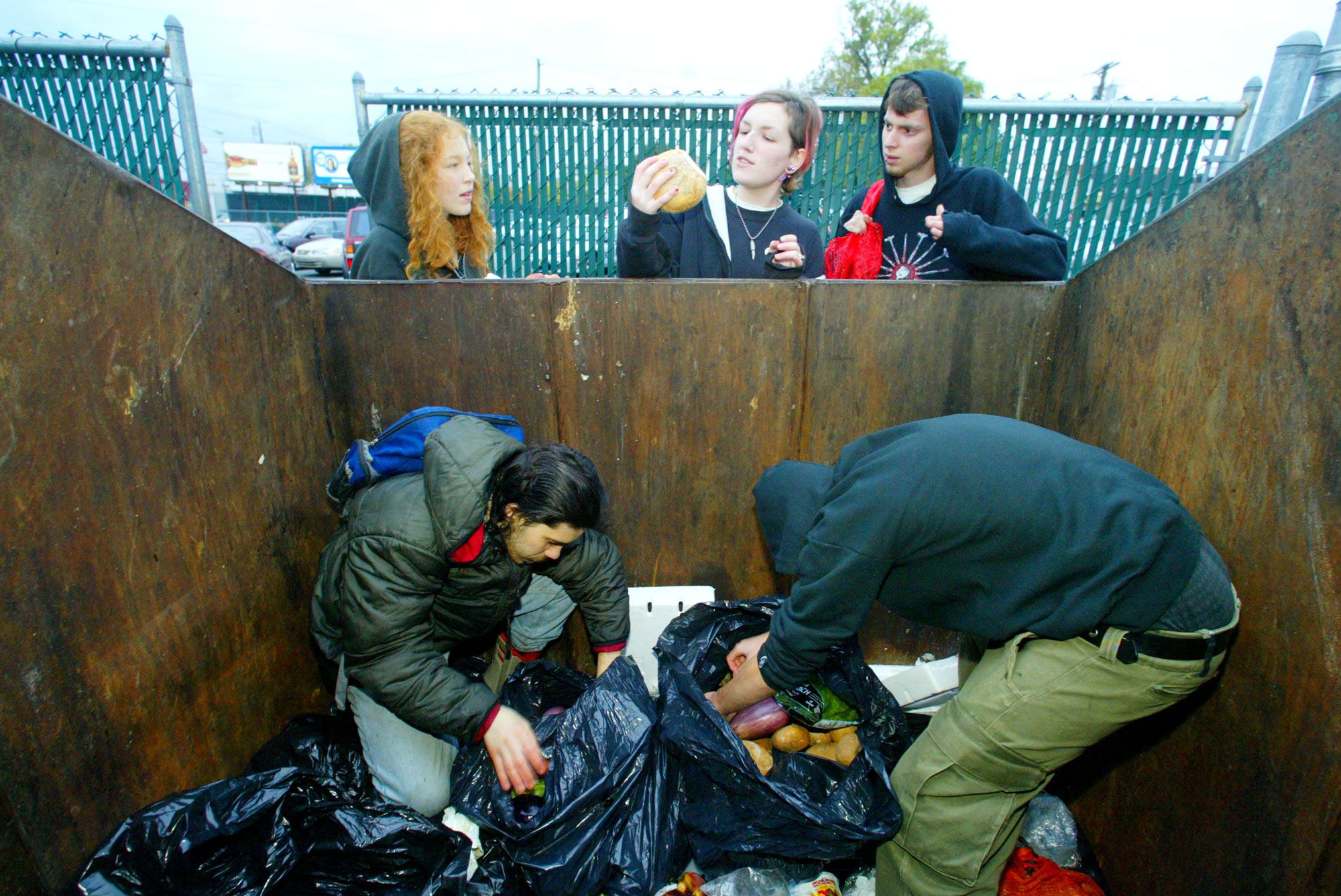
That said, we can actually do something about this. Grist’s own Nathanael Johnson outlined a plan of action here, so hopefully we’ll have this all worked out before Antarctica melts. In the meantime, enjoy the dumpster diving while it’s still good.

Share

Please

enable JavaScript

to view the comments.

Find this article interesting?

Donate now to support our work.

Get Grist in your inbox

Original post:

Food waste is already a big problem — but it could get even bigger

Posted in alo, Anchor, FF, G & F, GE, LG, ONA, Radius, Uncategorized | Tagged , , , , , , , | Comments Off on Food waste is already a big problem — but it could get even bigger

More than 100 years of car evolution could reveal where the industry is going next

More than 100 years of car evolution could reveal where the industry is going next

By on 6 Apr 2016 6:05 pmcommentsShare

Unless you’re a couple of crusty old white guys, the future of cars is looking pretty bright. Affordable electric cars are about to hit the market, self-driving cars are practicing their not-hitting-people skills, sleek 3D-printed cars are becoming a thing. And in a world that desperately needs to be more efficient and rely less on fossil fuels, this is all promising news.

But predicting the future of technology is always hard and often leads to egg-covered faces and tarnished reputations. The former chair of IBM, for example, once famously said that “there is a world market for maybe five computers.” And boy does that guy have about a billion eggs on his face right now.

Fortunately, a new (yet to be peer-reviewed) study on arXiv.org offers a way to predict where our technologies are going by first looking at where they’ve been. The study, led by researchers at UCLA, presents an evolutionary model for technology, and with the automobile as a case study, suggests that “electric and hybrid cars may be experiencing the early stages of a radiation event, with dramatic diversification expected in the next three to four decades.”

The model includes data on 3,575 cars made by 172 manufacturers between 1896 and 2014. It considers each car model a distinct species whose first and last years of production mark its origin and extinction, respectively. It thus offers a rate of “species” origination and extinction over time, allowing the researchers to analyze the effects of outside factors like GDP, oil prices, and market competition on the size and diversity of species types.

Not surprisingly, they found declines in origination in 1933, during the Great Depression. They also found declining extinction rates in 1935, again corresponding to the Great Depression, and in 1960, when the “Big Three” automakers (General Motors, Ford, and Chrysler) hit their peak.

More surprising was that the model showed that the rate of new species hitting the market had decreased fourfold between 1980 and 2014 and that extinction rates slightly outpaced origination rates during that time, meaning the market has gotten less diverse. At the same time, the average lifespan of models increased.

This happened, the researchers speculate, because certain designs began to dominate, and experimenting with new ones became too costly. The resulting market consolidation increased brand loyalty, stabilized cost of production, and made for safe investing. And it showed that market competition is more strongly correlated with species diversity than other factors like GDP or the price of oil.

Which brings us back to today. Electric vehicles haven’t gone through the decades of evolution that gas-powered cars have, which is perhaps why a relatively new brand like Tesla can come in with its shaky production schedules and unsteady financial standing and shake up the market. And in the coming decades, according to this research, we can expect more competitors to join Tesla’s Model 3 and GM’s Chevy Bolt before the market ultimately settles on dependable models and creativity in the industry declines once again.

By that point, though, we’ll surely be in the midst of a flying car diversity boom. That’s one tech prediction that will never die, no matter how many times it’s blown up in people’s faces.

Share

Please

enable JavaScript

to view the comments.

Find this article interesting?

Donate now to support our work.

Get Grist in your inbox

View this article: 

More than 100 years of car evolution could reveal where the industry is going next

Posted in alo, Anchor, FF, G & F, GE, LG, ONA, Radius, Ultima, Uncategorized | Tagged , , , , , , , , , , | Comments Off on More than 100 years of car evolution could reveal where the industry is going next

Gibraltar ends one of the biggest balloon releases; thousands of whales blow sighs of relief

Gibraltar ends one of the biggest balloon releases; thousands of whales blow sighs of relief

By on 6 Apr 2016 4:58 pmcommentsShare

Looks like Gibraltar will need to find a new way to celebrate its national holiday — one that doesn’t involve sending 30,000 balloons into the sky.

Gibraltar, a British territory squeezed onto a tiny peninsula next to Spain, has celebrated National Day every Sept. 10 by releasing one balloon for each of its citizens. It’s quite the spectacle. But after 24 years, that practice is coming to a close thanks to pressure from environmental advocates who denounced the “mass aerial littering.”

The Self-Determination for Gibraltar Group, an organization campaigning for independence, announced an end to the annual balloon barrage on Wednesday. The decision prompted this tweet from Lewis Pugh, U.N. Patron of the Oceans:

So what’s not to love about flooding the sky with helium-filled bubbles of joy? Eventually, those balloons come back down. Back on earth, they can spell the end for turtles, dolphins, and sharks that mistake the deflated latex lumps for food. Eating deflated balloons can lead them to starve. Sea creatures sometimes get entangled in balloons and suffocate.

With 30,000 fewer balloons this year, we hope Gibraltar’s decision will provide our oceans with a little respite from the onslaught of plastic pollution. I guess Gibraltar came to the conclusion that the rest of us did: Sending a bunch of plastic into the air — even if it looks pretty! — is still littering.

Please

enable JavaScript

to view the comments.

Find this article interesting?

Donate now to support our work.

Get Grist in your inbox

Visit site – 

Gibraltar ends one of the biggest balloon releases; thousands of whales blow sighs of relief

Posted in alo, Anchor, Citizen, Dolphin, Everyone, FF, G & F, GE, LG, ONA, Radius, Uncategorized | Tagged , , , , , , , , , , | Comments Off on Gibraltar ends one of the biggest balloon releases; thousands of whales blow sighs of relief

Unpacking climate change’s $2.5 trillion impact

Unpacking climate change’s $2.5 trillion impact

By on 5 Apr 2016commentsShare

Climate change is all about the Benjamins. Sign as many international climate agreements as you want, you’ve still got to scrounge up about $16.5 trillion for all those solar panels and seawalls.

But that’s just the first row on the climate change balance sheet. Not only does the world have to front a huge amount of money to solve the climate crisis, it’s putting trillions more at risk if it doesn’t — trillions that should be sitting in your pension or retirement fund.

A new study, published on Monday in Nature Climate Change, offers a new way to think about the financial risks of doing nothing.

The study’s authors, based at the London School of Economics and the research firm Vivid Economics, estimate that a business-as-usual emissions path would lead to expected warming of 2.5 degrees C by 2100. Under that scenario, banks, pension funds, and investors could sacrifice up to $2.5 trillion in value of stocks, bonds, and other financial assets. The worst-case scenario, with a 1-percent chance of occurring, would put $24 trillion (about 17 percent of global financial assets) at risk.

This is the first time economists have put climate risk in terms the financial sector understands — and the picture isn’t particularly pretty. Let’s dive in.

Why is climate change so expensive?

Transitioning to a green economy will undoubtedly require a bunch of cash. The nonprofit advocacy group Ceres estimates that we’ll need about $1 trillion annually in investment to shift the world away from fossil fuels. But let’s put that aside for a moment, and talk about what happens if we don’t put up the money. What do we stand to lose?

Climate change can affect the economy in myriad ways; including the extent to which people can perform their jobs, how productive they are at work, and the effects of shifting temperatures and precipitation patterns on things like agricultural yields or manufacturing processes. These factors help determine our “economic output” — all the goods and services produced by an economy. Output is usually measured by tools like the Gross Domestic Product.

Back in October, a study published in Nature estimated that the world could see a 23 percent drop in global economic output by 2100 due to a changing climate, compared to a world with no climate change.

“Historically, people have considered a 20 percent decline in global Gross Domestic Product to be a black swan: a low-probability catastrophe,” said a coauthor of that study, economist Solomon Hsiang of U.C. Berkeley. Instead, he says, “We’re finding it’s more like the middle-of-the-road forecast.”

What other costs haven’t we been counting?

But economic output isn’t the same thing as asset value. There’s a difference between economics and finance, and the Nature Climate Change study targets the latter.

Let’s say a company makes chocolate bars. Climate change might mess with cocoa production or productivity of workers. Maybe some of the bars end up a lil’ melty and misshapen and nobody wants to buy them. All told, the company might see a drop in sales.

If the company’s output drops, that’s one thing. But you also have to think about these losses in terms of what the company’s board of directors has to tell its shareholders and lenders. These investors — the ones who made those chocolate bars possible in the first place, whether through buying stock or granting loans — are expecting returns on their investments (through dividends and interest). Lower output likely means lower returns for them.

Until Monday’s Nature Climate Change study, nobody had really quantified the climate-induced losses at this level. Economic output studies like Hsiang and his collaborators’ are about the actual gears of the economy: the stuff that’s being produced, the way it’s being produced, and the people that are producing it. The LSE and Vivid Economics study is about the money greasing the wheels and the people holding this money. Those are the people who really matter when it comes to a clean energy transition, because they’re the ones with the bank accounts to finance it.

What’s more, corporate boards are legally obligated to make sure those shareholders’ bank accounts look good. This idea — “fiduciary duty” — means that corporate boards and institutional investors like pension fund managers can (must!) take action to further the interests of investors.

Demonstrating the risk climate change poses to financial assets is a way to appeal directly to these responsibilities. For those of us interested in climate action, that’s a good thing.

So how does climate change put these assets at risk?

The authors of the new study write that climate change can affect the value of financial assets in two ways. First, it can just destroy them. If a hurricane wrecks a beachfront hotel, that hotel no longer produces financial value.

Second, climate change can reduce how much a given investment is worth. This point is a little more abstract. One of the things that Hsiang and his colleagues showed in October was that there’s actually an optimal temperature for economic productivity: about 55 degrees F. Any shift in average temperature above that threshold tends to result in less productivity from workers. If workers are less productive but investment levels remain the same, that means those dollars aren’t worth as much in a warming world.

The craziest thing about this argument is that it’s not just about the fossil-fuel industry — it’s about the whole financial sector. Plenty has been written about the potential losses that investors could incur due to continued faith in the fossil-fuel economy. The “stranded asset” argument says that as climate policy makes fossil fuels less and less likely to be burned, investors sitting on fossil reserves won’t be able to make a profit or sell them off.

By broadening this argument to include risks for effectively every investor under the sun, the authors have just turned up the heat on us all.

Share

Please

enable JavaScript

to view the comments.

Find this article interesting?

Donate now to support our work.

Get Grist in your inbox

Original link: 

Unpacking climate change’s $2.5 trillion impact

Posted in alo, Anchor, FF, G & F, GE, LG, ONA, Radius, solar, solar panels, Uncategorized | Tagged , , , , , , , | Comments Off on Unpacking climate change’s $2.5 trillion impact

Keystone leaks and reminds us why we’re glad there isn’t an XL pipeline out there

Keystone leaks and reminds us why we’re glad there isn’t an XL pipeline out there

By on 4 Apr 2016commentsShare

A major section of the original Keystone pipeline is out of commission after an oil spill near the pipeline was detected in South Dakota on April 2.

The spill, estimated at 187 gallons of crude oil, serves as a reminder of the risks that pipelines pose — and that with the Obama administration’s rejection of the Keystone XL pipeline proposal, we’ve likely avoided the potential for an even bigger, more disastrous spill.

Part of the original argument against Keystone XL was that eventually, the proposed pipeline was bound to spill. A 2013 Forbes article (which claimed that it was “crazy” to think Keystone XL wouldn’t leak) pointed out that as pipelines age, they are often not properly maintained, leading to a greater possibility of a leak occurring.

The recent oil spill was discovered, of course, by TransCanada’s state-of-the-art spill detection technology — oh, what’s that? My state-of-the-art Tweet detecting system’s “Bill McKibben” sensor just went off:

Apparently, a South Dakota landowner first noticed signs of a spill and informed TransCanada of the leak. As a result, TransCanada shut down the section of the pipeline from Alberta, Canada, to Cushing, Okla. (The section of Keystone that runs from Cushing to Texas is still in operation.)

Transcanada says that “no significant impact to the environment has been observed” from the April 2 spill. We hope it stays that way — and in the meantime, we’re glad that there’s one less huge pipeline out there to worry about. Spilled milk might not be worth crying over, but unspilled pipelines are definitely worth celebrating.

Please

enable JavaScript

to view the comments.

Find this article interesting?

Donate now to support our work.

Get Grist in your inbox

Original article:

Keystone leaks and reminds us why we’re glad there isn’t an XL pipeline out there

Posted in alo, Anchor, FF, G & F, GE, LAI, LG, ONA, Radius, Uncategorized | Tagged , , , , , , , , , , | Comments Off on Keystone leaks and reminds us why we’re glad there isn’t an XL pipeline out there