Tag Archives: Ringer

4 Reasons You Should Worry About Another Sandy

Mother Jones

<!DOCTYPE html PUBLIC “-//W3C//DTD HTML 4.0 Transitional//EN” “http://www.w3.org/TR/REC-html40/loose.dtd”>

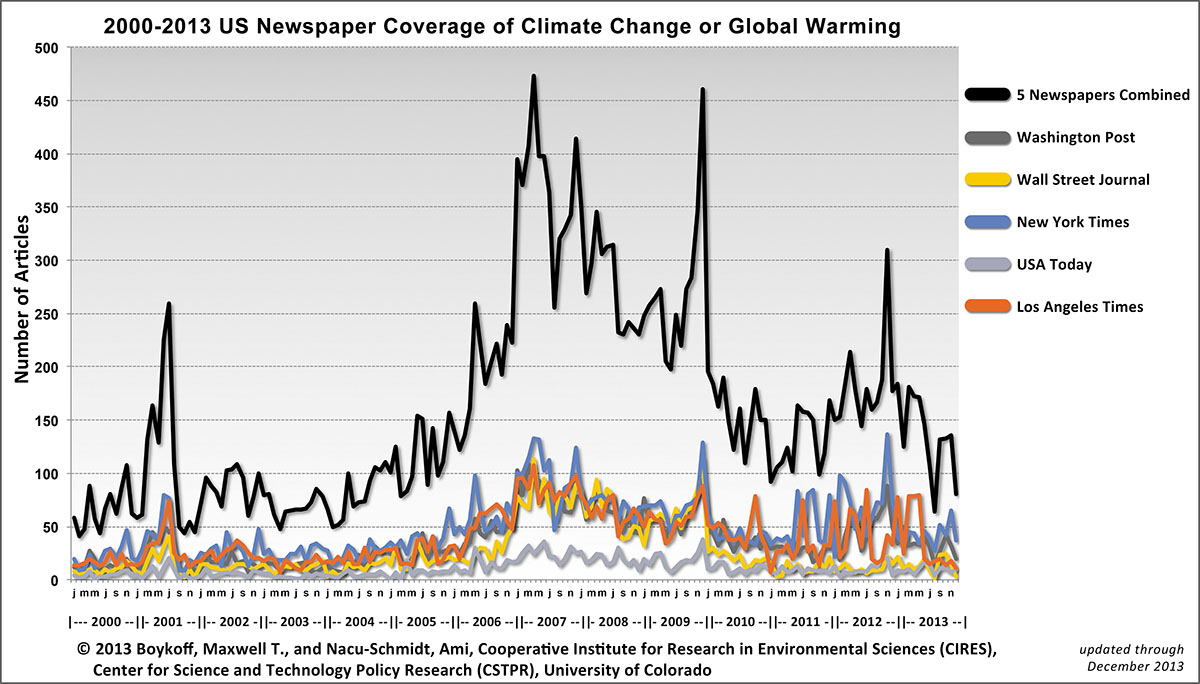
One year ago, when Superstorm Sandy devastated much of New Jersey and New York City, the event sparked an intense national discussion about an issue that had gone mysteriously un-discussed during the presidential campaign: climate change. According to research by media scholar Max Boykoff of the University of Colorado, there was actually more media coverage of climate change in leading U.S. newspapers following Sandy than there was following the recent release of the United Nations’ Intergovernmental Panel on Climate Change’s Fifth Assessment Report.

Why? According to NASA researchers, Sandy’s particular track made it a 1-in-700 year storm event. It was, to put it mildly, meteorologically suspicious.

So now, with a year’s distance and a lot of thought and debate, what can we say about climate change and Sandy—and hurricanes in general? A lot, as it turns out. Here’s what we know:

1. Sea level rise is making hurricanes more damaging—and Sandy is just the beginning. The most direct and undeniable way that global warming worsened Sandy is through sea level rise. According to climate researcher Ben Strauss of Climate Central, sea level in New York harbor is 15 inches higher today than it was in 1880, and of those 15 inches, eight are due to global warming’s influence (the melting of land-based ice, and the thermal expansion of seawater as it warms). And that matters: For every inch of sea level rise, an estimated 6,000 additional people were impacted by Sandy who wouldn’t have been otherwise. That’s why Strauss told me last year, in the wake of the storm, that there is “100 percent certainty that sea level rise made this worse. Period.”

And what’s true for Sandy is true for every hurricane that makes landfall. While numerous other factors, such as the tidal cycle, also affect the size of a given storm’s surge, global warming is now a measurable part of the total impact. And the more seas rise in the future, the worse the impact gets—and the more likely future Sandys become. “Coastal communities are facing a looming sea level rise crisis, one that will manifest itself as increased frequency of Sandy-like inundation disasters in the coming decades along the mid-Atlantic and elsewhere,” as a recent American Meteorological Society report put it. In fact, a recent analysis by Mother Jones, using data from Climate Central and the National Climate Assessment, finds that by the end of the century the chance of Sandy-level flooding in Lower Manhattan in any given year increases to 50 percent.

2011’s Hurricane Irene caused widespread flooding damage due to heavy rains in New England. Jim Greenhill/Flickr

2. Hurricane rainfall will also be more damaging in the future due to global warming. The principal flooding damage from Sandy came through its storm surge, not its heavy rains. But in other devastating storms, that won’t necessarily be the case. Hurricanes are, at minimum, a triple threat, and can damage lives and property through rainfall, through storm surge, and due to their powerful winds.

We can say with some confidence that global warming is generating more rainfall in storms like Sandy. The reason is simple: Warmer air holds more water vapor, due to basic physics. “For 1 degree Fahrenheit, it’s something like 5 percent more moisture in the atmosphere,” as climate scientist Kevin Trenberth of the National Center for Atmospheric Research has put it.

Extreme precipitation events in the US are already on the rise, and this trend, like sea level rise, is expected to continue in the future. According to the National Oceanic and Atmospheric Administration’s Geophysical Fluid Dynamics Laboratory, by the end of the 21st century we should expect a roughly 20-percent increase in hurricane rainfall.

3. Hurricanes may also be more intense in the future. A knottier issue involves whether the average hurricane is already more intense (in other words, having higher wind speeds) than it was in the past due to global warming—or whether it will be in the future. This is the question that gets the most press attention, even as it also remains among the hardest to answer.

2005’s Hurricane Wilma, the strongest Atlantic hurricane ever recorded. NASA/Wikimedia Commons

If you want to go with the conservative (and somewhat dated) scientific view, then the latest IPCC assessment says there is “low confidence” that hurricanes have already gotten more intense due to global warming. The IPCC also says it is “more likely than not” that this will occur by the second half of this century, at least in two major basins that have a lot of hurricanes—the North Atlantic and the Western North Pacific (where they’re called typhoons).

The IPCC, however, has a cutoff date and as a result, cannot always cite the most cutting-edge research. That includes one recent paper suggesting that hurricanes are already more intense, as the global population of storms has shifted towards more Category 4 and 5 storms, and proportionately less Category 1 and Category 2 storms. This issue remains heavily debated within the scientific community, however.

4. Will there be more hurricane left turns into New Jersey? But where things get really scientifically tricky is the matter of storm paths. One of the reasons that Sandy was so devastating is that it, in effect, swung left and slammed into the US East Coast. That’s exceedingly rare behavior for an Atlantic hurricane. By the time they reach the mid-latitudes, most of these storms “recurve” to the northeast, a path that often ensures that they miss land.

That pattern was interrupted in the case of Sandy, however, by what is called a “blocking” event: A ridge of high pressure over Greenland that drove the storm westward, leading to this devastating track:

The bizarre track of Superstorm Sandy. Cyclonebiskit/Wikimedia Commons

So will such atmospheric blocks become more likely in the future?

Officially, the IPCC says no. Or rather, in scientist speak: “there is medium confidence that the frequency of Northern and Southern Hemisphere blocking will not increase, while trends in blocking intensity and persistence remain uncertain.” However, a number of researchers disagree with this assessment, most notably Jennifer Francis of Rutgers, who argues that the rapid warming of the Arctic is leading to a more loopy jet stream and, thus, more blocking patterns. This, too, is likely to be a hotly debated issue in the coming years.

So we already know global warming is making hurricanes more dangerous, through sea level rise and rainfall if nothing else. We don’t know everything, yet: But we know more than enough to be worried.

Continue at source:

4 Reasons You Should Worry About Another Sandy

Posted in alo, FF, GE, LG, ONA, Ringer, Springer, Uncategorized, Venta | Tagged , , , , , , , | Comments Off on 4 Reasons You Should Worry About Another Sandy

Which 9 Household Items Will Make Your Hormones Go Haywire?

Mother Jones

<!DOCTYPE html PUBLIC “-//W3C//DTD HTML 4.0 Transitional//EN” “http://www.w3.org/TR/REC-html40/loose.dtd”>

The other day I found an old T-shirt that had been sucked into the vortex under my bed. When I pulled it out, it was covered with dust bunnies. I grimaced, picked them off, deposited them into the trash, and didn’t give them another thought.

That is, until I read a new report about the hormone-disrupting chemicals lurking in those dust bunnies—and in a whole host of other harmless-seeming things in my house. The Environmental Working Group along with the Keep-A-Breast Foundation just released the Dirty Dozen Endocrine Disruptors list of chemicals that can seriously mess with your hormones, potentially leading to various cancers, growth and reproductive issues, metabolic malfunctioning, and many more health problems.

So I set out to identify some the items in my apartment that might be making my hormones go haywire. Here are just a few of the things that I found:

1. Receipts

I started by inspecting my wallet. According to the report, the thermal paper on which receipts are commonly printed contains BPA—a chemical found in certain plastics—which is known to imitate estrogen. BPA has been linked to breast cancer, reproductive problems, obesity, heart disease and has even been blamed for sparking early onset puberty.

2. Cans

I next wandered into the kitchen, tummy rumbling. First I glanced into the pantry, where I saw cans of chili, soup, beans, tuna, and even sauerkraut. Like the receipts, many cans are lined with BPA, EWG warns.

3. Bacon and eggs

With some hesitation, I next opened the fridge. From the mercury-laden fish in the freezer to the phthalates in the plastic containers storing leftovers, nearly everything in there was at some risk of contamination with hormone-altering chemicals, according to the report. Dioxin, a hormone disruptor produced during industrial processes, has tainted much of the American food supply. Exposure to low levels of the chemical in the womb and early life can permanently affect men’s sperm quality and count. Dioxins are also considered powerful carcinogens. They are extremely hard to avoid if you’re an omnivore like me, since dioxins lurk in many animal products including meat, fish, eggs, and dairy.

4. Non-stick pan

My favorite breakfast seemed a lot less appetizing when I learned that the non-stick pan I use likely contains perflourinated chemicals, another endocrine disruptor known to lead to high cholesterol among other things.

5. Fruit

So maybe I’ll skip the meat products today and have some healthy fruit instead. Not so fast, says EWG: The fruit may be coated with pesticides. In fact apples topped the EWG’s other dirty dozen list of produce most likely to be exposed to pesticides. Those could include organophosphates, chemicals that don’t biodegrade. Exposure to them can negatively effect brain development, behavior, and fertility. Another pesticide, atrazine, may also be present. One of the most commonly used herbicides in the United States, the chemical made a splash a few years ago when scientists observed it turning male frogs into females. It’s been linked to breast tumors, delayed puberty and prostate inflammation in animals.

6. Drinking water

I head to the sink to draw a glass of water. But EWG says my water could contain atrazine contamination from runoff in croplands, along with traces of perchlorate, lead, and arsenic. Perchlorate, a component of rocket fuel, can alter the thyroid gland which regulates metabolism and brain and organ development. Arsenic is a powerful poison that in trace amounts can disrupt the glucocorticoid system, which can lead to weight loss or gain, immunosuppression, insulin resistance, osteoporosis, and high blood pressure. And lead, as you probably have heard, is just the worst.

7. Dust

In the living room, I found the TV stand coated with dust bunnies like the ones I found under my bed—not ideal, since polybrominated diphenyl ethers could be clinging to the dust particles. PBDEs, the chemical in fire retardants, are known to mimic thyroid hormones and can lead to lower IQ among other health effects. The EWG (and my parents) advise keeping the house spick and span.

8. Cleaning products

Under the sink is a stockpile of cleaning products. I pick out a blue-tinted all-purpose cleaner and check the label. One of the ingredients is 2-butoxyethanol (EGBE), a glycol ether linked to severe reproductive problems: Guys, think shrunken testicles. Glycol ethers are also found in paints, brake fluid, and cosmetics.

9. Couch

OK, I’m done. There are hormone altering toxins in my food, in the dust in the house, and in the products I use to clean. I sit down on the couch and feel defeated. Then I remember that the foam in the cushions is also likely filled with fire retardants. And I’m forced to face the facts: My once cozy, safe home is a veritable mine field of endocrine disruptors. Short of moving to the wilderness, how can I keep my hormones safe? It would be difficult to avoid all of the chemicals the EWG names, but luckily the group does have a few practical resources; for starters I’ll be perusing the guide to healthy cleaning, advice on finding a good water filter, and a safe cosmetics database.

From: 

Which 9 Household Items Will Make Your Hormones Go Haywire?

Posted in alo, Bunn, FF, GE, LG, ONA, PUR, Ringer, Springer, Uncategorized, Venta | Tagged , , , , , , , , , | Comments Off on Which 9 Household Items Will Make Your Hormones Go Haywire?

Did Climate Change Worsen the Colorado Floods?

Mother Jones

<!DOCTYPE html PUBLIC “-//W3C//DTD HTML 4.0 Transitional//EN” “http://www.w3.org/TR/REC-html40/loose.dtd”>

Last Thursday, as torrential rains turned into floods that washed away homes, roads, and bridges in Boulder, Colorado, and the surrounding region, the local National Weather Service forecast office went ahead and said what we were all thinking. It put it like this:

MAJOR FLOODING/FLASH FLOODING EVENT UNDERWAY AT THIS TIME WITH BIBLICAL RAINFALL AMOUNTS REPORTED IN MANY AREAS IN/NEAR THE FOOTHILLS.

The word “biblical” certainly captures the almost preternatural scale of the Colorado floods, and the rainfall that caused them. Indeed, according to climate scientist Martin Hoerling of the National Oceanic and Atmospheric Administration, “this single event has now made the calendar year (2013) the single wettest year on record for Boulder.”

But does that mean that climate change is involved? Although suggestive, broken records alone do not constitute definitive proof that humanity’s fingerprints have been left on a particular weather disaster. On the other hand, climate scientists say with considerable confidence that a hotter planet will feature more extreme rain events, much like this one.

So what can actually be said about the Colorado floods in a climate context?

Just how extreme was this event? First off, it’s important to get a sense of how out-of-the-ordinary these floods—which have killed eight people and left hundreds unaccounted for—really were. That’s not difficult; superlatives have hardly been lacking to describe the event. Remarking on the “epic deluge,” meteorologist Jeff Masters, co-founder of the popular Weather Underground site, had this to say:

According to the National Weather Service, Boulder’s total 3-day rainfall as of Thursday night was 12.30″. Based on data from the NWS Precipitation Frequency Data Server, this was a greater than 1-in-1000 year rainfall event. The city’s previous record rainfall for any month, going back to 1897, was 9.59″, set in May 1995. Some other rainfall totals through Thursday night include 14.60″ at Eldorado Springs, 11.88″ at Aurora, and 9.08″ at Colorado Springs. These are the sort of rains one expects on the coast in a tropical storm, not in the interior of North America!

So what caused such a deluge? That the rains were reminiscent of a tropical storm gives a hint as to how this occurred. What fell over Colorado last week was, in significant part, tropical moisture, pulled up all the way up to the Rockies from the Mexican coast by a confluence of atmospheric events. Furthermore, the rainfall on the Front Range was exacerbated by a so-called atmospheric “blocking pattern,” which produced a situation of stuck weather, in which one pattern (unending rain) persisted for a long period of time. “We had this giant cutoff low sitting over Salt Lake City, dredging up a continuous stream of tropical moisture,” explains Minnesota meteorologist Paul Douglas, who is founder of the Media Logic Group and has been frequently outspoken about the reality of climate change from a Republican political perspective.

Satellite imagery showing tropical moisture being pulled from the coast of Mexico up to Colorado. Cooperative Institute for Meteorological Satellite Studies, University of Wisconsin-Madison.

And here’s the first possible climate linkage: The idea that the jet stream has been altered as a result of climate change, leading to more stuck weather and more blocking patterns, is a serious one, and one that has also been brought up in relation to the odd behavior of Superstorm Sandy. “I’ve noticed since last September, since the record ice loss in the Arctic, that the jet stream has been misbehaving, more blocking patterns in general over the northern hemisphere,” says Douglas.

He’s not the only one: Jennifer Francis of Rutgers University has led the scientific charge when it comes to the connection between Arctic sea ice loss and mid-latitude weather extremes (for further explanation, see here). And while the issue remains debated, it’s certainly possible that global warming is making blocking patterns, like the one that helped produce the Colorado floods, more likely to occur on average.

Doesn’t climate change produce more extreme rainfall, period? The idea that there will be more extreme rainfall, in general, in a warming world is very well established scientifically at this point. “The science about future increases of extreme rainfall is very solid, just because we have a good understanding of the physics of it,” says Claudia Tebaldi, a climate scientist and statistician with Climate Central and the National Center for Atmospheric Research. “Warmer air is going to hold more moisture,” Tebaldi continues, “so when something happens, there is going to be more available water to precipitate on us.”

If you want to get your inner nerd on about why this is the case, the answer is the Clausius-Clapeyron equation, which states that as atmospheric temperatures increase, the amount of water vapor that the air can contain increases exponentially. For a good explanation, see here.

How much extra water vapor are we talking about here? “For 1 degree Fahrenheit, it’s something like 5 percent more moisture in the atmosphere,” explains climate scientist Kevin Trenberth of the National Center for Atmospheric Research (which itself happens to be in Boulder). That extra water vapor, according to Trenberth, helps fuel and strengthen storms, even as it also gives them an added moisture supply, meaning that the net effect on increased rainfall may be 5 to 10 percent. For Trenberth, that would therefore mean that climate change contributed somewhat to the Colorado floods, but that’s very different from saying that it caused the entire event. “You can’t blame this thing on climate change,” he says.

Martin Hoerling of NOAA comes to a similar conclusion. “Global warming has led to an increase in the atmosphere’s water holding capacity, and empirical studies indicate a few percent of increase in water vapor to date,” he comments by email. That means that the majority of the moisture over Colorado was there not due to global warming per se, but simply because of the aforementioned atmospheric circulation patterns.

Are extreme rainfall events increasing, as predicted? Absolutely. NOAA’s National Climatic Data Center keeps extensive data on weather extremes, and has found that since the 1970s, there has been an uptick in one-day extreme precipitation events:

Extremes in U.S. one-day precipitation, 1910-2012 National Climatic Data Center

An increasing trend in extreme rains is also supported by the recently leaked draft of the Intergovernmental Panel on Climate Change’s Fifth Assessment Report. The draft says that it is “very likely” that central North America has already seen a trend toward more extreme precipitation events and that there is “medium confidence” that humans have contributed to this change. In the future, moreover, this trend is expected to continue. According to the IPCC draft, “in a warmer world, extreme precipitation events over most of the mid-latitude land masses and over wet tropical regions will very likely be more intense and more frequent by the end of this century.”

In this sense, the Colorado Floods are consistent with the general picture of what we’ve been seeing, and what we would expect to see, under climate change. That doesn’t make them directly caused by climate change, but it does put them in context.

What about Colorado’s climate future in particular? The future precipitation forecast for Colorado itself is less certain. The U.S. National Climate Assessment, which is currently in draft form, includes regional projections for how temperature and rainfall changes are expected to affect different parts of the United States. The report includes Colorado in the country’s Southwest region, which overall has seen a 12 percent increase in heavy precipitation since the year 1958 (considerably less than some other regions). Going forward, the southern part of the Southwest region, including states like Arizona and New Mexico, is actually expected to see a decrease in precipitation. But the picture isn’t as clear for Colorado; according to the National Assessment draft, projections aren’t in agreement with each other. However, even in areas where average rainfall is expected to decline, the percentage of overall precipitation falling in extreme downpour events is expected to increase. In other words, the shift remains towards more extremes.

And now for the really tough question: Did global warming in any way “cause” this event? So far, we’ve established that the Colorado floods are consistent with expected climate trends: more extreme rains (pretty certainly), and possibly more blocking patterns (still a new and debated issue). And we’ve also suggested that rainfall in this particular event may have been amplified, somewhat, by climate change.

But causation? That’s a very different, much knottier issue, as Kevin Trenberth’s remark above (“You can’t blame this thing on climate change”) makes clear. In fact, Trenberth himself has argued prominently that “no events are ’caused by climate change’ or global warming, but all events have a contribution.” The issue is further complicated by a large gap between how scientists understand the word “cause,” and how the lay public does.

“Correlation,” an XKCD comic.

Ordinarily, we think about “cause” in a simple sense in which one thing fully brings about another. Thus, I tripped and fell, and this caused me to have a bump on my head. But in the atmosphere, it’s hardly so simple. As we’ve seen, the Colorado floods were partially caused by moisture from the tropics, partly caused by a blocking pattern that held one weather system in place for an extended period of time, and perhaps also partly caused by past wildfires that increased the risk of runoff (to name just a few partial causes). The cognitive linguist George Lakoff has introduced the distinction between “direct causation” and “systemic causation” to help us tackle this sort of problem. The latter form of causation is not direct; rather, it is diffuse, partial, and usually captured in statistical relationships. But it is no less real for this reason, or less amenable to scientific analysis.

In the past, scientists have demonstrated, for a few individual events, that global warming made them more likely to occur in a statistical sense. That includes the 2003 heat wave in France, and a particularly devastating UK flood in 2000. (For an explanation, see here.) More recently, researchers at the National Oceanic and Atmospheric Administration and the UK Met Office released a landmark study on 2012’s extreme weather events, and whether climate change was involved, finding a role in some of them but not others. For instance, climate change was found to have made July 2012’s heat wave in the U.S. as much as four times more likely to occur, and increased the likelihood of the US’s anomalous March-May 2012 warmth by as much as 12 times. But no role was found for the 2012 US drought.

Not surprisingly, such an analysis has not yet been performed for the 2013 Colorado floods, but it surely will be. And what will be the result? That’s unclear. “With precipitation events it’s much harder than with heat waves,” explains Claudia Tebaldi, “because of these two aspects that combine, the thermodynamic and the dynamic.” The thermodynamic is the easy part: There’s more moisture, due to a warmer atmosphere. There’s physics on that. But the dynamics—whether, in a world without global warming, the atmospheric flow that created this event would still have occurred…well, that’s extraordinarily difficult to unravel.

So what’s the bottom line? With every extreme weather event nowadays, from Superstorm Sandy to the Colorado floods, there’s a strong inclination to link it to climate change. But once you get into the details, the word “link” becomes far too vague: Each event is different, and the ways in which it may or may not relate to a changing climate are also varied. Partial contributions may be present—global warming exacerbated Sandy’s storm surge through sea level rise, and probably contributed to some percentage of the rainfall over Colorado—and individual events may be consistent with larger trends. But ultimate “causal” connections remain difficult to establish and, according to Trenberth, the very attempt itself may be missing the point.

The real question is: Why would we expect it to be otherwise? When you conduct a massive experiment with only one planet as your test subject—or as scientists would put it, an experiment with an N of 1—this is the situation you create. And the proper way of thinking about that situation is clear: Even when you can’t be definitive, you can definitely be worried.

Continue at source: 

Did Climate Change Worsen the Colorado Floods?

Posted in alo, FF, GE, LAI, Landmark, LG, ONA, Ringer, Springer, Uncategorized, Venta | Tagged , , , , , , , , , , , | Comments Off on Did Climate Change Worsen the Colorado Floods?

Ringer 3050 Compost Plus 2 Pound Box

[amzn_product_post]

Posted in Ringer | Tagged , , , , , , , , , | Comments Off on Ringer 3050 Compost Plus 2 Pound Box