Tag Archives: school

West Virginia Wanted to Teach Students Anti-Science Nonsense. Teachers Fought Back—and Won.

Mother Jones

<!DOCTYPE html PUBLIC “-//W3C//DTD HTML 4.0 Transitional//EN” “http://www.w3.org/TR/REC-html40/loose.dtd”>

This story originally appeared in Grist and is republished here as part of the Climate Desk collaboration.

For a little while there, it looked like West Virginia was getting ready to teach its students to doubt the overwhelming majority of scientists who say climate change is a real thing. Now, maybe not. Yesterday, after an outcry from science education advocates, the state school board reversed course.

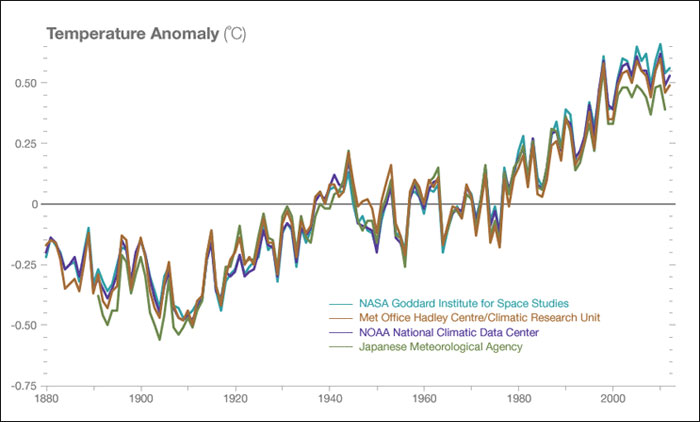
To start from the beginning: The state’s school board voted in December to adopt the Next Generation Science Standards, a framework that 26 states, including West Virginia, helped develop for nationwide use. The standards require students to look at and analyze evidence that humans are causing global warming. But one climate skeptic on the board feels this aspect of the curriculum is misleading; it “presupposes that global temperatures have risen over the past century, and, of course, there’s debate about that,” he told The Charleston Gazette. Hmm.

So, at his urging, the school board revised the standards to sow doubt about whether things are getting warmer (there is no scientific debate about this—they are) and whether humans are causing it (there is almost no scientific debate about this either—we almost certainly are). Students were to learn about Milankovitch cycles—changes in Earth’s orbit around the sun, one explanation for global warming popular among the mostly non-scientist community that doesn’t believe humans are responsible. (In fact, instead of explaining warming, Milankovitch cycles actually suggest that the earth’s temperatures should, at the moment, be stable or cooling.)

When the news broke that the standards had been quietly altered, it was met with a general outcry from educators inside and outside of the state, as well as parents. West Virginia University’s faculty senate voted unanimously to request that the school board reverse the changes. Many of those who spoke up were particularly upset that the public, including the teachers who would be discussing climate change in their classrooms, didn’t have a chance to weigh in.

“The West Virginia School Board made these final changes unilaterally,” said Elizabeth Strong, the president of the West Virginia Science Teachers Association. “The science was compromised by these modifications to the standards, specifically by casting doubt on the credibility of the evidence-based climate models and misrepresentation of trends in science when analyzing graphs dealing with temperature changes over time.”

National education groups were also not impressed. “They are taking the standards, they are calling it the next-generation science standards, and they are changing the composition of the science to match their own personal views,” Minda Berbeco of the National Center for Science Education told The New York Times. “That defeats the purpose of having standards developed by scientific advisory boards.”

The outcry, apparently, had the desired effect. After a public comment period on Wednesday, the school board reversed course and went back to the original, unaltered standards. Ryan Quinn, who has great coverage of the whole saga at The Charleston Gazette, reports that the state school board president “said she didn’t want to go against the work that West Virginia teachers did in vetting the standards and called the controversy a learning opportunity.”

Now the standards will be opened up for a 30-day public comment period and the board will take a final vote on the matter in March. Whatever the board settles on will go into effect during the 2016-2017 school year—and right now, signs indicate that they’ll stick with this latest decision to not muddy science in the science classroom.

Read this article: 

West Virginia Wanted to Teach Students Anti-Science Nonsense. Teachers Fought Back—and Won.

Posted in alo, Anchor, Citizen, Everyone, FF, G & F, GE, LAI, LG, ONA, PUR, Radius, Uncategorized, Venta | Tagged , , , , , , , , , , | Comments Off on West Virginia Wanted to Teach Students Anti-Science Nonsense. Teachers Fought Back—and Won.

Chart of the Day: Vaccinate Your Kids!

Mother Jones

<!DOCTYPE html PUBLIC “-//W3C//DTD HTML 4.0 Transitional//EN” “http://www.w3.org/TR/REC-html40/loose.dtd”>

Via the LA Times from a few months ago, here’s the rise in “personal belief” exemptions from state-mandated vaccinations among kindergartners in California:

And here’s where it’s happening:

In Los Angeles County, the rise in personal belief exemptions is most prominent in wealthy coastal and mountain communities, The Times analysis shows. The more than 150 schools with exemption rates of 8% or higher for at least one vaccine were located in census tracts where the incomes averaged $94,500 — nearly 60% higher than the county median.

….At Santa Cruz Montessori in the small coastal community of Aptos, about 7% of kindergartners in 2007 got belief exemptions. Last fall, that rate was 22.6%. Principal Kathy Rideout said the school has tried different approaches to encourage parents to immunize children. They asked a doctor to talk with fellow parents. They produced handouts emphasizing the importance of immunizations and asked parents seeking belief exemptions to get counseling from a healthcare practitioner. A state law that went into effect this year makes this a requirement. But none of it made much difference, Rideout said.

….“We have schools in California where the percent of children who exercise the personal belief exemption is well above 50%,” said Dr. Gil Chavez, deputy director of the California Department of Public Health’s Center for Infectious Diseases. “That’s going to be a challenge for any disease that is vaccine preventable.”

There are times when it’s appropriate to be skeptical of authority. This really isn’t one of them. “Big Vaccine” is not an issue in American life. Childhood vaccination is just a matter of public health that no one has any real motivation to lie about. Please don’t get sucked into this maelstrom. Get your kids vaccinated.

This article is from: 

Chart of the Day: Vaccinate Your Kids!

Posted in FF, GE, LG, ONA, Uncategorized, Venta | Tagged , , , , , , , , | Comments Off on Chart of the Day: Vaccinate Your Kids!

Friends Don’t Let Friends Walk Drunk

Mother Jones

<!DOCTYPE html PUBLIC “-//W3C//DTD HTML 4.0 Transitional//EN” “http://www.w3.org/TR/REC-html40/loose.dtd”>

The champagne’s been flowing since noon. You did the 12 grapes at midnight thing, danced to the requisite amount of Beyoncé, and it’s time to collapse. Car keys are off-limits, obviously, but you’ve heard all those Uber holiday pricing horror stories, and the train is bound to be a sweaty shit show. What’s more festive than weaving one’s merry way home from a New Year’s party, right?

Not so fast. It turns out New Year’s Day is the deadliest day to hoof it home, according to a 2005 study by the Insurance Institute for Highway Safety that looked at every pedestrian death from traffic collisions between 1986 and 2002. Nearly half of the fatal accidents that occurred on a January 1 took place between midnight and 6 a.m. And on an even more sobering note, 58 percent of pedestrians who died that day were legally drunk, according to their blood alcohol levels at time of death.

But maybe people have gotten way better at ambulating under the influence since 2002? I asked the IIHS to crunch the most recent data available from the National Highway Traffic Safety Administration. Turns out, not much has changed. Between 2008 and 2012, more pedestrians died in traffic crashes on New Year’s Day (and Halloween) than on other days of the year. IIHS also found that 59 percent of pedestrians killed on New Year’s Day were drunk, compared to 34 percent of pedestrians in fatal crashes every other day of the year.

There’s no mystery here: Drunk walkers are much more likely to engage in risky behavior like crossing against a sign, jaywalking, or lying down in the roadway, says Dan Gelinne, a researcher at University of North Carolina’s Highway Safety Research Center. “Intoxicated pedestrians frequently cannot fulfill the perceptual, cognitive, and physical skills required to cross safely in the complex traffic patterns seen in most urban cities,” wrote New York University School of Medicine researchers in a 2012 review paper in the journal Trauma.

Of course, NYE teetotalers still have drunk drivers to contend with. In nearly half of the traffic crashes that killed pedestrians in 2012, the driver or the walker (or both) had consumed alcohol, according to the NHTSA. But get this: Pedestrians in these crashes were more than twice as likely as drivers to have had a blood alcohol level greater or equal to 0.08 grams/deciliter, or above the legal driving limit—34 percent of walkers versus 14 percent of the drivers.

“Watching a sporting event on TV, you’re bound to see at least one ad reminding people not to drive after drinking,” says Gelinne. “The risks associated with drinking and walking aren’t as clear to the average person.” Freakonomics author Steven Levitt compared the risks of drunk driving versus drunk walking in his 2011 book SuperFreakonomics. “You find that on a per-mile basis,” he writes, “a drunk walker is eight times more likely to get killed than a drunk driver.”

If you’re lucky enough to survive the impact, healing from wounds becomes trickier when you have booze in your system. “Alcohol impairs the ability to fight infections, repair wounds, and recover from injuries,” says Elizabeth Kovacs, the Director of the Alcohol Research Program at Loyola University’s Stritch School of Medicine. Alcohol impairs the white blood cells responsible for clearing out debris and “eating garbage” on skin wounds, she says.

If you do miss the last train home and walking becomes unavoidable, try to remember these tips from a trauma surgeon: Don’t wear dark colors, stay out of the road as much as possible, and walk in a group (ideally with some sober folks sprinkled in).

Better street lighting and lower speed limits near popular hangouts would help too, says Gelinne, along with campaigns encouraging bartenders to cut the taps when solo customers start getting sloppy. In San Francisco, the Vision Zero campaign aims to eliminate all traffic deaths by 2024 by restructuring high-risk roadways and lowering speed limits. Los Angeles and New York have taken similar measures, thanks in part to $1.6 million in grants to promote pedestrian safety from the US Department of Transportation. IIHS’s Russ Rader points to new car technology like Subaru’s EyeSight camera system, which automatically hits the brakes if it thinks there’s a pedestrian in your path, as a good step forward, though a tiny fraction of cars are currently equipped with these features.

Bottom line: As you ring in 2015, if you can’t call a cab or squeeze onto the subway, your best option is to grab a pillow and stay put. Or reconsider your choice of merriment-enhancement for the night. As it happens, the safest day of the year to walk down the street is 4/20. Make of this what you will.

Additional reporting by Brett Brownell.

Icons by Luis Prado and Dan McCall from the Noun Project.

Continue at source: 

Friends Don’t Let Friends Walk Drunk

Posted in alo, Anchor, FF, GE, LAI, LG, ONA, Radius, Uncategorized, Venta | Tagged , , , , , , , , , , | Comments Off on Friends Don’t Let Friends Walk Drunk

Pakistani Taliban Kills At Least 145 People—Including More Than 100 Kids—in Savage School Massacre

Mother Jones

<!DOCTYPE html PUBLIC “-//W3C//DTD HTML 4.0 Transitional//EN” “http://www.w3.org/TR/REC-html40/loose.dtd”>

The Pakistani Taliban is claiming responsibility for a deadly attack inside a military-run school in Peshawar, in northwestern Pakistan, on Tuesday, that has left as many as 145 dead, more than 100 of them students. The BBC has described the attack as the deadliest massacre ever carried out by the Taliban in Pakistan.

Gunmen entered Army Public School and Degree College by scaling the walls of the campus’ main building. The attackers held students hostage for more than eight hours, as they moved systematically from classroom to classroom firing at children. Reuters quoted a local hospital as saying that the dead and injured were aged between 10 and 20 years old.

Six gunmen were reportedly killed in the gunfire. A spokesperson for the terrorist group says the massacre was a retaliation against earlier Pakistani military activities against militants in North Waziristan.

“We selected the army’s school for the attack because the government is targeting our families and females,” Taliban spokesman Muhammad Umar Khorasani said, according to Reuters. “We want them to feel the pain.”

Prime Minister Nawaz Sharif, who has traveled to Peshawar, has called for three days of national mourning.

Originally posted here:

Pakistani Taliban Kills At Least 145 People—Including More Than 100 Kids—in Savage School Massacre

Posted in alo, Anchor, FF, GE, LAI, LG, ONA, Radius, Uncategorized, Venta | Tagged , , , , , , , , | Comments Off on Pakistani Taliban Kills At Least 145 People—Including More Than 100 Kids—in Savage School Massacre

Arizona School District Cutting Contraception from High School Biology Text

Mother Jones

Via Steve Benen, here’s the latest from Gilbert, Arizona:

School district staff here will “edit” a high-school honors biology textbook after board members agreed that it does not align with state regulations on how abortion is to be presented to public-school students.

….The book in question, Campbell Biology: Concepts & Connections (Seventh Edition), has a chapter that discusses abstinence, birth-control methods, tubal ligations and vasectomies and drugs that can induce abortion.

….The board made its decision after listening to a presentation from Natalie Decker, a lawyer for Scottsdale-based Alliance Defending Freedom….Decker did not recommend a way to change the book but said it could be redacted or have additional information pasted in. “The cheapest, least disruptive way to solve the problem is to remove the page,” board member Daryl Colvin said.

This whole thing is ridiculous, and the prospect of taking a razor blade to p. 547 of this textbook is cringe-inducing. Hell, as near as anyone can tell, the book doesn’t even violate Arizona law, which requires public schools to present child birth and adoption as preferred options to elective abortion. Apparently there are just some folks in Gilbert who don’t like having the subject presented at all.

Still, ridiculous as this is, I do have a serious question to ask. I checked, and this is not a “Human Sexuality” text or a “Health and Family” book. It’s straight-up biology: photosynthesis, genes, evolution, eukaryotic cells, vertebrates, nervous systems, hormones, the immune system, etc. etc. So why, in a generic biology textbook, is there a special boxed page devoted to specific technical means of contraception in human beings? That really does seem like something pasted in to make a point, not because it follows naturally from a discussion of reproduction and embryonic development in class Mammalia.

So….what’s the point of including this in the first place? To annoy conservatives? To satisfy some obscure interest group? If this book were used in a sex ed class, that would be one thing. It would clearly belong. But in a standard biology text? I don’t really get it.

See the original post:  

Arizona School District Cutting Contraception from High School Biology Text

Posted in FF, GE, LG, ONA, Scotts, Uncategorized, Venta | Tagged , , , , , , , , , , | Comments Off on Arizona School District Cutting Contraception from High School Biology Text

Rate of Mass Shootings Has Tripled Since 2011, Harvard Research Shows

Mother Jones

<!DOCTYPE html PUBLIC “-//W3C//DTD HTML 4.0 Transitional//EN” “http://www.w3.org/TR/REC-html40/loose.dtd”>

(Click to enlarge)

Editor’s note: The authors are scholars from the Harvard School of Public Health; this article details their independent research, which is based on the mass shootings data Mother Jones has collected and published since 2012.

In June, following gun attacks in California and Oregon, President Obama remarked that mass shootings are “becoming the norm.” But some commentators claim that mass shootings are not on the rise. So which is it?

Have mass shootings become more common?
According to our statistical analysis of more than three decades of data, in 2011 the United States entered a new period in which mass shootings are occurring more frequently. Our analysis used data compiled by Mother Jones on attacks that took place in public, in which the shooter and the victims generally were unrelated and unknown to each other, and in which the shooter murdered four or more people. (An incident with four or more homicide victims was the threshold count for mass killing established by the FBI a decade ago; a federal law signed by President Obama in 2013 defined the threshold as three or more victims killed.)

So why do we keep hearing in the media that mass shootings have not increased?
This view stems from the work of Northeastern University criminologist James Alan Fox, who has long maintained that mass shootings are a stable phenomenon. (“The growing menace lies more in our fears than in the facts,” he has said.) But Fox’s oftcited claim is based on a misguided approach to studying the problem: The data he uses includes all homicides in which four or more people were murdered with a gun. His analysis, which counts the number of events per year, lumps together mass shootings in public places with a far more numerous set of mass murders that are contextually distinct—a majority of which stem from domestic violence and occur in private homes. Fox’s annual count and use of overly broad data including many types of mass killings fail to detect the recent shift in public mass shootings.

Our method and how it works
We used a Statistical Process Control (SPC) method that analyzes the time interval between each incident. This is more effective than counting the annual number of incidents because it is more sensitive to detecting changes in frequency when the number of events per year is small, as is the case with public mass shootings. SPC methods were first developed for industry, to identify changes in the process underlying a specific problem, so that root causes of that problem could be better assessed. This approach has proved effective in healthcare, for example, helping to reduce surgical errors. For the method to work, it is crucial to analyze events that are qualitatively similar. In other words, to assess the rate of public mass shootings it is necessary to exclude mass killings that are qualitatively distinct, like those taking place in private homes.

What our analysis reveals
As the chart above shows, a public mass shooting occurred on average every 172 days since 1982. The orange reference line depicts this average; data points below the orange line indicate shorter intervals between incidents, i.e. mass shootings occurring at a faster pace. Since September 6, 2011, there have been 14 public mass shootings at an average interval of less than 172 days. A run of nine points or more below the orange average line is considered a statistical signal that the underlying process has changed. (A nine-point run below the average is about as likely to occur by chance as flipping a coin nine times and getting heads nine times in a row—the probability is less than 1 percent. The 14-point run we see here is even more unlikely to have occurred by chance.) The standard interpretation of this chart would be that mass shootings, as of September 2011, are now part of a new, accelerated, process.

Because the chart signals that a new process started around September 2011, we can divide the chart at that point to analyze each phase separately. In the first 29-year phase, mass shootings occurred every 200 days on average. In the subsequent three-year phase, mass shootings occurred every 64 days on average:

(Click to enlarge)

What does the new FBI report on mass gun violence show?
In late September, the FBI released a study showing an increase in the frequency of “active shooter” cases between 2000 and 2013. The FBI analyzed 160 cases, which it defined as any incident in which shooters are “actively engaged in killing or attempting to kill people” in a public place, regardless of the number of casualties. Our analysis of the FBI’s data using the SPC method corroborates the FBI’s findings that “active shooter” incidents have become more frequent.

Our analysis further reveals that the FBI data overlaps closely with the Mother Jones data. The FBI’s data set contains 44 cases in which four or more people were murdered; as the chart below shows, the process underlying this set of events shifted between late 2011 and early 2012, with mass shootings occurring more frequently since.

The FBI and Mother Jones used similar criteria. Both studies excluded mass killings in private homes related to domestic violence as well as attacks stemming from drug and gang-related activity, and both included certain attacks involving more than one shooter. The discovery methods for collecting data differed to some degree, with the FBI using various law enforcement records and reports in addition to media reports, which were the main source of the Mother Jones data. That the results of the two studies are so similar reinforces our finding that public mass shootings have increased.

(Click to enlarge)

So mass shootings have become more frequent. What now?
Though we now know that public mass shootings have been occurring more often, the reasons why have yet to be identified. However we come to understand the complex factors that drive these events, it is unlikely that this recent shift is the result of social and cultural factors that have remained relatively constant over the past decade—such as the prevalence of mental illness. While many mass shooters had mental health problems, as the Mother Jones data shows, there is no reason to believe that there has been an increase in mental illness rates in the last several years that could help explain the rise in mass shootings. (In fact, federal research on the prevalence of severe mental illness shows a decrease in recent years.) As we search for answers with the common goal of diminishing mass shootings, studying them effectively remains key, not least for gauging the success of any policies aimed at reducing the frequency and toll of these events.

(Click to enlarge)

See original article: 

Rate of Mass Shootings Has Tripled Since 2011, Harvard Research Shows

Posted in Anchor, FF, GE, LAI, LG, Northeastern, ONA, Radius, Uncategorized, Venta | Tagged , , , , , , , , , , | Comments Off on Rate of Mass Shootings Has Tripled Since 2011, Harvard Research Shows

Texas Official Is Freaking Out About School "Meatless Monday"

Mother Jones

<!DOCTYPE html PUBLIC “-//W3C//DTD HTML 4.0 Transitional//EN” “http://www.w3.org/TR/REC-html40/loose.dtd”>

This story originally appeared in Huffington Post and is republished here as part of the Climate Desk collaboration.

A top Texas official denounced school districts that have scaled back on serving meat one day a week, accusing them of succumbing to a “carefully orchestrated campaign” to force Americans to become vegetarians.

Texas Agriculture Commissioner Todd Staples last week criticized districts that have adopted “meatless Monday” policies in an op-ed in the Austin American-Statesman. He specifically attacked Dripping Springs Independent School District, near Austin.

“Restricting children’s meal choice to not include meat is irresponsible and has no place in our schools,” Staples wrote. “This activist movement called ‘Meatless Monday’ is a carefully orchestrated campaign that seeks to eliminate meat from Americans’ diets seven days a week—starting with Mondays.”

The Dripping Springs district adopted meatless Monday to encourage healthy eating that is environmentally conscious, a local CBS affiliate reported. Industrial meat production is resource-intensive and contributes to greenhouse gas emissions.

“Are we having a war on meat in Dripping Springs? Definitely not,” John Crowley, head of nutrition services for the school district, told the CBS affiliate. “We’re trying to think outside the box, and we serve a lot of Texas beef on our menus. We’ve had requests for more vegetarian options, and I thought, ‘Why don’t I give it a try and see how it’s received by kids?'”

Dripping Springs students are still allowed to bring meat lunches on Mondays. Last week, a district elementary school served options that included cheese pizza, black bean burritos, and vegetarian chili, reported KVUE-TV.

“In no way are kids going deficient in protein by not having actual meat, fish or poultry products served today,” Crowley told the station. “We hope that we’re meeting the parents’ and the kids’ needs and serving things that they like and things that are healthy.”

Staples, however, wrote that he sees meatless Mondays as a way for activists “to mandate their lifestyles on others.”

Staples, who has received more than $100,000 in campaign contributions from beef producers and ranchers over the past few years, has lashed out against meatless Mondays in the past, according to the Austin-American Statesman. Staples branded as “treasonous” a U.S. Department of Agriculture suggestion in 2012 that its employees go green by participating in meatless Monday.

Bryan Black, director of communications for the Texas Department of Agriculture, said campaign contributions are unrelated to Staples’ position on meat-eating.

“He’s focused on this issue because children need the freedom to eat meat,” Black told The Huffington Post. “I think it would be important to go back and look at all his contributions. He’s received millions of dollars from Texans across our state. In this last election he received more than $3 million, so to try to pinpoint that he’s doing this simply for farmers and ranchers who gave him money is untrue.”

School districts around the country have embraced meatless Monday in recent years. In 2009, a Baltimore district became the first in the country to adopt the initiative, according to Education Week. A district in Houston also participates.

Read the article: 

Texas Official Is Freaking Out About School "Meatless Monday"

Posted in Anchor, Everyone, FF, GE, LAI, LG, ONA, Radius, Uncategorized, Venta, Vintage | Tagged , , , , , , , , , | Comments Off on Texas Official Is Freaking Out About School "Meatless Monday"

23 Reasons Why Jeb Bush Should Think Twice About Running for President

Mother Jones

<!DOCTYPE html PUBLIC “-//W3C//DTD HTML 4.0 Transitional//EN” “http://www.w3.org/TR/REC-html40/loose.dtd”>

For months, former Florida Gov. Jeb Bush has been mentioned as a possible 2016 candidate, with the conventional wisdom holding that he was the one GOP contender the party’s donor class could unite behind. “Jeb has the capacity to bring the party together,” Fred Malek, a top Republican operative, told the Washington Post in March. Bush has yet to signal whether he’ll seek to follow in the footsteps of his older brother and their father by launching a bid for the White House, but the Wall Street Journal reported last week that his advisers have reached out to key fundraisers and consultants to ask them to hold off on throwing in with a presidential candidate until Bush makes up his mind sometime after the November election. One Bush family confidant told the Journal that there was a better than 50-50 chance that Bush would run.

But there are plenty of reasons why Bush should think long and hard before subjecting himself (and his family) to the ruthless scrutiny of a presidential campaign. His history is an opposition researcher’s dream—clouded by embarrassing family episodes, allegations of philandering, offensive comments to black voters, and dubious business dealings.

Many of these past deeds and misdeeds will no doubt be put under the microscope should Bush run in 2016. Here are 23 reasons why he might want to take a pass—and it’s only a partial list:

The shopaholic: Customs agents detained Bush’s wife, Columba, in 1999 at the Atlanta airport and fined her $4,100 for failing to declare the more than $19,000 in clothes and jewelry she’d purchased in Paris.

The addict: In 2002, Bush’s daughter Noelle was arrested for trying to purchase Xanax with a bogus prescription. In rehab, she was caught with a “white rock like substance” thought to be crack cocaine. Between 1995 and 2002, she racked up seven speeding tickets, five other traffic violations, and was involved in three wrecks.

The stalker: In 1994, Bush’s eldest son, George P., broke into his ex-girlfriend’s house. After fleeing her father, George returned to the scene and drove his SUV into their front lawn. His ex told the police that young George had “been a problem” since the breakup. Her father declined to press charges.

The other son: In 2000, cops discovered Bush’s 16-year-old son “Jebby” boffing a 17-year-old girl in a car in a mall parking lot. The police reported the incident of sexual misconduct, but Jebby wasn’t arrested.

The black sheep brother: Volumes have been written about Jeb’s siblings, especially former president George W. Bush. But his brother Neil, who helped bankrupt a savings and loan and once toured Asia with the late Rev. Sun Myung Moon while he was promoting the development of a 51-mile underwater highway between Russia and Alaska, will give reporters plenty to chew on.

The fraudster: In 1986, Camilo Padreda, who had been a counterintelligence officer for Cuban dictator Fulgencio Batista in the 1950s, hired Bush to find tenants for office buildings financed with US Department of Housing and Urban Development-backed loans. Bush took the gig, despite the fact that four years earlier Padreda had been indicted for embezzling $500,000 from a Texas savings and loan. Those charges were dropped, but in 1989 Padreda pleaded guilty to defrauding HUD of millions. (Bush was not involved in that scam, and it’s unclear whether he was aware of the savings and loan indictment when he teamed up with Padreda.)

The international fugitive: In 1986, Miguel Recarey, who’d done 30 days in jail for income tax evasion in the 1970s, paid Bush $75,000 to help him find a new headquarters for his health care company. The company never moved, but while Bush’s father was serving as vice president, Bush lobbied the US Department of Health and Human Services to help Recarey access millions in Medicare funds. Bush also helped arrange for Recarey’s company to provide free medical care to the Nicaraguan contras. Recarey was later indicted for a massive Medicare fraud scheme but fled the country before trial. He is now an international fugitive.

The bribery case: In 1988, Bush formed a company with GOP donor David Eller to market water pumps manufactured by Moving Water Industries, another Eller business, to foreign countries. The company used Bush’s White House ties to drum up business. In 1992, at the behest of MWI, the Export-Import Bank approved $74 million in US-backed loans to Nigeria to buy water pumps from Eller’s company. The Justice Department later alleged in a 2002 civil suit that about $28 million of those loans were used to bribe a Nigerian official. Bush was not implicated, but in November 2013, a jury found MWI guilty of making 58 false claims to the Export-Import Bank on its applications for the Nigerian loans. A federal judge fined the company $580,000. Bush escaped testifying after the judge determined his testimony wouldn’t be relevant to the central issue in the case.

The fortunate son: Cuban American real estate developer Armando Codina was the Florida chair of George H.W. Bush’s unsuccessful 1980 bid for the GOP presidential nomination. He loved the Bush family so much that when Jeb first moved to Miami in the early 1980s, he made Bush a partner in his real estate company and gave him 40 percent of the profits—even though Jeb had no real estate experience or money to invest. In 1985, Bush and Codina bought an office building partially financed by a savings and loan that later failed. The $4.56 million loan went into default, but federal regulators gave Bush and his partner a pass. Instead of foreclosing, they merely asked them to repay $500,000 of the loan. Taxpayers picked up the rest. In 1991, Bush and Codina sold the building for $8 million.

The shady company: In 2007, Bush joined the board of InnoVida, a building materials-manufacturing startup founded by a businessman whose previous company had gone bankrupt under suspicious circumstances. Bush and his fellow board members subsequently failed to notice that InnoVida officials had used forged documents to fake solvency, hidden the company’s financial problems, and misappropriated $40 million. The company’s Maserati-driving founder eventually went to jail for money laundering, and investors lost their shirts when the company went bankrupt in 2011. Last year, Bush agreed to repay the $270,000 he was paid by the company as a consultant to reimburse defrauded investors.

The Big Finance fail: Bush signed on as a paid adviser to the financial giant Lehman Brothers in 2007, just as the firm was on the brink of collapse. The company hoped he would use his political ties to rescue it, but he couldn’t even convince Mexican billionaire Carlos Slim to throw some money into that pit.

The terrorist: In 1989, Bush successfully lobbied his father, who was then serving as president, for the release of Cuban terrorist Orlando Bosch, who allegedly orchestrated the bombing of a Cuban airliner that killed 73 people in 1976 and other terrorist attacks. Bosch, who was in a federal prison on an immigration violation and dubbed an “unrepentant terrorist” by then-Attorney General Dick Thornburgh, was a cause célèbre for Miami’s influential Cuban population—a voting bloc that Jeb needed to launch his political career.

The black vote: During his first failed campaign for governor in 1994, Bush was asked in a debate what he would do to help African Americans. “Probably nothing,” he replied. In 2000, his administration purged 12,000 eligible voters from the rolls because they were incorrectly identified as convicted felons. More than 40 percent of them were African Americans.

The welfare wife: During his 1994 campaign, Bush said that women on welfare “should be able to get their life together and find a husband.”

The Playboy bunny: In 1999, Bush appointed Cynthia Henderson as his secretary of business regulation. Bush later transferred Henderson, who had worked her way through law school as a bunny at the St. Petersburg Playboy club, to another job in his administration, after she got caught taking a trip to the Kentucky Derby on a corporate jet owned by a company she regulated and accepting lodging and tickets to the event from an association of race track regulators. (Henderson’s boyfriend, a Florida real estate developer, eventually paid the cost of the trip.) Rumors that Henderson and Bush were having an affair forced him to publicly deny philandering.

The socialist: While at the elite prep school Andover, Bush was briefly a member of the socialist club. He also smoked pot.

The failed charter school: After wining just 4 percent of the black vote in his first failed run for governor, Bush teamed up with the Greater Miami Urban League to start Florida’s first charter school. In 1999, the state implemented a school grading system at Bush’s insistence. His own charter school received a D. By 2008, the school had earned a C- and was $1 million in debt; the state shut it down that year.

The shady charter school operator: In 2010, Bush gave the commencement speech for the Electronic Classroom of Tomorrow, an Ohio online charter school owned by William Lager, a big GOP donor who has served on Bush’s Digital Learning Council, which promotes for-profit online schools like ECOT. (Lager’s companies have also sponsored conferences hosted by Bush’s education foundation.) The school was far from a model for the future. At the time Bush gave his speech, ECOT’s graduation rate had never exceeded 40 percent. A 2001 state audit found that though the state had paid the school tuition for more than 2,000 students one month, only seven students had logged on to ECOT’s computer system. When state auditors couldn’t find the rest of the school’s alleged student body, ECOT was forced to repay Ohio $1.7 million. School founder William Lager’s private companies have earned more than $100 million from online schools that perform worse than any of Ohio’s worst brick-and-mortar public schools.

The cheaters: In 2010, Bush and his education reform organization, the Foundation for Excellence in Education, created a group of school superintendents and other high-ranking officials called “Chiefs for Change” to advance the Florida model of education, which emphasizes accountability and emphasized giving schools letter grades based on performance, especially standardized test scores. One of the original eight chiefs was caught inflating the grade of a lackluster charter school funded by a Republican donor. The office of another was caught manipulating test score data.

The IRS complaint: In October, a New Mexico advocacy group filed a complaint with the IRS alleging that Bush’s Foundation for Excellence in Education failed to disclose thousands of dollars it paid to bring public school superintendents, education officials, and lawmakers to the group’s events, where they had private “VIP” meetings with the foundation’s for-profit ed-tech company sponsors. The complaint alleges that Bush’s foundation disguised travel payments as “scholarships” to hide the fact that the nonprofit was facilitating lobbying between big corporations and public officials. The IRS has not commented on the complaint. Bush’s foundation issued a statement dismissing the allegations as politically motivated.

The immigration book: Last year, Bush published Immigration Wars, a book that took a hardline position against a path to citizenship for illegal immigrants. After going on TV to push the book’s anti-path-to-citizenship position—and being accused of having changed his position to avoid offending the tea party—he quickly reverted to his previous stance of supporting citizenship.

The Reagan comment: In 2012, Bush said publicly that Ronald Reagan would have had trouble getting his party’s presidential nomination today—meaning that the tea party had driven the GOP too far too the right. He told editors at Bloomberg, “Back to my dad’s time and Ronald Reagan’s time—they got a lot of stuff done with a lot of bipartisan support.” Reagan “would be criticized for doing the things that he did.”

The mother: In April, former First Lady Barbara Bush appeared on the Today Show and said that her son would be “by far the best qualified man, but…we’ve had enough Bushes.”

Continue reading:  

23 Reasons Why Jeb Bush Should Think Twice About Running for President

Posted in Anchor, Bunn, Citizen, Cyber, FF, GE, LAI, LG, ONA, PUR, Radius, Uncategorized, Venta | Tagged , , , , , , , | Comments Off on 23 Reasons Why Jeb Bush Should Think Twice About Running for President

Compton to District Security Guards: Go Ahead, Bring Your AR-15s to School

Mother Jones

<!DOCTYPE html PUBLIC “-//W3C//DTD HTML 4.0 Transitional//EN” “http://www.w3.org/TR/REC-html40/loose.dtd”>

When students in the Compton Unified School District return to classrooms on Monday, some of them will have new pencils or notebooks. Their teachers will have new textbooks. But this year, the district’s campus police will be getting an upgrade, too: AR-15 assault rifles.

The board of the Los Angeles-area school district approved a measure to allow the campus cops to carry the new guns in July. The district’s police chief, William Wu, told the board that equipping school police with semi-automatic AR-15s is intended to ensure student safety.

“This is our objective—save lives, bottom line,” Wu told the board.

Crime is a serious problem in Compton, an independent jurisdiction south of downtown Los Angeles. In the 12 months preceding July, the city of nearly 100,000 experienced 28 murders, making it the 11th-deadliest neighborhood in the county, according to a data analysis by the Los Angeles Times.

But the choice to make Compton school police the latest local law enforcement agency to adopt military-style weapons was less about dealing with street crime than it was about preventing more exotic incidents like mass shootings. At the board meeting, Wu cited an FBI report released in January that found that 5 percent of “active shooters”— or shooters which are conducting an ongoing assault on a group of people—wore body armor, which can stop most bullets fired from handguns. To make his case, Wu cited a range of examples, including the Mumbai terrorist attacks and the University of Texas shooting in 1966, in which a student killed 16 people from the campus clock tower, out of range of police sidearms. (The student was eventually killed when a group of police climbed the tower and shot him at close range.)

“They will continue until they are stopped,” Wu said, at which point a board member interjected.

“No, they will continue until we stop them,” he said. “Compton Unified School Police…holding it down.”

“These rifles give us greater flexibility in dealing with a person with bad intent who comes onto any of our campuses,” Wu said in a statement. “The officers will keep the rifles in the trunks of their cars, unless they are needed.”

Compton is not the first district in the Southern California to allow AR-15s on its campuses. At the meeting, Wu said that Los Angeles, Baldwin Park, Santa Ana, Fontana, and San Bernardino all allow their officers to use the same weapons.

Compton school police last made news in May 2013, when a group of parents and students filed a suit against the department, alleging a pattern of racial profiling and abuse targeting Latino students. The complaint said that officers beat, pepper-sprayed, and put a chokehold on a bystander who was recording an arrest with his iPod. The group also claimed that Compton school police used excessive force against students and parents who complained that English-as-a-second-language programs were underfunded. (The case is ongoing.)

Wu said at the board meeting that seven officers have already been trained to use the new weapons. He said all officers would be purchasing their own weapons. The guns will be the officers’ personal property, but they could be bringing them to work as early as September.

Read original article: 

Compton to District Security Guards: Go Ahead, Bring Your AR-15s to School

Posted in Anchor, FF, GE, LAI, LG, ONA, PUR, Radius, Uncategorized, Venta | Tagged , , , , , , , , , , , | Comments Off on Compton to District Security Guards: Go Ahead, Bring Your AR-15s to School

Voter Registration Drives in Ferguson Are "Disgusting," Says Missouri GOP Leader

Mother Jones

<!DOCTYPE html PUBLIC “-//W3C//DTD HTML 4.0 Transitional//EN” “http://www.w3.org/TR/REC-html40/loose.dtd”>

Over the last couple days, voter registration booths have been popping up in Ferguson. There was one by the ruined site of the recently burned-down QuikTrip convenience store, which has become a central gathering site of the protests, and another near the site where Michael Brown was shot.

Voter turnout was just 12 percent in Ferguson’s last municipal election, and in a city that’s 60 percent black, virtually all city officials are white. In December, the black superintendent of the Ferguson-Florissant school district was fired by the then all-white school board, and the longtime St. Louis county executive, who is black, recently lost his seat to a white opponent in a race seen as “racially charged.” “Five thousand new voters will transform the city from top to bottom,” said Jesse Jackson Sr., who told the St. Louis Post-Dispatch on Monday that he was meeting with local clergy to organize a door-to-door voter registration drive.

But the prospect of more registered black voters has greatly perturbed the executive director of Missouri’s Republican Party, Matt Wills, who expressed outrage at the new registration booths to Breitbart News Monday:

“If that’s not fanning the political flames, I don’t know what is,” Wills said. “I think it’s not only disgusting but completely inappropriate…Injecting race into this conversation and into this tragedy, not only is not helpful, but it doesn’t help a continued conversation of justice and peace.”

While some on Twitter echoed Wills’ sentiments and painted the voter efforts as Democratic opportunism, other political leaders in Missouri distanced themselves from Wills’ comments. Republican state Sen. Ryan Silvey of Kansas City tweeted, “I have no problem w/ protesters, or anyone, getting registered to vote. How do we keep our gov’t accountable if not by ballot?” And he had more to say later:

In April, an editorial in the Kansas City Star denounced “cheap” tactics by the Missouri GOP to “make voting more difficult for certain citizens, who are most likely to be elderly, low-income, students or minorities. They’re not even subtle about it.” A proposed amendment to the state constitution would require photo ID at the polls, and a proposal to bring early voting to Missouri would disallow it on Sundays—a big day for black voters. The Star pointed out that the photo ID law would cost the state over $6 million next year, “a huge cost, especially because Republicans have been able to produce zero examples of voter identity fraud in Missouri.” In fact, as my colleague Kevin Drum has exhaustively reported, incidents of voter fraud anywhere in the country are microscopically few; the New York Times found just 86 cases from 2002 to 2006, for instance.

“Elected officials don’t have to care about black citizens as long as they don’t fear them at the ballot box,” Dorothy A. Brown, a professor of law at Emory University’s School of Law who’s written a book on race and the law, noted on CNN.com last week. If anything, the Missouri GOP may be on track to increase the number of voters determined to put that notion into practice.

Link:  

Voter Registration Drives in Ferguson Are "Disgusting," Says Missouri GOP Leader

Posted in Anchor, Citizen, FF, GE, LG, ONA, Radius, Uncategorized, Venta, Vintage | Tagged , , , , , , , , , | Comments Off on Voter Registration Drives in Ferguson Are "Disgusting," Says Missouri GOP Leader