Tag Archives: china

U.N. lists air pollution as carcinogen

U.N. lists air pollution as carcinogen

Shutterstock

If you want to avoid lung cancer, the United Nation’s cancer-research body has some advice for you: Don’t breathe.

The International Agency for Research on Cancer on Thursday added air pollution, and the particulate matter that it contains, to its list of carcinogens.

The airborne poisons were classified as “Group 1″ carcinogens, meaning there is “sufficient evidence” that they cause cancer in humans. They are mostly produced through the burning of fossil fuels in vehicles, power plants, and stoves.

And it’s not just lung cancer that can be triggered by air pollution. In a statement [PDF], the agency noted “a positive association” between polluted air and bladder cancer.

“Our task was to evaluate the air everyone breathes rather than focus on specific air pollutants,” agency official Dana Loomis told Reuters. “The results from the reviewed studies point in the same direction: the risk of developing lung cancer is significantly increased in people exposed to air pollution.”

The decision follows findings that air pollution killed 3.2 million people in 2010, including 233,000 cancer-related deaths. Most of the deaths occurred in India, China, and other developing countries with large populations. The Clean Air Act helped dramatically clean up the air that Americans breathe, but anybody who has visited Los Angeles or California’s Central Valley knows that problems persist in the West.

Air pollution and particulate matter now join a list [PDF], nicknamed the encyclopedia of carcinogens, that also contains such nasties as asbestos, plutonium, hepatitis, and tobacco smoke. Oh, and sun rays, estrogen therapy, Chinese-style salted fish, and booze.


Source
Outdoor air pollution a leading environmental cause of cancer deaths, IARC
UN agency calls outdoor air pollution leading cause of cancer, Reuters

John Upton is a science fan and green news boffin who tweets, posts articles to Facebook, and blogs about ecology. He welcomes reader questions, tips, and incoherent rants: johnupton@gmail.com.

Find this article interesting? Donate now to support our work.Read more: Climate & Energy

Source – 

U.N. lists air pollution as carcinogen

Posted in Anchor, FF, G & F, GE, ONA, Uncategorized | Tagged , , , , , , , , , , | Comments Off on U.N. lists air pollution as carcinogen

TV Stars Lead Online Push to Curb China’s Shark Fin Appetite

Celebrities using social media spearhead a Chinese campaign to conserve sharks by cutting demand for shark fin soup. Link: TV Stars Lead Online Push to Curb China’s Shark Fin Appetite Related Articles As China’s demand for grain rises, its water tables drop How Do You Get People to Give a Damn About Climate Change? For Climate Scientists, Shutdown Casts Long Shadow

View article: 

TV Stars Lead Online Push to Curb China’s Shark Fin Appetite

Posted in alo, alternative energy, Casio, Citadel, eco-friendly, FF, G & F, GE, LAI, Monterey, ONA, PUR, solar, solar power, Uncategorized | Tagged , , , , , , , | Comments Off on TV Stars Lead Online Push to Curb China’s Shark Fin Appetite

Dot Earth Blog: TV Stars Lead Online Push to Curb China’s Shark Fin Appetite

Celebrities using social media spearhead a Chinese campaign to conserve sharks by cutting demand for shark fin soup. View original:  Dot Earth Blog: TV Stars Lead Online Push to Curb China’s Shark Fin Appetite ; ;Related ArticlesTV Stars Lead Online Push to Curb China’s Shark Fin AppetiteSinosphere Blog: Amid Heavy Pollution, Beijing Issues Emergency Rules to Protect CitizensHit by Low Prices, Lobstermen Are at Odds in Maine and Canada ;

Link: 

Dot Earth Blog: TV Stars Lead Online Push to Curb China’s Shark Fin Appetite

Posted in alo, Casio, Citadel, Citizen, eco-friendly, FF, G & F, GE, LAI, Monterey, ONA, PUR, solar, solar power, Uncategorized | Tagged , , , , , , , , , , , | Comments Off on Dot Earth Blog: TV Stars Lead Online Push to Curb China’s Shark Fin Appetite

America’s Chinatowns Are Disappearing

Image: Dan Nguyen

When was the last time you took a trip to Chinatown? You might want to head there soon, because they might not be around for much longer. According to the Asian American Legal Defense and Education fund, Chinatowns all over the United States are being squeezed into smaller and smaller areas due to gentrification. At Wired‘s Map Labs blog, Greg Miller breaks down this break-down. Based on the maps, Boston has it the worst:

According to Census records, the percentage of the population that claims Asian heritage in Boston’s Chinatown dropped from 70 percent in 1990 to 46 percent in 2010. New York and Philadelphia’s Chinatowns did not see big change either way by that measure during the same time period, but in all three cities the proportion of homes inhabited by families and the proportion of children in the population dropped considerably. To Li that suggests that multigenerational immigrant homes are breaking up — or moving out.

To figure out the composition of these Chinatowns, volunteers went out and surveyed what types of restaurants, businesses and residential properties were in the area. Restaurants in particular are good barometers for a neighborhood’s service to immigrants. In other words, more Asian restaurants means a more robust Chinatown. But as the survey found, other restaurants and shops are moving in quickly.

The very existence of Chinatowns are a product of discrimination—immigrants created these communities to live in because they were excluded from pre-existing ones. And that tradition continues today, according to Bethany Li, author of the report. But with pressure from condominiums and high-end shops from all sides, many Chinatowns are slowly shrinking. While communities are fighting back, Li’s report says that without help they’ll be pushed out again:

Without the fights against unfettered development led by members from groups like the Chinese Progressive Association in Boston, Chinese Staff & Workers’ Association in New York, and Asian Americans United in Philadelphia, these Chinatowns would likely contain even more high-end and institutional expansion. City governments removed and replaced working-class immigrant residential and commercial land uses in each of these Chinatowns.

Bonnie Tsui at Atlantic Cities breaks down what some of those actions might be:

What’s to be done? Recommendations include allocating public land and funds for low-income housing development and retention at a more reasonable proportion to current high-end development; supporting small, local businesses to offset rising rents, given the symbiotic relationship with residents; prioritizing public green spaces; and engaging community organizations, residents, and the larger satellite communities to maintain Chinatowns as shared cultural history and home to working-class immigrants.

For many, Chinatowns are an attraction to a city, and many cities boast about their robust cultural neighborhoods. But they might not be around for much longer.

More from Smithsonian.com:

The Many Chinatowns of North America
San Francisco’s Chinatown at night

Link to original:  

America’s Chinatowns Are Disappearing

Posted in ATTRA, FF, GE, LAI, ONA, Smith's, Uncategorized | Tagged , , , , , , , , , , | Comments Off on America’s Chinatowns Are Disappearing

Wasted food is a huge climate problem

Wasted food is a huge climate problem

Shutterstock

Global warmer.

If wasted food became its own pungent country, it would be the world’s third biggest contributor to climate change.

The United Nations Food and Agriculture Organization had previously determined that roughly one-third of food is wasted around the world. Now it has used those figures to calculate the environmental impacts of farming food that is never eaten, along with the climate-changing effects of the methane that escapes from food as it rots.

The results, published in a new report [PDF], were as nauseating as a grub-infested apple:

Without accounting for [greenhouse gas] emissions from land use change, the carbon footprint of food produced and not eaten is estimated to 3.3 Gtonnes of CO2 equivalent: as such, food wastage ranks as the third top emitter after USA and China. Globally, the blue water footprint (i.e. the consumption of surface and groundwater resources) of food wastage is about 250 km3, which is equivalent to the annual water discharge of the Volga River, or three times the volume of Lake Geneva. Finally, produced but uneaten food vainly occupies almost 1.4 billion hectares of land; this represents close to 30 percent of the world’s agricultural land area.

In the West, most of our food waste occurs because we toss out leftovers and unused ingredients — and because stores won’t sell ugly produce. The FAO found that some farmers dump 20 to 40 percent of their harvest because it “doesn’t meet retailer’s cosmetic specifications.” In developing countries, by contrast, most of the wasted food rots somewhere between the field and the market because of insufficient refrigeration and inefficient supply chains.

The FAO estimates that when we throw away more than 1 gigaton of food every year, we are throwing away $750 billion with it — an estimate that doesn’t include wasted seafood and bycatch.

“All of us — farmers and fishers; food processors and supermarkets; local and national governments; individual consumers — must make changes at every link of the human food chain to prevent food wastage from happening in the first place, and re-use or recycle it when we can’t,” FAO Director-General José Graziano da Silva said in a statement. “We simply cannot allow one-third of all the food we produce to go to waste or be lost because of inappropriate practices, when 870 million people go hungry every day.”

John Upton is a science fan and green news boffin who tweets, posts articles to Facebook, and blogs about ecology. He welcomes reader questions, tips, and incoherent rants: johnupton@gmail.com.Find this article interesting? Donate now to support our work.Read more: Climate & Energy

,

Food

Taken from:

Wasted food is a huge climate problem

Posted in alo, ALPHA, Anchor, FF, food processor, G & F, GE, LAI, LG, ONA, solar, solar power, Uncategorized | Tagged , , , , , , , , , , , | Comments Off on Wasted food is a huge climate problem

Hay contaminated with Monsanto GMOs rejected for export

Hay contaminated with Monsanto GMOs rejected for export

Shutterstock

Bad news for Washington farmers?

Pity a Washington farmer who grew a crop of GMO-free alfalfa only to have it rejected for export — because tests showed it had been tainted by a genetically modified variety.

An exporter found the farmer’s hay to have been contaminated with Roundup-resilient alfalfa, which was developed by Monsanto and approved for use by the U.S. Department of Agriculture in 2011. Farmers who grow the GMO alfalfa can douse their fields with the herbicide Roundup without hurting the crop.

Reuters reports:

GMO opponents have warned for more than a decade that, because alfalfa is a perennial crop largely pollinated by honeybees, it would be almost impossible to keep the genetically modified version from mixing with conventional alfalfa. Cross-fertilization could devastate conventional and organic growers’ businesses, they said.

But even though U.S. regulators have deemed biotech alfalfa to be as safe as non-GMO varieties, many foreign buyers will not accept the genetically modified type because of concerns about the health and environmental safety of such crops.

ACX Pacific — a major exporter of alfalfa and other grass hay off the Pacific Northwest to countries that include Japan, Korea, China and parts of the Middle East — will not accept any GMO because so many foreign buyers are so opposed to it.

And domestic organic dairy farmers have said that any contamination of the hay they feed their animals could hurt their sales.

“This is terribly serious,” said Washington state senator Maralyn Chase, a Democrat who fears alfalfa exports could be lost if it is proven that GMO alfalfa has mixed in with conventional supplies.

Washington’s agricultural sector will be holding its breath until Friday — and that’s not because of all the poisonous herbicides in the air. That’s when Washington state ag officials should be done with their own lab analysis of the farmer’s samples, which could confirm whether the crop was indeed tainted and possibly help identify the source of contamination.


Source
Exclusive: Washington state testing alfalfa for GMO contamination, Reuters

John Upton is a science fan and green news boffin who tweets, posts articles to Facebook, and blogs about ecology. He welcomes reader questions, tips, and incoherent rants: johnupton@gmail.com.

Find this article interesting? Donate now to support our work.Read more: Business & Technology

,

Food

View the original here:  

Hay contaminated with Monsanto GMOs rejected for export

Posted in ALPHA, Anchor, FF, G & F, GE, LG, ONA, organic, oven, solar, solar panels, Uncategorized | Tagged , , , , , , , | Comments Off on Hay contaminated with Monsanto GMOs rejected for export

China’s Plan to Curb Air Pollution Sets Limits on Coal Use and Vehicles

The plan represents the most concrete response yet to growing criticism for allowing the country’s air, soil and water to degrade to abysmal levels. View this article: China’s Plan to Curb Air Pollution Sets Limits on Coal Use and Vehicles Related Articles Huge Aquifers Are Discovered in North Kenya Dot Earth Blog: From the Fire Hose: Warming Slowdown, Deep-Ocean Waves, Canadian Crude Inferno Dot Earth Blog: First Hurricane Brews After Silent First Half to the Atlantic Storm Season

Link to article – 

China’s Plan to Curb Air Pollution Sets Limits on Coal Use and Vehicles

Posted in alo, Citadel, eco-friendly, FF, G & F, GE, LAI, LG, Monterey, ONA, solar, solar power, The Atlantic, Uncategorized | Tagged , , , , , , , , , , | Comments Off on China’s Plan to Curb Air Pollution Sets Limits on Coal Use and Vehicles

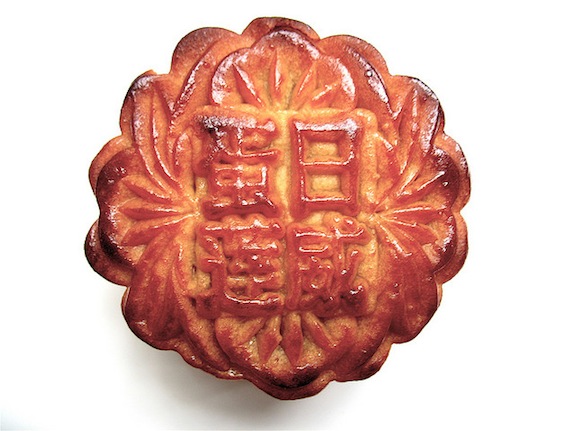
Mooncakes Are China’s Fruit Cake—Traditional Holiday Gifts No One Actually Wants

Image: Franz&P

Last year, China threw away 2 million mooncakes—the little cakes eaten during the Mid-Autumn Festival. According to the Wall Street Journal, the country has 10,000 mooncake makers, who last year produced more than 300,000 tons of the sweets. And many of them, along with their elaborate packaging, ended up in landfills. So many, in fact, that this year the Chinese government has issued guidelines to cut down on the mooncake waste.

The guidelines lay out rules about packaging, urge manufacturers to reduce, reuse and recycle and to choose materials that are easier on the environment, should the cakes be tossed in the trash. Mooncake disposal isn’t a new problem, either. In the past, the government has issued rules that the cost of packaging the little cakes cannot exceed the cost of making the treats by more than 25 percent.

According to Green Power, a Hong Kong–based environmental group, the number of mooncake casualties hasn’t really gone down. They say that the average household purchases 2.4 boxes of mooncakes—often intended as gifts. Multiply that by the number of people celebrating the Mid-Autumn Festival, and you’re at 4.6 million units of cake.

The Journal‘s Te-Ping Chen says that the best way to cut the mooncake craze might not be regulation, at all, but rather painting mooncakes as an evil excess:

But in the end, the most effective catalyst for trimming Mid-Autumn waste may be China’s anti-corruption drive, with the Communist Party recently making mooncakes the latest casualty of its quest to keep officials clean. Last month, the state-run People’s Daily announced a drive for more mooncake austerity, saying that “polite reciprocity, when overdone, becomes a kind of squandering of cash.” According to a People’s Daily report last week, sales of luxury mooncakes this year have dropped by as much as 12% in certain locations.

So, it seems that, in China, the new orders are: “Let them not eat cake.”

Smithsonian.com:

The Mooncake: A Treat, a Bribe or a Tradition Whose Time Has Passed?

Follow this link: 

Mooncakes Are China’s Fruit Cake—Traditional Holiday Gifts No One Actually Wants

Posted in alo, FF, GE, PUR, Smith's, Uncategorized | Tagged , , , , , , , , | Comments Off on Mooncakes Are China’s Fruit Cake—Traditional Holiday Gifts No One Actually Wants

China Plans Its First Unmanned Moon Landing This Year

The mission, due by the end of 2013, will be the country’s “first soft landing on an extraterrestrial body,” the state-run Xinhua news agency reported. Visit site:  China Plans Its First Unmanned Moon Landing This Year ; ;Related ArticlesGus, New York’s Most Famous Polar Bear, Dies at 27Entergy Announces Closing of Vermont Nuclear PlantCanvassing Central Park and Finding New Tenants ;

Jump to original – 

China Plans Its First Unmanned Moon Landing This Year

Posted in alo, Citadel, eco-friendly, FF, G & F, GE, growing marijuana, horticulture, LAI, Monterey, ONA, organic, organic gardening, solar, solar power, Uncategorized | Tagged , , , , , , , , | Comments Off on China Plans Its First Unmanned Moon Landing This Year

20 million people in China could be exposed to arsenic-contaminated water

Arsenic poisoning is no fun, as you can imagine. A 2007 study found that over 137 million people in more than 70 countries are probably affected by arsenic poisoning from drinking water. Link:  20 million people in China could be exposed to arsenic-contaminated water ; ;Related ArticlesBreaking the seed bank to feed the futureCrops can be made self-fertilizing with nitrogen-fixing bacteria, making artificial fertilizer unnecessaryGoogle co-founder Sergey Brin is investor in synthetic beef venture ;

Continue reading here – 

20 million people in China could be exposed to arsenic-contaminated water

Posted in alo, Citadel, eco-friendly, FF, G & F, GE, LG, Monterey, ONA, Oster, solar, solar power, Uncategorized | Tagged , , , , , , , , , , , | Comments Off on 20 million people in China could be exposed to arsenic-contaminated water