Tag Archives: virginia

Leave it to West Virginia to confuse its students about science

Leave it to West Virginia to confuse its students about science

By on 5 Jan 2015commentsShare

The campaign by special interests and right-wing politicians to inject climate skepticism into public school classrooms has gone on for years. In 2014, it hit Texas, Kansas, and Wyoming. Now West Virginia has become the latest science-education battleground.

Members of the state school board were unhappy with the national Next Generation Science Standards, a blueprint for teaching science in schools, even though it had already been watered down on the topic of climate change to the satisfaction of the climate change–denying Heartland Institute.

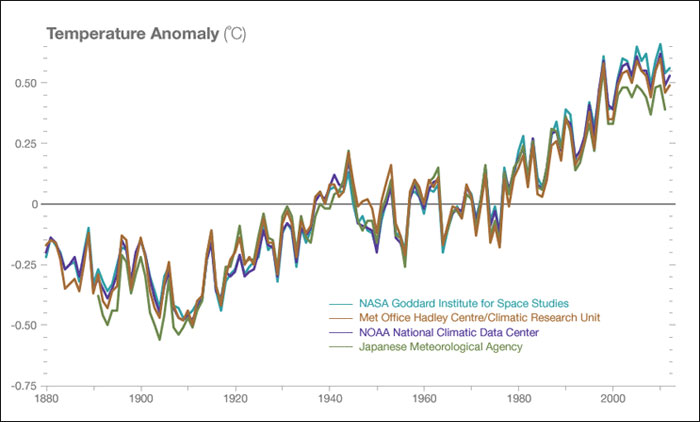
One board member was concerned about the effect that teaching climate science would have on the coal industry, reports The Charleston Gazette. Another took issue with the science itself: “There was a question in there that said: ‘Ask questions to clarify evidence of the factors that have caused the rise in global temperatures over the past century,’” school board member Wade Linger told the newspaper. “If you have that as a standard, then that presupposes that global temperatures have risen over the past century, and, of course, there’s debate about that.”

No, there’s not. There’s no question that temperatures have risen over the past century. Any “debate” is over why temperatures have risen — and it’s hardly much of a debate, as 97 percent of climate scientists agree that human activity is the primary cause.

Well so anyway, because the opinions of the world’s scientists are, cumulatively, worth slightly less than those of Mr. Wade Linger, the board made some changes, detailed here by Ryan Quinn of The Charleston Gazette:

The changes, for example, added “and fall” after “rise” to a proposed standard requiring that sixth-graders “ask questions to clarify evidence of the factors that have caused the rise in global temperatures over the past century.”

The other changes West Virginia Department of Education staff members made in response to Linger’s concerns were:

Original ninthgrade science requirement: “Analyze geoscience data and the results from global climate models to make an evidence-based forecast of the current rate of global or regional climate change and associated future impacts to Earth systems.”
Adopted version: “Analyze geoscience data and the predictions made by computer climate models to assess their creditability [sic] for predicting future impacts on the Earth System.”
Original high school elective Environmental Science requirement: “Debate climate changes as it [sic] relates to greenhouse gases, human changes in atmospheric concentrations of greenhouse gases, and relevant laws and treaties.”
Adopted version: “Debate climate changes as it relates to natural forces such as Milankovitch cycles, greenhouse gases, human changes in atmospheric concentrations of greenhouse gases, and relevant laws and treaties.”

Milankovitch cycles are long-term changes in Earth’s orbit around the sun, and some who do not believe in man-made global warming use that theory as the basis of their assertion that the Earth is simply in a natural warming period.

Never a good sign when a newspaper has to insert “sic” more than once into a state’s teaching requirements.

The school board’s break with mainstream science is concerning to education advocates and many parents. One nonprofit, Climate Parents, will petition the school board to throw out its inaccurate changes before they’re implemented in 2016.

Source:
Climate change learning standards for W.Va. students altered

, The Charleston Gazette.

Climate groups oppose changes to W.Va. science standards

, The Charleston Gazette.

Share

Please

enable JavaScript

to view the comments.

Find this article interesting?

Donate now to support our work.

Get stories like this in your inbox

AdvertisementAdvertisement

Source: 

Leave it to West Virginia to confuse its students about science

Posted in Anchor, FF, GE, LG, ONA, Uncategorized | Tagged , , , , , , , , | Comments Off on Leave it to West Virginia to confuse its students about science

What Are the Odds Your City Will Have a White Christmas?

Mother Jones

<!DOCTYPE html PUBLIC “-//W3C//DTD HTML 4.0 Transitional//EN” “http://www.w3.org/TR/REC-html40/loose.dtd”>
The lighter the shade of blue, the higher the chance of a White Christmas. NOAA/NCDC

This story originally appeared in CityLab and is published here as part of the Climate Desk collaboration.

Those determined to have a White Christmas should grab crampons and a bottle of scotch and prepare for a tough slog. Many places in the lower 48 with a lock on holiday snow are located in rugged, altitudinous climes—the bony ridge of the Sierra Nevada, for instance, and the wind-burned peaks of the Rockies.

That much is clear in this delightful NOAA map plotting probabilities across the US for a White Christmas, defined here as a December 25 with more than an inch of snow on the ground. Based on three decades of climate normals from the National Climatic Data Center, the graphic shows a stark geographic divide when it comes to unwrapping presents in snow-globe conditions: A region of zero to 10 percent probability curves from Washington State through coastal California and then explodes in the deep South and Southeast. Parts of the Midwest also are likely to be snowless, with places like Kansas, Missouri, and lower Illinois having only an 11 to 25 percent chance of a White Christmas.

New York, Baltimore, and Washington, D.C., have piddling shots at this charming weather, though their brethren higher on the East Coast fare better: Boston and Providence each have a 41 to 50 percent chance. Chicago racks a (considering its frosty reputation) low-sounding 41 to 50 percent chance, and Buffalo, home to sudden crashing currents of lake-effect snow, takes it up to 51 to 60 percent.

Aside from the West’s mountain ranges, NOAA says the best-performing powder points for December 25 are Maine, upstate New York, Minnesota, the highlands of West Virginia and Pennsylvania, and almost “anywhere in Idaho.” But even these crystal-crusted locales could shake off the holiday snow this year, the agency says: “While the map shows the climatological probability that a snow depth of at least one inch will be observed on December 25, the actual conditions this year may vary widely from these probabilities because the weather patterns present will determine the snow on the ground or snowfall on Christmas day.”

Here’s another version of the map that’s less smooth, but clearer at delineating regional probabilities:

NOAA/NCDC

View the original here:

What Are the Odds Your City Will Have a White Christmas?

Posted in alo, Anchor, FF, GE, LAI, LG, ONA, Radius, The Atlantic, Uncategorized, Venta | Tagged , , , , , , , , , , , | Comments Off on What Are the Odds Your City Will Have a White Christmas?

This Is the Predictably Awful Way Fox News Reacted to the CIA Torture Report

Mother Jones

<!DOCTYPE html PUBLIC “-//W3C//DTD HTML 4.0 Transitional//EN” “http://www.w3.org/TR/REC-html40/loose.dtd”>

On Tuesday the Senate released a long-awaited, scathing report condemning CIA torture methods during the George W. Bush administration. The report outlines horrible abuses including “rectal feeding” and “ice-water baths,” but only the geniuses over at Fox News could see what it was truly about: Obamacare.

The hosts of Fox News’ Outnumbered were convinced the report was made public in order to distract from Jonathan Gruber’s testimony on Obamacare this morning. Jesse Watters, who says he would have rather remained in the dark, because after all people do “nasty things in the dark” all the time, said he found the timing of the report’s release “ironic,” which it is not.

Watters then went on to compare the torture report to Rolling Stone’s botched sexual assault reporting at the University of Virginia, because why the hell not?

“They didn’t even interview any of the CIA interrogators who do the report,” Watters explained. “It’s kind of like how Rolling Stone does their stories—they only get one side. And to say this is about transparency at the CIA, the Democrats didn’t care about transparency when they were destroying hard drives at the IRS.”

(h/t Media Matters)

View post:

This Is the Predictably Awful Way Fox News Reacted to the CIA Torture Report

Posted in Anchor, FF, GE, LAI, LG, ONA, Pines, Radius, Uncategorized, Venta | Tagged , , , , , , , , , | Comments Off on This Is the Predictably Awful Way Fox News Reacted to the CIA Torture Report

The Problem With the Ferguson, Ray Rice, and UVA Rape Stories

Mother Jones

<!DOCTYPE html PUBLIC “-//W3C//DTD HTML 4.0 Transitional//EN” “http://www.w3.org/TR/REC-html40/loose.dtd”>

What do these three recent stories have in common?

Ferguson
Ray Rice
The University of Virginia gang rape

One thing they have in common is that I’ve written little or nothing about them. But they share two other attributes as well. Here they are:

  1. All three have spotlighted problems that are critically important and absolutely deserving of broader attention. Ferguson is all about racial disparities, police killings of unarmed civilians, the militarization of law enforcement, and other equally deserving issues. Ray Rice was about the scourge of domestic violence and its tacit acceptance within the culture of professional sports. The UVA rape story was about sexual assault on university campuses, fueled by alcohol, fraternities, and official lack of concern.
  2. However, the specific incidents in all three cases are, to say the least, less than ideal as poster children for these issues. We will never know for sure what happened to Michael Brown, but as evidence has dribbled out, the simple liberal narrative of a gentle teenager being gunned down while trying to surrender has seemed less and less credible. In the Ray Rice case, it’s clear that Rice did something terrible—but as it turns out, the evidence suggests that the criminal justice system treated him fairly reasonably and that the NFL’s actions were mostly a craven reaction to public opinion. Finally, in the UVA rape scandal, a number of credible questions have been raised about whether Rolling Stone‘s account of what happened was fair—or, in the worst case, even true.

If you’re curious about why I’ve been relatively quiet about these stories, that’s why. All of them spotlight issues that I think are well worth spotlighting, and I don’t really relish the thought of doing or writing anything that might dilute their power. These are all things that I want people to pay more attention to, not less, and if you want the world to change you have to be willing to exploit the events you have, not the events you wish you had.

And yet, the specific fact patterns of each specific case are genuinely problematic. To pretend otherwise is to be intellectually dishonest.

I’ve dealt with this by not saying much. That’s not exactly an act of moral courage, is it? And yet, with the facts as hazy as they are, I’m just not sure what else to do. Perhaps the answer is to stop worrying about it: Just accept that we live in a messy world and sometimes the events that have the most impact aren’t clear cut. But you use the events anyway in an effort to grab public attention and improve the world a bit, even if that sometimes means a few individuals end up being treated unfairly in some way. Perhaps.

I don’t know—though I’m struck that three such similar events have occurred in just the past few months. But I’m still not sure whether I should have reacted differently. I just don’t know.

See more here – 

The Problem With the Ferguson, Ray Rice, and UVA Rape Stories

Posted in FF, GE, LG, ONA, Oster, Pines, Uncategorized, Venta | Tagged , , , , , , , , , , | Comments Off on The Problem With the Ferguson, Ray Rice, and UVA Rape Stories

29 Coal Miners Died in a 2010 Explosion. Congress Still Hasn’t Fixed the Problem.

Mother Jones

<!DOCTYPE html PUBLIC “-//W3C//DTD HTML 4.0 Transitional//EN” “http://www.w3.org/TR/REC-html40/loose.dtd”>

Last week, a federal grand jury indicted former Massey Energy CEO Don Blankenship for allegedly conspiring to violate mine safety standards in the run-up to the 2010 explosion that killed 29 workers at the Upper Big Branch Mine. The four-count indictment describes a culture of negligence under Blankenship’s watch, in which essential safety measures were ignored as the company sought to squeeze every last cent out of the ground. Blankenship, who left Massey in 2010, pleaded not guilty Thursday.

But the indictment also came as a sobering reminder: In the four years since the disaster, little has been done to make the mining industry safer. Legislation designed to rein in the worst offenders and give regulators teeth was beaten back by big business. Meanwhile, tens of millions of dollars in safety fines have gone uncollected.

“We’ve taken some actions after the various accidents that have taken place, but unfortunately, Congress can apparently only legislate in this area after someone dies,” said Rep. George Miller (D-Calif.), who sponsored mine-safety legislation in the wake of the Upper Big Branch explosion.

“I’ve been there after the accidents, I’ve been standing with many of these politicians—they all pledge they’re gonna do something for the families, that they care about the miners. And then everybody goes back to business as usual.”

Continue Reading »

Taken from: 

29 Coal Miners Died in a 2010 Explosion. Congress Still Hasn’t Fixed the Problem.

Posted in alo, Anchor, FF, GE, LG, ONA, Radius, Safer, solar, Uncategorized, Venta | Tagged , , , , , , , , , , | Comments Off on 29 Coal Miners Died in a 2010 Explosion. Congress Still Hasn’t Fixed the Problem.

Backstabbing in Hillaryland: Here We Go Again

Mother Jones

<!DOCTYPE html PUBLIC “-//W3C//DTD HTML 4.0 Transitional//EN” “http://www.w3.org/TR/REC-html40/loose.dtd”>

We’ve seen this movie before, and it doesn’t end well.

On Friday, ABC News published a story about a email listserv maintained by two Democratic operatives: Robby Mook, a former Howard Dean and Hillary Clinton campaign aide, and Marlon Marshall, an Obama White House staffer. The story’s title—”EXCLUSIVE: Read the Secret Emails of the Men Who May Run Hillary Clinton’s Campaign”—promised a juicy exposé. In reality, the substance of what members posted on this 150-member “secret” listserv, dubbed the “Mook Mafia,” was far from explosive. The phrases “smite Republicans mafia-style” and “punish those voters” read badly out of context. But then, who hasn’t dashed off a snarky email to friends that you wished you could take back and touch up a little?

The real news isn’t that Mook and Marshall had a listserv for fellow Democratic operatives. It’s that someone on the listserv leaked its contents in an effort to hurt Mook’s chances of becoming the manager of Hillary Clinton’s presidential campaign. In other words, the Clinton ’16 effort has yet to officially launch and already the backstabbing and infighting has begun.

It’s shades of Hillary ’08 all over again.

Internal battles notoriously plagued Clinton’s first presidential run. A Washington Post story in March 2008 described the “combustible environment within the Clinton campaign, an operation where internal strife and warring camps have undercut a candidate once seemingly destined for the Democratic nomination.”

The story went on:

Many of her advisers are waging a two-front war, one against Sen. Barack Obama and the second against one another, but their most pressing challenge is figuring out why Clinton won in Ohio and Texas and trying to duplicate it. While chief strategist Mark Penn sees his strategy as a reason for the victories that have kept her candidacy alive, other advisers attribute the wins to her perseverance, favorable demographics, and a new campaign manager. Clinton won “despite us, not because of us,” one said.

The Post published this story after Clinton had won the crucial Ohio and Texas primaries. That is, even in victory, the Clinton camp was divided, its top aides in conflict with one another.

In response to the Post story, Clinton adviser Bob Barnett wrote an email that was later published by The Atlantic:

STOP IT!!!! I have held my tongue for weeks. After this morning’s WP story, no longer. This makes me sick. This circular firing squad that is occurring is unattractive, unprofessional, unconscionable, and unacceptable…It must stop.

Neither Mark Penn nor Clinton’s first choice of campaign manager, Patti Solis Doyle, lasted the entire campaign. Penn left the campaign after the Wall Street Journal reported that he had lobbied in support of a trade deal with Colombia that Clinton opposed. Solis Doyle was once so close to Clinton that she liked to say, “When I speak, Hillary is speaking.” But by the time of her firing, Solis Doyle and Clinton were on such bad terms that Clinton let her go by email.

Even after Penn’s departure, as the Atlantic story illustrated, the acrimony continued:

Geoff Garin, the new leader, soon encountered the old problems. Obama remained the front-runner, and Clinton’s communications staff disagreed on how to turn back the tide of tough stories. Garin was appalled at the open feuding and leaking. “I don’t mean to be an asshole,” he wrote in an e-mail to the senior staff. “But…Senator Clinton has given Howard Wolfson both the responsibility and the authority to make final decisions about how this campaign delivers its message.” On the strategic front, Garin sided with the coalition opposed to Penn’s call to confront Obama, and he had numbers to support his reasoning. Polls showed that a majority of voters now distrusted Clinton.

The strategic leaking of Mook’s and Marshall’s listserv emails wouldn’t have been at all out of place during Clinton’s ’08 campaign, as her aides bickered and backstabbed their way to defeat against a more cohesive—or at least functional—Obama campaign.

Over the past few years, I have interviewed a number of folks who have worked on various campaigns with Mook, dating back to Howard Dean’s 2004 presidential bid. I heard nothing but admiration and respect for someone routinely described to me as a smart and honest operative who kept his head down and disliked publicity. He and Obama organizing guru Jeremy Bird helped create Dean’s pioneering volunteer-powered ground game in New Hampshire—a model Mook took with him to Clinton’s ’08 bid and Bird applied to Obama’s first presidential run. And in 2013, Mook, using part of the Obama playbook, helped longtime Democratic fundraiser Terry McAuliffe win a tough fight for governor in Virginia. This victory, which impressed the Democratic political class, got people talking about Mook helming a Clinton campaign. But obviously not everyone is keen on that.

It’s not known who was behind the Mook email dump. But for Democrats this prankish move raises a troubling question: Is it possible to avoid conflict within Hillaryland? In 2008, Clinton demonstrated she could not head a cohesive, effective, and drama-free operation. Democrats who yearn for her to do better this time might be forgiven for looking at this episode and wondering, here we go again?

Link:  

Backstabbing in Hillaryland: Here We Go Again

Posted in Anchor, ATTRA, Bunn, Everyone, FF, GE, LG, ONA, Radius, Uncategorized, Venta | Tagged , , , , , , , | Comments Off on Backstabbing in Hillaryland: Here We Go Again

Catholic Church Argues It Doesn’t Have to Show Up in Court Because Religious Freedom

Mother Jones

<!DOCTYPE html PUBLIC “-//W3C//DTD HTML 4.0 Transitional//EN” “http://www.w3.org/TR/REC-html40/loose.dtd”>

When Emily Herx first took time off work for in vitro fertilization treatment, her boss offered what sounded like words of support: “You are in my prayers.” Soon those words took on a more sinister meaning. The Indiana grade school where Herx was teaching English was Catholic. And after church officials were alerted that Herx was undergoing IVF—making her, in the words of one monsignor, “a grave, immoral sinner”—it took them less than two weeks to fire her.

Herx filed a discrimination lawsuit in 2012. In response, St. Vincent de Paul School and the Fort Wayne-South Bend Diocese, her former employers, countered with an argument used by a growing number of religious groups to justify firings related to IVF treatment or pregnancies outside of marriage: Freedom of religion gives them the right to hire (or fire) whomever they choose. But the diocese took one big step further. It is arguing that, in this instance, its religious liberty rights protect the school from having to go to court at all.

“I’ve never seen this before, and I couldn’t find any other cases like it,” says Brian Hauss, a staff attorney with the American Civil Liberties Union Center for Liberty. The group is not directly involved in the lawsuit but has filed amicus briefs supporting Herx. “What the diocese is saying is, ‘We can fire anybody, and we have absolute immunity from even going to trial, as long as we think they’re violating our religion. And to have civil authorities even look into what we’re doing is a violation.’…It’s astonishing.”

The key legal question in Herx’s case is whether she was fired for religious reasons or her firing was an illegal act of sex discriminations.

Title VII of the Civil Rights Act bans employers from discriminating on the basis of race, color, religion, sex, and national origin. An exemption in that law allows religious institutions to favor members of their own faith during the hiring process. But there’s no religious exemption for sex discrimination—which is how Herx is framing her dismissal. As proof, she showed that the diocese had never fired a male teacher for using any type of infertility treatment. In response, the diocese asserted that it would fire a male teacher who underwent fertility treatments against church teachings—it just hasn’t done so yet. In early September, a federal judge ruled that there was enough evidence on both sides of the dispute for a jury trial.

That’s when the diocese launched its radical new legal strategy.

The diocese argued that a trial on this question would violate its freedom of religion and appealed the judge’s decision to a three-judge panel on the 7th Circuit Court of Appeals. “If the diocese is required to go through a trial,” attorneys for the diocese and school argued, it would “irrevocably” deny Fort Wayne-South Bend the benefits of religious protection. Herx’s attorneys are fighting the appeal.

A spokesman for the diocese and an attorney and for the diocese and school both declined to comment.

“Employers try to appeal these decisions all the time. But this is unusual because of the incredibly broad claim to a religious exemption they’re making,” says Susan Deller Ross, a professor at the Georgetown University Law Center who has written about Title VII and worked on sex discrimination cases. Thomas Brejcha, the president of the Thomas More Society, a conservative religious liberty legal group, called the move “creative, venturesome, and unusual.” He adds, “I’m very interested to see what happens.”

Louise Melling, a deputy legal director at the ACLU, was more critical: “It’s an unusual and extreme argument, to be saying the court doesn’t even have the legal authority to ask whether this was, in fact, sex discrimination. I can’t imagine they would prevail on that. It’s too extreme.”

Than again, Melling says she never would have predicted the recent wave of cases in which religious institutions asserted that they have an expansive right to discriminate. One of those cases was Burwell v. Hobby Lobby—the Supreme Court case that struck down the contraception mandate in the Affordable Care Act. The ACLU has also seen a climb in the number of Christian schools arguing that Title VII allows them to fire women who undergo IVF or become pregnant outside of marriage, or to fire employees who engage in same-sex relationships. “Hobby Lobby was just one case in this wave,” Melling says.

Douglas Laycock, a professor at the University of Virginia Law School, says the diocese’s assertion is a “perfectly sensible argument.” Laycock, who has successfully argued numerous religious liberty cases before the Supreme Court, notes there is precedent for immunizing certain organizations from trial, although not necessarily under Title VII’s religious protections. “I think it’s going to be a hard sell,” he says. “But I don’t know that it’s ‘extreme.'”

Eventually, a case like Herx’s could reach the Supreme Court. There are at least four other high-profile lawsuits like Herx’s under way at the federal level. Four women—Jennifer Maudlin, a former cook at an Ohio religious community center; Teri James, a former financial-aid specialist for San Diego Christian College; Shaela Evenson, a former Catholic school teacher with the Helena Diocese in Montana; and Shanna Daly, a former teacher with St. Elizabeth Ann Seton Catholic School in Florida—are suing their former employers for firing them because they became pregnant outside of marriage. Daly claims she was fired because she refused to get married until the church annulled her previous marriage. Each of these women filed their cases within the last two years.

“It’s striking that this is still an issue, that people are still firing women for getting IVF and being pregnant and unmarried,” Melling says. “It all feels so medieval.”

It is also hypocritical, according to Herx. Other teachers in the diocese, she claims, have undergone hysterectomies, vasectomies, and tubal ligations without any employment consequences, even though the church teaches that deliberate sterilization is immoral. Herx and her doctor made sure that none of the embryos created for her infertility treatment were intentionally destroyed. Herx’s school principal approved sick days for her IVF treatment. And the diocese’s health insurance plan, which the diocese directly administers without the help of a third party, paid for Herx’s visits to the fertility doctor and the anesthesia she required.

Ross agrees that the appeals court is unlikely to buy into the diocese’s argument. “That would have an extreme impact,” she says. “But with law you can never say never.”

View original post here – 

Catholic Church Argues It Doesn’t Have to Show Up in Court Because Religious Freedom

Posted in Anchor, Bunn, FF, GE, LAI, LG, ONA, Radius, Uncategorized, Venta | Tagged , , , , , , , , , | Comments Off on Catholic Church Argues It Doesn’t Have to Show Up in Court Because Religious Freedom

18-Year-Old Wins State Legislature Seat in West Virginia

Mother Jones

<!DOCTYPE html PUBLIC “-//W3C//DTD HTML 4.0 Transitional//EN” “http://www.w3.org/TR/REC-html40/loose.dtd”>

The Republican Wave lifted many boats last night, including that of 18-year-old Saira Blair. The college freshman was elected to the West Virginia House of Delegates in a landslide—she earned 63 percent of the vote to her 44-year-old Democratic opponent’s 30 percent—and officially became the youngest lawmaker in the country. She’ll represent a district of about 18,000 people in the eastern part of the state, near the Maryland border.

The Wall Street Journal describes Blair as “fiscally conservative,” and she “campaigned on a pledge to work to reduce certain taxes on businesses.” Her website boasts an “A” rating from the NRA and endorsements from West Virginians for Life. As a 17-year-old, Blair primaried the 66-year-old Republican incumbent Larry Kump and advanced to the general election—all while legally being unable to cast a vote for herself. Democratic attorney Layne Diehl, her general election opponent, had only good things to say last night about the teenager who beat her: “Quite frankly a 17- or 18-year-old young woman that has put herself out there and won a political campaign has certainly brought some positive press to the state.”

Blair, an economics and Spanish major at West Virginia University, will defer her spring classes to attend the legislative session in the state capital. There, she’ll join her father and campaign manager, Craig, who is a state senator.

Continue reading here:

18-Year-Old Wins State Legislature Seat in West Virginia

Posted in Anchor, FF, G & F, GE, LAI, LG, ONA, Radius, solar, Uncategorized, Venta | Tagged , , , , , , , , , | Comments Off on 18-Year-Old Wins State Legislature Seat in West Virginia

Even Without Voter ID Laws, Minority Voters Face More Hurdles to Casting Ballots

Mother Jones

Over the past decade, Republican legislators have pushed a number of measures critics say are blatant attempts to suppress minority voting, including voter ID requirements, shortened early voting periods, and limits on same-day voter registration. But minority voters are often disenfranchised in another, more subtle way: Polling places without enough voting machines or poll workers.

Charts: How minority voters were blocked at the ballot box in 2012.

These polling places tend to have long lines to vote. Long lines force people to eventually give up and go home, depressing voter turnout. And that happens regularly all across the country in precincts with lots of minority voters, even without voter ID or other voting restrictions in place.

Nationally, African Americans waited about twice as long to vote in the 2012 election as white people, (23 minutes on average versus 12 minutes); Hispanics waited 19 minutes. White people who live in neighborhoods whose residents are less than 5 percent minority, had the shortest of all wait times, just 7 minutes. These averages obscure some of the unusually long lines in some areas. In South Carolina’s Richland County, which is 48 percent black and is home to 14 percent of the state’s African American registered voters, some people waited more than five hours to cast their ballots.

Continue Reading »

View article: 

Even Without Voter ID Laws, Minority Voters Face More Hurdles to Casting Ballots

Posted in alo, Anchor, Everyone, FF, G & F, GE, Hagen, LAI, LG, ONA, PUR, Radius, Uncategorized, Venta | Tagged , , , , , , , , , , | Comments Off on Even Without Voter ID Laws, Minority Voters Face More Hurdles to Casting Ballots

Judge Rips Alabama for Hiring a Discredited Abortion Foe

Mother Jones

<!DOCTYPE html PUBLIC “-//W3C//DTD HTML 4.0 Transitional//EN” “http://www.w3.org/TR/REC-html40/loose.dtd”>

Vincent Rue, a marriage therapist best known for his discredited theories about how abortion causes mental illness, has made hundreds of thousands of dollars assembling legal teams to defend extreme anti-abortion bills. But lately, the states that hire him have been getting a raw deal.

On Monday, US District Judge Myron H. Thompson skewered Alabama for involving Rue in the defense of a law that requires abortion providers to obtain admitting privileges with a local hospital. Thompson struck down the law, which had threatened to close three of Alabama’s five abortion clinics. Notably, Thompson disregarded two arguments made by John M. Thorp, an OB-GYN at the University of North Carolina Hospital and one of Rue’s go-to expert witnesses: that complications arise from abortion more often than is reported in official statistics, and that admitting privileges are necessary to good patient care. Both claims have been key for states defending these sorts of abortion restrictions.

This is the second time this year that a federal judge has dismissed evidence brought by Rue’s favored expert witnesses. In September, a Texas judge ruling on an anti-abortion bill that would close all but six of the state’s clinics raked the state’s attorneys across the coals for bringing on Rue—and hiding his involvement.

Rue was thoroughly discredited as an abortion expert long before Alabama hired him. When he testified in two landmark abortion cases in the 1990s, judges disregarded his testimony for being personally biased and lacking expertise. Mainstream medical organizations have rejected Rue’s research on a supposed mental illness caused by abortion, “post-abortive syndrome.”

In Alabama, Rue recruited expert witnesses for the state and in one case wrote the entirety of the report the state’s witnesses submitted to the court. Rue didn’t testify. But the state paid him $82,890 for his work. It paid the two witnesses that Thompson called out in his opinion, Thorp and James C. Anderson, a Virginia emergency room physician, $40,174.75 and $76,279.20, respectively. Thorp, Rue, and Anderson did not reply to requests for comment.

Thorp based his testimony on a study he wrote for a pay-to-publish journal. (Traditional academic journals do not charge authors for printing their work.) He misplaced decimal points in his report to the court compiling abortion complication rates. When challenged about his methodology on cross-examination, Thorp told the court to “knock a point off” his estimate of complication rates.

At trial, Anderson admitted that Rue had written a report to the court that Anderson signed. Anderson also said that Rue provided most of the research for a second report Anderson wrote. Anderson further testified that he didn’t know courts had disregarded Rue’s testimony. Thompson was incredulous.

“You say you don’t know his employment or any organizations that he belongs to,” the judge asked Anderson. “Why do you trust him?”

In his Monday ruling, Thompson tried to guess at the answer: “Either Anderson has extremely impaired judgment; he lied to the court as to his familiarity with Rue; or he is so biased against abortion that he would endorse any opinion that supports increased regulation on abortion providers. Any of these explanations severely undermines Anderson’s credibility as an expert witness.”

Read the article – 

Judge Rips Alabama for Hiring a Discredited Abortion Foe

Posted in Anchor, FF, GE, LAI, Landmark, LG, ONA, Radius, Uncategorized, Venta | Tagged , , , , , , , , , , | Comments Off on Judge Rips Alabama for Hiring a Discredited Abortion Foe