Category Archives: Eureka

The Climate Lost Big-Time in Tuesday’s Election

Climate deniers are officially in charge of Congress, and other bad news. Susan Santa Maria/Shutterstock Tuesday’s elections were a major defeat for those who want to take serious action against global warming. Environmentalists spent millions in an effort to defeat pro-fossil-fuel Republicans, but their efforts largely failed. Key Senate committees will now be controlled by climate deniers, and even in blue states, clean energy advocates suffered big setbacks. Here are some of last night’s most significant electoral blows in the battle against climate change—along with a couple small victories. The Senate’s environment committee will be run by the biggest climate denier in Congress. With a Republican majority in the Senate, Sen. James Inhofe (R-Okla.) will likely become chairman of the Environment and Public Works committee, which handles legislation on air pollution and the environment. Inhofe is an outspoken climate denier. Two years ago, he published a book titled, The Greatest Hoax: How the Global Warming Conspiracy Threatens Your Future. He’s also a big opponent of the Obama administration’s proposed rule to limit carbon emissions from coal-fired power plants, describing it as the “definitive step in the administration’s war on fossil fuels.” There’s new life for the Keystone pipeline. The Republican-controlled House has already voted on more than one occasion to approve the Keystone XL pipeline, but with the Senate under Democratic control, that gesture has been little more than political theater. That will likely change now that Republicans have taken over the Senate. President Barack Obama could still veto any Keystone legislation that does pass, but as Grist explains, there’s “no guarantee” that he won’t seek to strike a deal with the GOP on the issue. Tom Steyer’s climate super PAC largely fell flat. Could a one-issue super PAC make climate an election-deciding issue? Not this time. California billionaire Tom Steyer put millions of his own money into the NextGen Climate PAC—and raised millions more—in an effort to elect pro-climate action candidates across the country. Much of the cash went to senate races in Iowa, New Hampshire, Michigan, and Colorado, and to gubernatorial races in Pennsylvania, Florida, and Maine. Out of those seven races, Democrats won only three. A Washington State carbon tax? Not so fast. Washington Gov. Jay Inslee (D) wants to put a price on carbon. In April, Inslee formed a taskforce to propose some “market-based” ways to reduce greenhouse emissions. Their recommendations are due later this month, but Republicans, who control the state senate, are likely to stand in the way. Steyer’s super PAC threw down more than $1 million in an attempt to help climate friendly candidates legislative candidates in the state. Early returns suggest it may not have worked; as of last night the Washington senate was expected to remain in the GOP’s hands. Climate adaptation measures passed: The impacts of climate change are already obvious on America’s coastlines, where rising sea levels are combining with other factors to threaten human and animal habitats alike. But there was a bit of good news on Election Night. In Rhode Island, voters passed a measure to provide $3 million to communities for flood-prevention projects, like replacing pavement with vegetation that can more easily absorb storm water. Louisiana voters also passed a ballot measure that will ensure the state can’t redirect money set aside for building artificial reefs to help rebuild the Gulf’s disappearing coastline. Local fracking bans: Pro-fossil-fuel candidates triumphed across the country last night, but the election still presented an opportunity for some voters to take a stand against fracking in their communities. The town of Denton, Texas, which is already home to some 275 fracked wells, voted to ban the practice, becoming the first city in the state to do so. Bans also passed in Athens, Ohio, and in Mendocino and San Benito Counties in California. Four other ban proposed bans failed—three in Ohio and one in Santa Barbara County, Calif. See original article here:  The Climate Lost Big-Time in Tuesday’s Election ; ; ;

Read this article – 

The Climate Lost Big-Time in Tuesday’s Election

Posted in alo, Casio, eco-friendly, Eureka, FF, G & F, GE, LAI, Landmark, Monterey, ONA, oven, OXO, solar, solar power, Uncategorized | Tagged , , , , , , , | Comments Off on The Climate Lost Big-Time in Tuesday’s Election

Forget the climate — cap-and-trade could fix your allergies

young wheezy

Forget the climate — cap-and-trade could fix your allergies

26 Aug 2014 6:07 PM

Share

Share

Forget the climate — cap-and-trade could fix your allergies

×

How can we finally get people to care about carbon emissions even a little bit? Focus on how they are directly threatening the amount of time on Earth that we can spend snacking and sexting (clinically proven to be the preferred activities of humans in the 21st century.) Or, as The Atlantic’s James Hamblin puts it:

Researchers are learning that the most effective way around climate-policy ambivalence is to invoke imminent dangers to human health. “What’s killing me today?” with emphasis on killing and me and today.

The answer to that question is — you guessed it! — carbon emissions. As Hamblin reports, for allergy and asthma sufferers, increased carbon dioxide levels boost pollen count. One allergist expects pollen levels to double by 2040. Also fun: Fossil fuel combustion creates minuscule particles that hang around in our lungs and bloodstreams and then kill us. Air pollution caused one in eight deaths in 2012, according to the World Health Organization.

OK – so carbon emissions are threatening lives. But what kind of effect would limiting those emissions have on the economy? Those cap-and-trade programs sure seem costly!

Well, a recent study by a team of MIT researchers, published in Nature Climate Change, found that a cap on carbon emissions would end up saving $125 billion in human health costs – which would cover the projected costs of widespread emissions capping tenfold. Furthermore:

[The study’s authors] write that any cost-benefit analysis of climate policy that omits the health effects of regional air pollution “greatly underestimate[s] benefits.”

“What’s killing me today?” is obviously a far more alarming question than “What’s going to create significant economic costs in the future?” When the answer to both is the same, that could – just a thought! – be cause for action. Something to ponder between snacks and Snapchats.

Source:
If You Have Allergies or Asthma, Talk to Your Doctor About Cap and Trade

, The Atlantic.

Find this article interesting?

Donate now to support our work.Share

Please

enable JavaScript

to view the comments.

Get stories like this in your inbox

AdvertisementAdvertisement

Continued – 

Forget the climate — cap-and-trade could fix your allergies

Posted in Anchor, Eureka, FF, G & F, GE, KTP, LG, ONA, oven, solar, solar power, The Atlantic, Uncategorized | Tagged , , , , , , , , , | Comments Off on Forget the climate — cap-and-trade could fix your allergies

This Is Why You Have No Business Challenging Scientific Experts

green4us

Harry Collins, a founder of the field of “science studies,” explains why we should listen to scientists on climate change, vaccines, and HIV-AIDS. Jenny McCarthy, who once remarked that she began her autism research at the “University of Google.” Scott Roth/Invision/AP Remember “Climategate“? It was the 2009 nonscandal scandal in which a trove of climate scientists’ emails, pilfered from the University of East Anglia in the UK, were used to call all of modern climate research into question. Why? Largely because a cursory reading of those emails—showing, for example, climate scientists frankly discussing how to respond to burdensome data requests and attacks on their work—revealed a side of researchers that most people aren’t really used to seeing. Suddenly, these “experts” looked more like ordinary human beings who speak their minds, who sometimes have emotions and rivalries with one another, and (shocker) don’t really like people who question the validity of their knowledge. In other words, Climategate demonstrated something that sociologists of science have know for some time—that scientists are mortals, just like all the rest of us. “What was being exposed was not something special and local but ‘business as usual’ across the whole scientific world,” writes Cardiff University scholar Harry Collins, one of the original founders of the field of “science studies,” in his masterful new book, Are We All Scientific Experts Now? But that means that Climategate didn’t undermine the case for human-caused global warming at all, says Collins. Rather, it demonstrated why it is so hard for ordinary citizens to understand what is going on inside the scientific community—much less to snipe and criticize it from the outside. They simply don’t grasp how researchers work on a day-to-day basis, or what kind of shared knowledge exists within the group. That’s a case that Collins makes not only about the climate issue, but also to rebut vaccine deniers, HIV-AIDS skeptics, and all manner of scientific cranks and mavericks. All of them, he argues, are failing to understand what’s so important and powerful about a group of experts coming to a scientific consensus. “If we devalue scientific attitudes and scientific values, we’re going to find ourselves living in an unpleasant society,” explains Collins on the latest episode of the Inquiring Minds podcast. Defenses of scientific expertise have been published before—but the source of this particular defense is what is likely to surprise a lot of people. There was a time, after all, when people like Collins—sociologists, anthropologists, historians, and other scholars studying science itself—were deemed to be researchers’ worst enemies, rather than their staunchest defenders. The so-called “science wars” between these two camps peaked with the 1996 “Sokal Hoax,” in which one New York University physicist, Alan Sokal, got so fed up with so-called “postmodern” critics of scientific knowledge that he spoofed them by submitting a gibberish-laden article, entitled “Transgressing the Boundaries: Towards a Transformative Hermeneutics of Quantum Gravity,” to one of their own journals. The paper got published, to Sokal’s delight. Harry Collins. For hard scientists like Sokal, science studies scholars were wrongly asserting that since it occurs in a cultural context and is heavily influenced by many nonscientific factors (the gender and race of researchers, for instance), science doesn’t really have any special claim to objective knowledge. Rather, scientific expertise was deemed to be just as contingent, just as sociologically determined, as anyone else’s belief system. That’s why it’s so significant to find Collins, in his new book, laying out a robust defense of scientific expertise and arguing, as he puts it, that “scientists are a special group of people…in terms of the values that drive their lives and their aspirations in respect of how they live their lives.” That’s not to say that Collins thinks the sociological study of science, which he and his colleagues pioneered, was a worthless endeavor. Coming out of the 1950s heyday, he argues, scientists were treated as almost mythic luminaries and geniuses who couldn’t be questioned. And that just wasn’t accurate. “What we were doing was saying things like, ‘Let’s get away from the mythological picture of science, the myth of what goes on in the lab, and let’s go and talk to scientists,’” explains Collins. In Collins’ case, he embedded for over a decade with the community of gravitational wave physicists, becoming so familiar with their culture that he was actually able, in an experiment, to trick expert physicists into thinking he was really one of them. Through such careful investigations, Collins and his colleagues were able to debunk a variety of myths about science, including the idea that it is full of instantaneous strokes of genius or “eureka moments”—as well as the myth that scientists always follow the data where it leads, rather than clinging to older but established paradigms in the face of new evidence. A book that played a major role in kicking off the science studies wave, after all, was Thomas Kuhn’s 1962 classic The Structure of Scientific Revolutions, which showed how older communities of scientists initially resisted new knowledge, from the Copernican revolution all the way to the Einsteinian one. The upshot is that while the scientific process works in the long run, in the shorter term it is very messy—full of foibles, errors, confusions, and personalities. So it’s not that Collins now repudiates his older research. He just thinks some scholars took it all too far, winding up in radically postmodernist positions that really did seem to devalue expertise and scientific knowledge. “It just seemed to me that we were moving into a position where, at least in the narrow academic world of my colleagues, it was ceasing to be possible to talk about experts,” says Collins. “If you said, ‘So and so is an expert,’ you were accused of being an elitist.” Collins’ new book is, in essence, a thorough answer to this objection. Based in significant part on the so-called “Periodic Table of Expertises” that he and his colleagues at Cardiff developed, Collins carefully delineates between different types of claims to knowledge. And in the process, he rescues the idea that there’s something very special about being a member of an expert, scientific community, which cannot be duplicated by people like vaccine critic Jenny McCarthy, who told Time magazine in 2009 that “I do believe sadly it’s going to take some diseases coming back to realize that we need to change and develop vaccines that are safe.” And why would McCarthy think, in the face of scientific consensus, that the current ones aren’t? Well, she once remarked that she began her autism research at the “University of Google.” Read all the online stuff you want, Collins argues—or even read the professional scientific literature from the perspective of an outsider or amateur. You’ll absorb a lot of information, but you’ll still never have what he terms “interactional expertise,” which is the sort of expertise developed by getting to know a community of scientists intimately, and getting a feeling for what they think. “If you get your information only from the journals, you can’t tell whether a paper is being taken seriously by the scientific community or not,” says Collins. “You cannot get a good picture of what is going on in science from the literature,” he continues. And of course, biased and ideological internet commentaries on that literature are more dangerous still. That’s why we can’t listen to climate change skeptics or creationists. It’s why vaccine deniers don’t have a leg to stand on. And, in a somewhat older example, that’s why what happened in South Africa, when president Thabo Mbeki rejected the scientific consensus on what causes HIV-AIDS and opted to base government policies on the views of a few scientific outliers, is so troubling. To justify the decision not to distribute anti-retroviral AIDS drugs, says Collins, Mbeki “told his parliamentary colleagues to read the internet, and they’d see that there was a controversy about the safety of anti-retroviral drugs. There was no controversy. There was a controversy on the internet, but there was no controversy in mainstream science any longer. It had long, long, long passed its sell-by date.” Interactional scientific expertise, says Collins, is what allows you to know that—and if you don’t have it, you are really not in any position to call into question mainstream knowledge. The same goes for Climategate. For instance, one of the most attacked emails was one that was simply misunderstood by its attackers. The email referred to ”Mike’s Nature trick…to hide the decline,” and it was assumed on this basis that scientists were doing something underhanded to suppress the fact that temperatures were supposedly declining. But that’s just incorrect, as you would have known if you were part of the community of scientists doing the research. The “decline” being referred to wasn’t even about global temperatures at all, but rather, a decline in the growth of certain trees whose rings were being used to infer past temperatures. “What the scientists meant by ‘trick’ was ‘a neat trick’—’Hey, that was a really good piece of science,’” explains Collins. “Whereas the public were interpreting it as something tricky, disreputable, and underhand. So you’ve got to know the context in order to interpret what the very words mean, and you can only know the context by once again, being part of the oral culture of science.” And then, finally, there is the vaccine issue. Here, Collins is perhaps at his strongest. Once again, there are smatterings of science that vaccine skeptics can cite, most of all, the now-retracted 1998 Lancet study that ignited the modern anti-vaccine furor. But that doesn’t put them in a position to judge the state of scientific expertise about vaccines, or to call into question an existing consensus about their safety. And in this case, ignoring or attacking expertise can be downright deadly. “We still have the measles epidemic in this country,” Collins says, “which was the result of people rebelling against injecting their children with MMR, on the basis of what’s, again, a complete piece of scientific trash.” So can Collins’ new book, and his notion of “interactional expertise,” help reunite two communities of scholars who have been at loggerheads for too long—scientists and those in the humanities who study them? Collins certainly hopes so. “What I’m trying to do in the book is to find…a way of revaluing science,” he says, “of putting science back into the center of our society—but without rejecting all the great work that was done from the ’70s onward, and without going back to the mythical 1950′s picture of science.” To listen to the full Inquiring Minds interview with Harry Collins, you can stream here: This episode of Inquiring Minds, a podcast hosted by neuroscientist and musician Indre Viskontas and best-selling author Chris Mooney, also features a discussion of thescientifically problematic exclusion of the elderly from clinical trials for new drugs, and abizarre viral spoof article claiming that solar panels are draining the sun’s energy (seriously). To catch future shows right when they are released, subscribe to Inquiring Minds via iTunesor RSS. We are also available on Stitcher and on Swell. You can follow the show on Twitter at @inquiringshow and like us on Facebook. Inquiring Minds was also recently singled out as one of the “Best of 2013″ on iTunes—you can learn more here.

Original link: 

This Is Why You Have No Business Challenging Scientific Experts

Related Posts

Scott Brown Urged GOP Senators To Kill Jeanne Shaheen’s Energy Efficiency Bill
Is the Arctic Really Drunk, or Does It Just Act Like This Sometimes?
Citizen Scientists: Now You Can Link the UK Winter Deluge To Climate Change
If You Distrust Vaccines, You’re More Likely to Think NASA Faked the Moon Landings
The Rise and Rise of American Carbon

Share this:

Original post: 

This Is Why You Have No Business Challenging Scientific Experts

Posted in Citizen, eco-friendly, Eureka, FF, G & F, GE, LAI, Monterey, ONA, OXO, PUR, solar, solar panels, solar power, Uncategorized | Tagged , , , , , , , , , , , | Comments Off on This Is Why You Have No Business Challenging Scientific Experts

The California Drought May Mean More Earthquakes

Mother Jones

<!DOCTYPE html PUBLIC “-//W3C//DTD HTML 4.0 Transitional//EN” “http://www.w3.org/TR/REC-html40/loose.dtd”>

This story first appeared on the San Francisco Public Press website.

Depletion of groundwater in the San Joaquin Valley is having wide-ranging effects not just on the agricultural industry and the environment, but also on the very earth beneath our feet. Massive changes in groundwater levels in the southern Central Valley are changing the stresses on the San Andreas Fault, according to research published today.

Researchers have known for some time that human activity can be linked to localized seismic effects. In particular, much of the debate about fracking in California in the past few years has centered on evidence that the process of injecting large volumes of liquid underground can lubricate fault lines and increase local earthquake risk.

Now geophysicists in Washington, California and Nevada have gathered evidence that human activity can have much farther-reaching seismic consequences.

This research was spurred by the observation that the southern Sierra Nevadas and the Coastal Ranges are rising by 1 to 3 millimeters a year. Geologists have been observing this movement, which they call uplift, using a network of GPS sensors planted along these mountain ranges. They’ve batted around theories about why it might be happening, with no clear answer.

“It looks like there’s a big bullseye of uplift in the mountains surrounding the south Central Valley,” said Colin Amos, a geologist at Western Washington University in Bellingham.

Ten years of satellite data show that groundwater use in the Central Valley is outpacing its replenishment, a trend that is intensifying in the current drought. Amos wondered if the two things might be connected. “What if uplift in the mountains is a response to sucking water out of the ground?” Amos said.

Amos and his collaborators found something that goes deeper than that—something that could look to a paranoid environmentalist like a grand unified theory of California problems: drought, water use, and earthquake risk. “We found a link between what humans are doing on the ground and the rate of earthquakes,” Amos said. His data and model are published today in the international scientific journal Nature.

There are trends on two timescales. First, there’s a seasonal one. In the late summer and early fall, it rains less and people use more water. During this time, Amos’s group discovered, there is a corresponding peak in the height of the Coastal Ranges and the Sierra Nevada. There is also a long-term trend: Over time, as the groundwater is being depleted, these mountains are growing taller.

To picture how water can play a role in this, think of the Earth’s surface like a flexible sheet of plywood with a weight on it. “The upper portion of the earth is elastic, and the ground water is weighing it down like a brick,” Amos said. Removing groundwater is like lifting that brick. The earth’s crust literally flexes up. As it moves up, it pushes up the Sierra Nevadas and the Coastal Ranges.

The researchers also looked at how this movement might stress the San Andreas Fault, which runs parallel to the San Joaquin Valley. The San Andreas Fault runs roughly the length of the state, stretching from the Palm Desert in the south, up through San Francisco, and north nearly to Eureka. It marks where two of the Earth’s tectonic plates meet. Friction and stress are currently holding the plates locked in place.

When the balance shifts and the faults slip, it leads to tremendous earthquakes, including the 1906 San Francisco earthquake. And even decades after the smaller but still deadly Loma Prieta quake of 1989, Bay Area cities are still grappling with the need to brace billions of dollars worth of vulnerable infrastructure against the Big One. (Read more on San Francisco’s retrofitting efforts at sfpublicpress.org/earthquakes.)

Last year, researchers at the US Geological Survey estimated a 28 percent chance that an earthquake of at least magnitude-6.7 would hit the Bay Area within 10 years. But the ground could shift at any time, and the risk increases the longer the pressure builds in a fault.

Water’s Geologic Effects

If massive changes in groundwater are big enough to move mountains, might they also change stresses on the fault? Amos has calculated that yes, they can. Again looking at short-term and long-term trends, the researchers found that patterns of seasonal microseismicity—rashes of tiny earthquakes—track with yearly changes in water use.

And they suggest a major long-term change: destabilization of the San Andreas fault over time.

“Long-term withdrawal of water in the San Joaquin Valley is leading to a decrease of stress on the San Andreas fault, and this promotes earthquakes,” said Paul Lundgren, a geophysicist at the NASA Jet Propulsion Laboratory in Pasadena. Lundgren is familiar with the research but is not associated with the project.

Andrew Michael, a geophysicist at the United States Geological Survey in Menlo Park, who was also not involved with Amos’s research but has read the results, said that for now it gives scientists a fuller picture of how faults like the San Andreas work. But it is not that useful for predicting earthquake risk in the short term, he said.

This linkage between water and seismic effects is not a new idea, nor is it unique to California. In 2001 and 2003, researchers led by Kosuke Heki at Hokkaido University in Japan showed that variations in snow loads in that country’s mountains tracked with variations in seismic activity.

What is unique in the current research is the link to human activity. California’s groundwater depletion is certainly tied to the drought. But it is also driven by the state’s thirst for drinking water and irrigation, said James Famiglietti, an earth systems scientist at the University of California, Irvine.

Famiglietti directs the University of California Center for Hydrologic Modeling. The center now has about 10 years’ worth of detailed satellite data tracking groundwater depletion in California. From October 2003 to March 2010, the Sacramento and San Joaquin River basins lost nearly 31 cubic kilometers of fresh water. That’s almost the volume of Lake Mead. The latest data show that since the start of the current drought, the decline in groundwater storage has sharpened. From November 2011 through November 2013 alone, an additional 20 cubic kilometers have been depleted. And that does not yet include this year’s record-dry winter. (The center’s latest water advisory, from February, is available in a PDF.)

Geologists’ working assumption is that human activity is too insignificant to play any role in whether large quakes happen. But the new model shows that may not be true, Lundgren said.

That is not to say that this research can give us any fine-grained predictions about when the next big one will be. “Right now we’re considered overdue for an earthquake, but the statistics aren’t good enough that we have a clock,” he said. The time between major earthquakes, he explained, is like time spent going up an escalator where the top is not visible. What the new groundwater model shows, Lundgren said, is that human factors have put us another step or two closer to the next big quake.

More: 

The California Drought May Mean More Earthquakes

Posted in alo, Anchor, Eureka, FF, GE, LAI, LG, ONA, PUR, Radius, Uncategorized, Venta | Tagged , , , , , , , | Comments Off on The California Drought May Mean More Earthquakes

Why This Year’s El Niño Could Grow Into a Monster

Mother Jones

<!DOCTYPE html PUBLIC “-//W3C//DTD HTML 4.0 Transitional//EN” “http://www.w3.org/TR/REC-html40/loose.dtd”>

This story originally appeared in Slate, and is republished here as part of the Climate Desk collaboration.

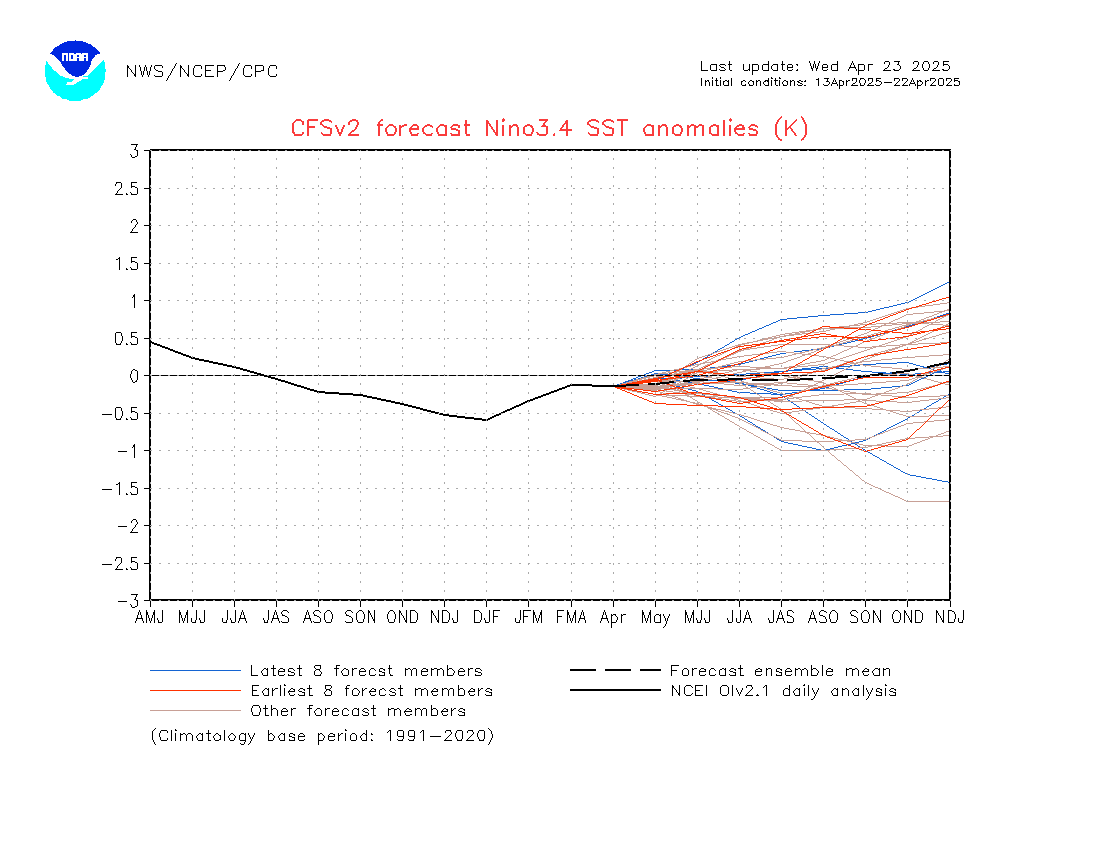
The odds are increasing that an El Niño is in the works for 2014—and recent forecasts show it might be a big one.

As we learned from Chris Farley, El Niños can boost the odds of extreme weather (droughts, typhoons, heat waves) across much of the planet. But the most important thing about El Niño is that it is predictable, sometimes six months to a year in advance.

That’s an incredibly powerful tool, especially if you are one of the billions who live where El Niño tends to hit hardest—Asia and the Americas. If current forecasts stay on track, El Niño might end up being the biggest global weather story of 2014.

The most commonly accepted definition of an El Niño is a persistent warming of the so-called “Niño3.4” region of the tropical Pacific Ocean south of Hawaii, lasting for at least five consecutive three-month “seasons.” A recent reversal in the direction of the Pacific trade winds appears to have kicked off a warming trend during the last month or two. That was enough to prompt US government forecasters to issue an El Niño watch last month.

Forecasters are increasingly confident in a particularly big El Niño this time around because, deep below the Pacific Ocean’s surface, off-the-charts warm water is lurking:

That giant red blob is a huge sub-surface wave of anomalously warm water that currently spans the tropical Pacific Ocean—big enough to cover the United States 300 feet deep. That’s a lot of warm water. Australia Bureau of Meteorology

As that blob of warm water moves eastward, propelled by the anomalous trade winds, it’s also getting closer to the ocean’s surface. Once that happens, it will begin to interact with the atmosphere, boosting temperatures and changing weather patterns.

There are signs that this huge pool of sub-surface warmth is starting to emerge on the surface in recent days:

Which means that April 2014 could be the month the mega El Niño gets officially underway.

Now, before we get ahead of ourselves, meteorologist Cliff Mass warns that this time of year is known for lower performance in forecasting El Niños. But in general, scientists who follow these things are anticipating what could become a strong event.

“We’re carefully watching the potential development of an El Niño later this spring and into summer,” said forecaster Tony Barnston of the International Research Institute for Climate and Society in a recorded briefing message. “Below the surface we have a lot of warming and that could eventually make its way to the surface and create an El Niño.”

The warm water just below the ocean’s surface is on par with that of the biggest El Niño ever recorded, in 1997-98. That event caused $35 billion in damages and was blamed for around 23,000 deaths worldwide, according to the University of New South Wales. The 1997-98 El Niño is also the only other time since records begin in 1980 that sub-surface Pacific Ocean water has been this warm in April.

Climate change skeptics point to El Niño-fueled 1998 as the year global warming “stopped.” Of course, global warming hasn’t stopped at all. The 10 hottest years on record have all occurred since 1998. The acceleration of that warming has slowed, though, compared with the previous breakneck pace during the late 20th century.

One of the theories put forth by the mainstream scientific community to explain the slow-down since 1998 has been increased storage of warm water in the Pacific Ocean. If that theory is true, and if a major El Niño is indeed in the works, the previously rapid rate of global warming could resume, with dramatic consequences.

As I wrote last fall, the coming El Niño could be enough to make 2014 the hottest year in recorded history, and 2015 could be even warmer than that. The 1997-98 super El Niño was enough to boost global temperatures by nearly a quarter of a degree Celsius. If that scale of warming happens again, the world could approach a 1ºC departure from pre-industrial times as early as next year. As climate scientist James Hansen has warned, that’s around the highest that temperatures have ever been since human civilization began.

Indeed, even the forecast is already having an effect: An index of global food prices reached a 10-month high in March, blamed in part on shortages an El Niño may exacerbate. Here’s what else we could expect:

A severe drought continues to rage in and around Indonesia, which an El Niño would likely worsen.

Peru’s anchovy catch may be significantly affected should a strong El Niño materialize.

Australia’s ongoing battles with bush fires may be intensified once its dry season resumes later this year.

But perhaps the strangest impact so far has been in India, where monsoon forecasting is at the heart of national politics. The meteorology department there has accused US weather forecasters of “spreading rumors” and colluding to ruin the Indian stock market by forecasting a return of El Niño.

There’s a bit of good news, too: Hurricane seasons in the Atlantic tend to be less severe under this kind of forecast. And people in drought-stricken California could be forgiven if they’re crossing their fingers for a strong El Niño, which is linked to some of the wettest years in state history. Still, it’s certainly no slam dunk that an El Niño would be enough to end the crippling drought there or even bring above normal rainfall. And if the El Niño ends up being as strong as current predictions indicate, there’s a chance it may even tip the scales from drought to deluge across the state, spurring damaging mudslides amid bursts of heavy rain. The two strongest El Niños in the last 30 years—1982-83 and 1997-98—both caused widespread damage from flooding in California.

The moral of the story here is: Be careful what you wish for.

Excerpt from: 

Why This Year’s El Niño Could Grow Into a Monster

Posted in alo, Anchor, Citizen, Eureka, FF, GE, LAI, LG, ONA, PUR, Radius, The Atlantic, Uncategorized, Venta | Tagged , , , , , , , , , , | Comments Off on Why This Year’s El Niño Could Grow Into a Monster

Like Meat and Beer? Hate Cancer?

Mother Jones

<!DOCTYPE html PUBLIC “-//W3C//DTD HTML 4.0 Transitional//EN” “http://www.w3.org/TR/REC-html40/loose.dtd”>

Spring is coming. Before long, beer-drinking men and women will be coaxing fiery embers to life and tossing dead animals onto charred metal grates above them. Ahh, the sizzle and snap of fat as it hits red hot coals. Oh no! What’s that you say? Carcinogens are caused by the “contact of dripping fat with hot embers“?

Fear not, eager human. And keep a couple of your dark winter beers handy, because researchers from Portugal and Spain have found that marinating your pork chops in dark beer dramatically reduces carcinogenic contamination. Rejoice!

Smoke, pyrolysis (organic matter decomposing in intense heat), and dripping fat can all cause the accumulation of polycyclic aromatic hydrocarbons (PAHs) on charcoal-grilled meats. According to the EPA, PAHs have caused tumors, birth defects, and “reproductive problems” in lab animals—though the Agency clarifies that these effects have not yet been observed in humans. You can also find PAHs in cigarette smoke and car exhaust.

The researchers tested the effect of marinating meat with Pilsner, nonalcohol Pilsner, and Black beer, against a control sampling of raw meat. Black beer show the strongest “inhibitory effect,” reducing the formation of carcinogenic PAHs by 53 percent. Pilsner beer and nonalcholic Pilsner, showed less significant results: 13 percent and 25 percent respectively. The scientists aren’t entirely sure why a beer marinade has this effect; they speculate that it might be the antioxidant compounds in beer, especially darker varieties, which inhibit the movement of free radicals necessary for the formation of PAHs.

The study, which will be published in the Journal of Agricultural and Food Chemistry, and sponsored by the University of Porto and the American Chemical Society, confirms what we always knew in our hearts: Guinness is good for you.

Credit:  

Like Meat and Beer? Hate Cancer?

Posted in Anchor, Aroma, Eureka, FF, GE, green energy, LAI, LG, ONA, organic, Radius, Uncategorized, Venta | Tagged , , , , , , , , , | Comments Off on Like Meat and Beer? Hate Cancer?

Why the EPA Can’t Manage To Block This Gnarly Herbicide

Mother Jones

<!DOCTYPE html PUBLIC “-//W3C//DTD HTML 4.0 Transitional//EN” “http://www.w3.org/TR/REC-html40/loose.dtd”>

In the February 10 issue of the New Yorker, Rachel Aviv has an outstanding piece on Tyrone Hayes, the University of California-Berkeley biologist whose research found that atrazine, a widely used herbicide, caused extreme sexual-development problems in frogs at very low levels. Aviv’s article follows a superb Hayes profile by Dashka Slater published in Mother Jones in 2012. Aviv’s piece gives some key background on just why it’s so hard for the US Environmental Protection Agency to take action on chemicals like atrazine, which in addition to harming frogs, is also suspected of causing thyroid and ovarian cancers in people at low doses. Here’s the key bit regarding the EPA and its reliance on cost-benefit analyses to determine what chemicals the public can and cannot be exposed to:

In the U.S., lingering scientific questions justify delays in regulatory decisions. Since the mid-seventies, the E.P.A. has issued regulations restricting the use of only five industrial chemicals out of more than eighty thousand in the environment. Industries have a greater role in the American regulatory process—they may sue regulators if there are errors in the scientific record—and cost-benefit analyses are integral to decisions: a monetary value is assigned to disease, impairments, and shortened lives and weighed against the benefits of keeping a chemical in use. Lisa Heinzerling, the senior climate-policy counsel at the E.P.A. in 2009 and the associate administrator of the office of policy in 2009 and 2010, said that cost-benefit models appear “objective and neutral, a way to free ourselves from the chaos of politics.” But the complex algorithms “quietly condone a tremendous amount of risk.” She added that the influence of the Office of Management and Budget, which oversees major regulatory decisions, has deepened in recent years. “A rule will go through years of scientific reviews and cost-benefit analyses, and then at the final stage it doesn’t pass,” she said. “It has a terrible, demoralizing effect on the culture at the E.P.A.”

Hat tip: Kathleen Geier.

Follow this link – 

Why the EPA Can’t Manage To Block This Gnarly Herbicide

Posted in Anchor, Eureka, FF, GE, LG, ONA, Radius, Uncategorized | Tagged , , , , , , , , , | Comments Off on Why the EPA Can’t Manage To Block This Gnarly Herbicide

If your pot isn’t organic, you’re probably inhaling pesticides

If your pot isn’t organic, you’re probably inhaling pesticides

Shutterstock

Bummer news for pot smokers: Up to 70 percent of the pesticides found on a marijuana bud can end up in the smoke you’re inhaling. That’s according to recent research conducted by Jeffrey Raber, who holds a PhD in chemistry from the University of Southern California and operates a medical cannabis testing laboratory in L.A.

The Eureka Times-Standard reports:

“I think that what’s so alarming to us is that such a huge amount of pesticide material could be transferred,” Raber said. “And, you have to consider that when you inhale (something), it’s much like injecting it directly into your blood stream.” …

Raber said it’s important to remember that smoking a marijuana bud that’s been sprayed with chemicals is far different than eating a non-organic tomato. First and foremost, he said, there are no controls over what’s sprayed on marijuana crops. And, while most people would rinse off a tomato before eating it, they can’t wash a bud before putting it in their pipe. The body also has filters in place for things that are ingested, he said, but not for what’s inhaled.

“You don’t have the first pass metabolism of the liver,” he said. “You don’t have the lack of absorptivity going through the stomach or the gut lining. It’s a very different equation when you’re inhaling.”

Pot farms are notorious for heavy use of pesticides, and even ones selling to legal medical marijuana dispensaries often go heavy on the toxic chemicals.

Humboldt County Sheriff Mike Downey said his deputies have been finding massive amounts of high-powered pesticides at marijuana gardens throughout the county, many of which have posted medical marijuana recommendations — meaning the marijuana grown there could be heading for collectives and, ultimately, to patients.

“I would be very concerned if I were a consumer,” Downey said.

Our takeaway: Go organic. And if you’re not sure of the provenance of your pot, take it brownie form.


Source
What are you smoking? Study finds pesticides transfer to marijuana smoke, Eureka Times-Standard

Lisa Hymas is senior editor at Grist. You can follow her on Twitter and Google+.

Find this article interesting? Donate now to support our work.Read more: Living

See more here:  

If your pot isn’t organic, you’re probably inhaling pesticides

Posted in alo, ALPHA, Anchor, Eureka, FF, G & F, GE, LG, ONA, organic, oven, Uncategorized | Tagged , , , , , , , , , | Comments Off on If your pot isn’t organic, you’re probably inhaling pesticides

Why Harry Reid Fears a Long-Term Shutdown Deal

Mother Jones

<!DOCTYPE html PUBLIC “-//W3C//DTD HTML 4.0 Transitional//EN” “http://www.w3.org/TR/REC-html40/loose.dtd”>

As the week of a possible government default began, talks aimed at ending the shutdown and the debt ceiling crisis revolved around a new wrinkle: the resistance of Senate majority leader Harry Reid and his fellow Senate Democrats to an agreement funding the government for a longer, rather than shorter, period of time. Say what?

Why is kicking the can down the road a couple of months a better option than staving off another government-spending showdown for a half a year, as Republicans prefer? It’s because the Republican plan would lock in for even longer the $1.2 trillion in budget cuts known as sequestration, which went into effect in March and which Democrats really hate.

Democrats want to replace the economy-crimping sequester with a less austere plan that includes more targeted cuts and higher total spending levels. Reid is OK with extending current sequester-level spending—but only until mid-January, so a broader budget deal that includes Democratic priorities can be worked out before deeper spending cuts go into effect. If the House somehow forces a longer term deal, it would be much harder for Reid and Democrats to negotiate a substitute for the sequester, say, six months from now because the fiscal year (which began October 1) would be half over. That would mean that the current deep budget cuts, which have already resulted in the loss of hundreds of thousands of jobs, would likely drag on and on.

Reid does not want a deal that un-shuts the government to prevent him from waging a fight over sequestration. In September, he says, he agreed to a temporary continuing resolution that would keep the US government open for two months at the spending levels dictated by sequestration, and considered that a concession to House Speaker John Boehner and the Republicans. He did so with the expectation that he could still try to undo some of the consequences of sequestration in the 2014 budget. And with the House Republicans now on the ropes in the dual shutdown/debt ceiling crisis, he has seen his leverage increase and has pushed for the chance to wage another battle over sequestration.

As my colleague Tim Murphy and I reported earlier this year, below are some of the sequester’s initial impacts on programs that help struggling Americans. The harmful cutbacks explain why Reid and Democrats desperately want a way out of Sequester Land. (Exact numbers will be different for 2014, because sequestration was not in effect for the entirety of 2013, and Congress could restructure the cuts).

Public housing subsidies: $1.9 billion in cuts hit 125,000 low-income people who lost access to vouchers to help them with their rent. The housing authority in Rochester, New York cut 600 vouchers after losing $2.5 million in funding. In Dubuque, Iowa, new Section 8 housing vouchers were put on hold. And in New Orleans, the housing authority recalled 700 Section 8 vouchers for low-income families.

Foreclosure prevention: 75,000 fewer people received foreclosure prevention, rental, and homeless counseling services.

Educational programs: Learning programs for poor kids saw a total of $2.7 billion in cuts. The $400 million slashed from Head Start, the preschool program for low-income children, meant reduced services for some 70,000 kids. Here’s how that panned out at the local level. The Head Start program in Jefferson County, Alabama closed for 10 weeks, affecting 276 kids. Fifteen staffers were furloughed. In Fayetteville, Arkansas, the Head Start program ended 13 days early. In Eureka, Kansas, the program closed for good.

Title I Funding: The Department of Education’s Title I program, the biggest federal education program in the country, subsidizes schools that serve more than a million disadvantaged students. It was cut by $725 million.

Rural rental assistance: Cuts to the Department of Agriculture resulted in the elimination of rental assistance for 10,000 very low-income rural people, most of whom are single women, elderly, or disabled.

Social Security: Although Social Security payments themselves were not scaled back, cuts to the program resulted in a backlogging of disability claims.

Unemployment benefits: More than 3.8 million people receiving long-term unemployment benefits saw their monthly payments reduced by as much as 9.4 percent, and lost an average of $400 in benefits over their period of joblessness.

Veterans services: The Transition Assistance Program was forced to cut back some of the job search and career services it provides to 150,000 vets a year.

Nutritional Assistance for Women & Children: The government’s main food stamp program is exempt from cuts, but other food programs took a whack. Some 600,000 women and children were cut from the Special Supplemental Nutrition Program for Women, Infants, and Children, which provides nutrition assistance and education.

Special education: $978 million in cuts affected 30.7 million children. For example, because of the scaling back of federal grants to states for students with disabilities, cash-strapped states and districts had to come up with the salaries for thousands of teachers, aides, and staff that serve special-needs kids. In Fort Myers, Florida, the Lee County school district had to lay off 100 employees, including 15 teachers, due to the lack of special education funding.

Job training programs: $37 million was slashed from a job retraining and placement program called Employment Services Operations, and $83 million was cut from Job Corps, which provides low-income kids with jobs and education.

Visit source – 

Why Harry Reid Fears a Long-Term Shutdown Deal

Posted in Eureka, FF, GE, LAI, LG, ONA, Uncategorized, Venta | Tagged , , , , , , , | Comments Off on Why Harry Reid Fears a Long-Term Shutdown Deal

Transforming the game one bag ban at a time

Original article – Transforming the game one bag ban at a time Related Articles Connecting more deeply with our supporters Connecting more deeply with our members Treating the beach like an ashtray

Read article here: 

Transforming the game one bag ban at a time

Posted in alo, Citadel, eco-friendly, Eureka, FF, G & F, GE, LAI, Monterey, ONA, solar, solar power, Uncategorized, Vintage | Tagged , , , , , , , , , | Comments Off on Transforming the game one bag ban at a time