Category Archives: solar panels

Earth911 Podcast, Sept. 23, 2019: CBD Sustainability, Solar Installation Contracts, & Indoor Vertical Gardens

Share this idea!

Tweet
Pin0
Facebook0

0shares

Following the rapid rise of CBD-based products, Earth911 looks at the environmental footprint of the non-psychoactive product of hemp and cannabis plants. We also walk you through the steps to a successful home solar installation contract and explore the opportunity to green your interior with vertical gardens. Join Evelyn Fielding-Lopez, Sarah Lozanova, and Mitch Ratcliffe for this week’s sustainable living and recycling discussion.

Products containing CBD are promoted as cures of pain, anxiety, and animal health, but is the production of CBD sustainable? We explore how CBD is grown and packaged to discover if your cannabis-based skin regime or sleep aide is good for the planet. Most CBD comes from industrial hemp farms, which use the spent plant material to make textiles and rope, among various other uses for this ancient plant. We also answer a related Earthling Question about how to determine the quality and dosage of CBD products.

If you are planning to install solar panels before the next annual reduction in government subsidies, check out Sarah’s guide to finding the right contractor and negotiating a good deal.

As we head into fall, it’s a good time to look indoors for vegetative inspiration. Vertical gardens beautify your home while freshening the air and supplying herbs for your winter meals. And if you’re looking for other projects for the longer nights ahead, we have some ideas for using the wood from shipping pallets to make furniture, kitchen racks, and more. We cover how to choose the right pallets, the tools you’ll need, and point to some great DIY projects.

This week’s Earthling Questions are about how to recycle the interior of a vehicle and whether alkaline batteries need to be bagged for recycling. Be sure to keep your guides to recycling single-use batteries and rechargeable batteries handy.

Join the conversation and share your thoughts with the community in our Earthling Forum.

Subscribe to the podcast in iTunes.
Follow the podcast on Spreaker, iHeartRadio, or YouTube.

You Might Also Like…

Earth911 Podcast, March 29, 2019: Sana Packaging Aims for Sustainable Cannabis

The fast-growing cannabis industry is a growing source of packaging …Earth911March 29, 2019

7 DIY Greenhouse Ideas That Are True Gardening Gold
Have you already started your spring garden? Getting ahead of …Chrystal JohnsonMarch 28, 2019

Can I Afford a Solar System for My Home?
Have you considered installing a solar power system on your …Sarah LozanovaJanuary 31, 2019

earth911

More here:  

Earth911 Podcast, Sept. 23, 2019: CBD Sustainability, Solar Installation Contracts, & Indoor Vertical Gardens

Posted in ALPHA, cannabis, eco-friendly, FF, G & F, GE, Landmark, LG, ONA, PUR, Radius, solar, solar panels, solar power, Thermos, Uncategorized | Tagged , , , , , , , , | Comments Off on Earth911 Podcast, Sept. 23, 2019: CBD Sustainability, Solar Installation Contracts, & Indoor Vertical Gardens

Berkeley triggered a chain of anti-gas laws

Visit site:

Berkeley triggered a chain of anti-gas laws

Posted in Everyone, FF, GE, LG, PUR, Safer, solar, solar panels, Uncategorized | Tagged , , , , , , , | Comments Off on Berkeley triggered a chain of anti-gas laws

Companies don’t want Trump’s ‘business-friendly’ methane rollbacks

The Environmental Protection Agency announced plans late last week to eliminate an Obama-era rule that required oil and gas companies to monitor and control the release of the potent greenhouse gas methane during their operations.

The proposed standards would no longer require new natural gas wells, pipelines, and storage facilities to detect and limit leaking methane, the primary component of natural gas which packs at least 25 times the atmosphere-warming power of carbon dioxide.

A number of parties have spoken out against the regulatory change, including Democratic politicians, public health experts, environmental activists, and of course, scientists. But perhaps the most surprising opponents are those it ostensibly benefits: major oil and gas companies like BP, ExxonMobil, and Shell. It seems counterintuitive for big businesses to oppose regulatory cuts, especially since Trump has touted his rollbacks as business-friendly. Why would large oil companies would actually want to be regulated?

There are two main reasons. The first has to do with public relations. Many fossil fuel companies are trying to revamp their image as the public learns about how much and how early the fossil fuel industry knew about climate change (spoiler: a lot, and the 1970s, respectively). Part of their PR push is positioning themselves as part of the solution, by pushing natural gas as a “cleaner” fossil fuel that can be used alongside alternatives like wind and solar.

Gretchen Watkins, president of Shell’s U.S. division, which has fracking and refining operations in more than 70 countries, has said that methane leaks are “a big part of the climate problem, and frankly we can do more.” A study last year estimated that 13 million metric tons of natural gas is lost through leaks each year, about 2 percent of all natural gas produced in the U.S. On Thursday, Watkins announced Shell’s plans to reduce methane leaks from its own global operations to less than 0.2 percent by 2025. And Shell isn’t the only fossil fuel company going full-steam ahead with the “we’re part of the solution” message. More than 60 companies have already pledged to curb methane emissions independent of government regulations.

The second reason the biggest oil and gas firms oppose the rollback has to do with competition among oil and gas companies. Multinational companies like BP and Shell could easily afford to comply with the Obama-era methane rule. (The EPA has said the regulatory rollback will save the oil and natural gas industry $17 million to $19 million per year, a drop in the oil barrel for a $388 billion company like Shell.) The regulation basically just forced big companies to capture natural gas more efficiently, which is good for their bottom lines. But softening the methane rule will actually help smaller oil and gas companies, which have smaller profit margins and can’t as easily comply with regulations. So, from the perspective of fossil fuel behemoths, cutting the methane rule gives a leg up to the little guys.

This isn’t the first time President Trump’s “pro-business” plans have met a tepid response from the industry he was trying to boost. Some electric utility companies have opposed weakening Obama-era limits on toxic mercury pollution — many have already spent billions to comply with the Obama-era rule, so eliminating it does little to help them now. And automakers have continued to balk at the administration’s plans to roll back fuel efficiency standards. With California maintaining higher standards, automakers are caught in the middle and are increasingly siding with the Golden State (as is the U.S. Chamber of Commerce), for the simple reason that they don’t want to produce different cars for different states. Just last week, the President furiously tweeted that Henry Ford was “‘rolling over’ at the weakness of current car company executives.”

Though the auto industry is protesting the regulation changes for different reasons from the oil industry, both are related to the fact that the Trump administration is woefully behind the times. The established regulations, along with consumers who are increasingly concerned about the climate, have set the market on a different path. New technologies are being implemented, and time and money have been invested in products that will meet new green demand. As a result, many fossil fuel, car, and energy companies would rather stick to the old plan than accept a regulatory gift from the Trump administration that’s more trouble than it’s worth.

Link:  

Companies don’t want Trump’s ‘business-friendly’ methane rollbacks

Posted in Accent, alo, FF, G & F, GE, LG, ONA, solar, solar panels, Sprout, Uncategorized | Tagged , , , , , , , , | Comments Off on Companies don’t want Trump’s ‘business-friendly’ methane rollbacks

How to Compare Solar Energy Bids & Select a Solar Installer

Share this idea!

Pin0
Facebook0

0shares

More home and business owners are installing solar panels than ever before. And we now have a greater variety of panels and solar equipment to choose from than ever before. Depending on where you live, you probably have at least two or three solar installers that service your area. This means you have a lot of options when installing a solar energy system — which can be overwhelming.

Let’s explore some of the items to consider that will help you select a solar energy installer that can meet your needs.

Research Solar Installers

Like with any other home improvement project, it is wise to get at least two or three bids from licensed solar contractors with liability insurance. Here are a few ideas for finding potential installers.

Seek Recommendations & Online Reviews

If you know people with solar systems, you can ask them about their experience and possibly get referrals that way. Online reviews are also a good way to find some of the best installers in your area. Consider how long the company has been in business, the depth of their experience, their credentials, and their reputation.

Consider Local Businesses

Whenever possible, support small, locally-owned businesses. This is beneficial for your local economy and maybe even your pocketbook. A study from the National Renewable Energy Labs (NREL) found that small- to mid-sized installers charge 10 percent less than big installers.

Review Solar Contractor Qualifications

Another important thing to consider is the qualifications of a given solar contractor. The North American Board of Certified Energy Practitioners (NABCEP) certifies solar PV installers. Their requirements involve passing a written test and accumulating a certain amount of solar field experience. NABCEP certification doesn’t guarantee quality workmanship, but it does ensure a certain level of solar energy expertise and installation experience. Ideally, a NABCEP-certified professional will oversee your solar installation — or you will even have a NABCEP-certified installer on the roof.

Check Installer’s Use of Subcontractors

It is also helpful to know if a solar installer subcontracts out some or all of the solar installation. If so, find out what work the contractor will do themselves and what they outsource to a subcontractor. Subcontracting part of the job isn’t necessarily bad news. For example, they might subcontract a roofer to flash around the installation, which could improve the quality of the final results. 

Compare Project Quotes

Now that you have received quotes from at least two or three reputable solar installers, it is time to compare them. This could be a bit more difficult than you might expect because it is rarely an apples-to-apples comparison.

Some of the most crucial things to consider are the warranties, quality of the solar equipment, appearance of the solar panels, financing, and when they can complete your installation.

Warranties

The solar equipment will come with its own set of warranties — this varies by the manufacturer and equipment model. There should also be a warranty on labor. Keep in mind that equipment failure can often require a couple of people to climb up on your roof to repair it. This can get expensive if labor is not covered. The more reputable equipment manufacturers and solar contractors are more likely to honor their warranties and to be in business down the road.

Equipment

Solar installers tend to have solar panels, inverters, and racking equipment that they prefer using. If you are particularly excited about a particular solar product, you can ask the contractor if they will use this equipment. This can also make it easier to make a more accurate comparison between installers’ quotes.

If you don’t have particular products in mind, it is still important to consider the quality of the equipment and that it fits your priorities. Some of the most relevant considerations for solar panels are their long-term power generation, product warranties, environmental performance, appearance, and module testing performance. Cheaper solar panels have a lower upfront cost, but they may also produce less power down the line. Some panels might be more expensive partially because they have a sleek, all-black appearance, which may not be a top priority to you.

Financing

Many solar installers partner with financing companies. If you need a loan to install your solar system, consider the financing company they use. For example, what are their rates, fees, and monthly payments? This not an issue if you do not need financing or you are not going through the solar installer to obtain a loan.

Scheduling

When comparing bids, it is also helpful to know when a given installer can get started. Because solar is booming, some contractors have a very full schedule for months. When your solar system is installed can also impact the percentage of the federal solar tax credit as it will taper down for the next several years, effective on the first of each year.

Power Generation

Another thing to consider is power generation. Many contracts will offer estimates on how much electricity a given solar system will produce. Some installers use more conservative methods when estimating this than others, so you do not want to take their estimates literally. For example, one installer may estimate that your roof is more shaded than another installer’s estimate. This means you may want to verify these numbers to make a more accurate comparison between bids. To do this, visit PVWatts Calculator by NREL.

It is a good idea to consider your future electric needs. If a given solar system is estimated to produce more than 100 percent of your electricity needs, it may be larger than necessary. Do you plan a purchase in the near future that will increase your power consumption, such as an electric vehicle or a heat pump? If so, it is useful to slightly oversize the solar system for the time being.

Electric Bill Savings

Also, installers may estimate your electric bill savings. Make sure they used an accurate power rate by viewing your electric bills.

Examine the Contract

It is common when reading solar installer reviews to find dissatisfied customers. In many cases, the salesperson promised the customer something verbally that they didn’t deliver on.

Make sure everything that the salesperson promised is included in the terms in the contract. For example, if your solar installer promised the solar company would remove and reinstall the solar system when the roof is replaced, make sure it is in the contract. If the salesperson promised the system would be installed by December 31, before the federal tax credit tapers down a few percentage points, look for that in the contract.


You Might Also Like…

How to Negotiate With a Contractor for Green Building Projects

If you’re planning a green renovation or remodeling project, you …Sarah LozanovaAugust 22, 2019

Earth911 Conscious-Shopping Guide: Best Solar Panels
Technological advances have transformed the solar energy industry in recent …Sarah LozanovaMay 14, 2019

Can I Afford a Solar System for My Home?
Have you considered installing a solar power system on your …Sarah LozanovaJanuary 31, 2019

earth911

From – 

How to Compare Solar Energy Bids & Select a Solar Installer

Posted in alo, ALPHA, eco-friendly, FF, G & F, GE, LG, Mop, ONA, PUR, Radius, solar, solar panels, solar power, Uncategorized | Tagged , , , , , , , , , , | Comments Off on How to Compare Solar Energy Bids & Select a Solar Installer

This group is teaching new sailors how to tackle plastic pollution

The Bronx’s City Island docks are a strange mixture of outer-borough New York and New England coast. There are crusty boatyards and pristine yacht clubs, seedy seafood joints and fancy oyster bars, “my she was yar” schooners and “I’m on a boat” party cruisers. But the love of the ocean has always had the ability to bring disparate-seeming forces together — including, in this case, climate activism and the American Sailing Association.

On a recent summer morning, I headed to the docks to watch Dave Jenkins prepare a small sailboat. Life vests and nautical maps in hand, Jenkins — a charismatic middle-aged man decked out in an appropriate sailing ensemble (boat shoes included) — boarded a vessel which was moored at the Harlem Yacht Club. We had been going back and forth for months trying to find the right time to head out on the water, only to be forced to reschedule several times due to unfavorable weather conditions. First it was the cold, then the heat, then torrential rain — the kinds of extremes that climate scientists say we should expect more of in the near future.

But on that day, with the sun shining bright and a slight breeze in the air, Jenkins assured me conditions were “ideal for sailing.”

“This is my playground,” Jenkins said of the open water. But it’s not just his alone — the way he sees it, the water belongs to everyone. He takes his sailboat, the Mary Lou, out regularly, showing students how to explore the five boroughs by way of its many waterways. While many people think of sailing as an exclusive endeavor, Jenkins says there are ways to keep the sport accessible. For example, there are a lot of old sailboats out there that sell for cheap and don’t require expensive fuel compared to one of those pesky motorboats.

“There’s so much to do in the city, they forget about the sixth borough — the water,” Jenkins said.

Jenkins’ love of the water is infectious. But in order for future generations to continue to enjoy it, he knows seafarers like himself need to do more than attract new talent. They also need to keep the ocean as clean as possible. And so every time he takes the sailboat out to open water, whether he’s hanging out with friends or instructing students, he keeps an eye open for any plastic debris.

Grist / Paola Rosa-Aquino

Jenkins says cleaning up trash while you are out on the water is something many sailors have been doing for a long time. But thanks to a new ocean cleanup program by the American Sailing Association, one of the world’s biggest coalitions of sailing enthusiasts, trainers, and charter companies, the habit is becoming formalized.

The group started the crusade, called Operation Plastic Pollution Purge, last year. The campaign, which, according to the American Sailing Association’s website, has exposed around 111 million people to the concept of ocean conservation, urges boaters to reduce or eliminate the number of plastic items they bring on their vessels and to collect and properly dispose of any trash they see while they’re out on open water. It’s an especially important value to instill in new sailing enthusiasts, and something organization says it is uniquely situated to do given its 300 schools and 7,000 instructors.

“It has to start with one person, and what better group of people than sailors,” Lenny Shabes, CEO and founder of the American Sailing Association, told Grist.

Granted, not all types of boats are great for the environment. Big cruise ships, for example, run off of diesel fuel and can actually end up being more harmful to the planet per mile even compared to air travel. But sailboats are largely wind-powered, and when decked out with solar panels like the one currently transporting 16-year-old Swedish climate activist Greta Thunberg to the U.N. Climate Summit in New York City, can provide a net-zero means of transportation even across long distances.

More than that, Shabes says sailing can benefit the planet because it can make people realize they have a special responsibility to the water. “It’s a very spiritual thing. There’s no propulsion involved, other than what the good earth gives you. The difference between living in New York City and going sailing in the Long Island Sound, which is one of the most beautiful places in the world to sail is immense. To see it become polluted because some yahoo doesn’t care and throws the plastic bottle overboard — it irks me.”

And between the planet’s warming waters and humanities’ growing trash problem, the oceans need all the love they can get. Scientists don’t know exactly how much plastic trash is in the ocean, but some estimates suggest that as much as 244,000 metric tons might bob on the surface. Another 8.5 million metric tons are though to settle on the ocean floor per year. The United Nations estimates that by the year 2050 there will be more plastic debris in our oceans than fish.

“It’s as if you took a New York City garbage truck and dumped it full of plastic into the ocean every minute of every day,” Jenkins said.

If that trash stays at sea, it could cluster up in trash hot spots, the most famous of which is a swirling mass of garbage twice the size of Texas. The patch is located somewhere between California and Hawaii called the Great Pacific Garbage Patch. There, currents deposit waste like abandoned fishing gear, bottles, and tiny pieces of pulverized plastics.


Back at the City Island docks, Jenkins and I were just about ready to set sail on our trash-finding venture. As the Mary Lou pulled out from the Bronx and into the open water, it felt like an escape from city life. To the east lay the Sound, Connecticut to the north and Long Island to the south. We headed toward the Long Island Sound.

Jenkins surveyed a nautical chart as we headed south and the ship neared the Throgs Neck Bridge. It wasn’t long before we spotted our first piece of refuse — a bright yellow bag floating on the waves. Jenkins quickly redirected the Mary Lou, grabbing a handy net. As we cruised by, he dipped it into the water and lifted it up to reveal a soggy bag of Funyons. After about three hours of sailing, we’d amassed a modest bag’s worth of trash. Jenkins said that if we’d gone sailing on a Monday after people were in surrounding beaches over the weekend, he would have expected even more prices of plastic surrounding the ship.

Grist / Paola Rosa-Aquino

Of course, it will take more than a few sailing trips to solve the ocean’s plastic problem. That’s why many countries are either restricting or even wholesale banning single-use plastics. But Bonnie Monteleone, executive director of the Plastic Ocean Project, says these small-scale clean-ups can still do a lot of good. As part of a separate cleanup effort, she hired charter fishermen to pick up trash they see offshore. “Just that exposure of getting people to become aware of how much trash is out there — I call it “the magic eye,” Monteleone told Grist. “Once you do you can’t unsee it. I think any opportunity that will get people out on the water [for this kind of effort] will cast a wider net and get more people proactive at picking up what they see. “

And the stakes are high: The billions upon billions of items of plastic waste choking our oceans, lakes, and rivers and piling up on land is more than unsightly and harmful to plants and wildlife. According to Lauren Coiro, the American Sailing Association’s marine conservationist, plastic Pollution is a very real and growing threat to human health. “In terms of the health of marine life, it’s not good,” Coiro told Grist. “In terms of our own health, it’s not good.”

Indeed, the toxic chemicals leach out of plastic and can be found in the blood and tissue of nearly every one of us. Exposure to these substances is linked to cancers, birth defects, impaired immunity, endocrine disruption and a whole slew of other ailments. What’s worse, instead of breaking down, plastic breaks into smaller and smaller pieces called microplastics, making it even harder to clean up.

But on a macro level, ocean cleanups can still do their part to help rid the ocean of its plastic scourge. And who better to lead the way than people who are already on the waves? “Sailors are naturally a really easily motivated group of people,” Coiro says. “When we asked sailors to start talking about this and take leadership … a lot of sailors [were] happy to do it..”

At the end of our rendezvous on open water, Jenkins packed the sails away, a process that requires the utmost care to avoid twists, tears, and tangles. With the lines finally coiled and the sails covered, and Mary Lou was tucked in for the day — but perhaps not for long.

If weather conditions are favorable, Jenkins says he’ll go back out and do the same thing all over again tomorrow.

Original article: 

This group is teaching new sailors how to tackle plastic pollution

Posted in Accent, alo, ATTRA, Everyone, FF, GE, LG, ONA, PUR, solar, solar panels, Uncategorized, wind power | Tagged , , , , , , , , , | Comments Off on This group is teaching new sailors how to tackle plastic pollution

Green Websites and Online Games for Kids

Share this idea!

Pin0
Facebook0

0shares

Young people are spending more and more time on devices. Kids between the ages of eight and 12 spend nearly six hours online daily on average. Although this statistic seems quite high, it is important to consider what children are doing online.

There are many educational websites and online games that teach children about nature, the climate crisis, or how to recycle. Unfortunately, some of these are not all that engaging, judging from my kid’s responses to them. Others teach about the natural world but don’t specifically teach young people about living greener lives.

Let’s explore some of the best green websites for young people.

Super Sorter

Super Sorter is an engaging game that takes children to a materials recovery facility to sort mixed recyclables. Plastic bottles, glass containers, and cardboard boxes appear on a conveyor belt where they must be sorted by one of four different technologies. Each sorter specializes in capturing different types of materials so players purchase and place the sorters strategically to have the highest recovery rate.

After watching kids play this game, it does seem to genuinely teach the concept that specific infrastructure is needed to have high recovery rates for single-stream recycling. It is ideal for late elementary age students and older.

PBS Nature Games

The PBS Kids website has a collection of nature games for elementary school-aged kids with a variety of themes. Gamers learn about ecosystems, bird species, constellations, soil health, geography, and more while playing. The object of the games is sometimes being a steward of nature or the environment, like managing renewable energy production, feeding winter birds, and creating wildlife habitat.

Much of the information is offered as a narrative during the game, which some kids might tune out. If nothing else, kids will gain exposure to certain vocabulary that could be helpful later on. These games are ideal for elementary-age children and often don’t require the ability to read.

National Geographic Kids

The National Geographic Kids website has a variety of resources that teach children about different animal species, planets, and special places. Kids can take a pledge to cut back on the use of disposable plastic, learn about amazing animals, or test their knowledge on a given topic with a quiz.

Rich graphics help keep this site interesting to kids, but aside from the videos, many activities require an ability to read. This website is ideal for late-elementary-age students and older. Most early-elementary-age children will need some help from an adult but will likely find the content interesting.

Ranger Rick

Ranger Rick is an interactive website that teaches children about different animals, provides instruction on craft projects, and has some jokes and games. Like National Geographic Kids, the website has excellent graphics and is well organized for young users.

Although Ranger Rick teaches children about the natural world, the website doesn’t necessarily teach children much about more sustainable lifestyle choices and conservation. One year of full access is $10. Because many activities require an ability to read, most early-elementary-age kids will need some assistance from an adult.

Have you found other educational green websites and online games that your children like? Share them with the Earth911 community in the Earthling Forum.


You Might Also Like…

Stop the Summer Reading Slide With Eco-Themed Kids’ Books

Summer is a time for playing outside and enjoying the …Gemma AlexanderMay 10, 2019

Family Movies for Earth Day and Every Day
Earth Day is great for raising awareness, but it isn’t …Gemma AlexanderApril 16, 2019

4 Clever Ways to Encourage Your Children to Recycle
As we all know, recycling is crucial when it comes …Liz GreeneAugust 15, 2017

earth911

More: 

Green Websites and Online Games for Kids

Posted in ALPHA, eco-friendly, FF, G & F, GE, LG, Mop, ONA, PUR, Radius, solar, solar panels, Uncategorized | Tagged , , , , , , , | Comments Off on Green Websites and Online Games for Kids

The U.N. report calls for better farming. Which 2020 candidates have a plan for that?

Link to original – 

The U.N. report calls for better farming. Which 2020 candidates have a plan for that?

Posted in alo, Casio, FF, GE, LG, ONA, PUR, solar, solar panels, Uncategorized | Tagged , , , , , , , , , , , | Comments Off on The U.N. report calls for better farming. Which 2020 candidates have a plan for that?

Is My Roof Too Shaded for Solar Panels?

Share this idea!

Pin0
Facebook0

0shares

Many people want to install solar panels but their roofs are very shaded. Is it worth it to go solar?

Obviously, solar panels produce more power when they are in direct sunlight, but they do generate some power when shaded. Here are the typical reasons for shady roof areas and how to place solar panels to take advantage of the light that is available.

Solar Orientation

It is ideal to install the solar panels on a south-facing roof.

When the panels point either west or east, they will not get as much direct sun during part of the day. If the panels face east, they will produce a lot of energy in the morning but very little in the late afternoon. The reverse is true if they face west. It is not recommended to install solar panels facing north as they will receive almost no direct sunlight.

To determine the generation loss due to orientation, use the PVWatts calculator tool and edit the azimuth field, which represents the angle at which your solar panels must be placed. 

Trees 

Although trees are wonderful for so many reasons, they are not necessarily compatible with solar panels unless they are planted on the north side of the home.

Trees on the south side can be most problematic because they can block midday sun, which is very important for overall power production. Trees can also prevent passive solar gains that can keep your heating energy use down in the winter.

There are a few things to keep in mind with trees. They could shade your solar panels more in the colder months when the sun is at a lower angle (especially if you live farther north). It is also important to consider the type of trees and how much they will grow.

Some smaller trees can be pruned to keep them small while some trees are just immense. Deciduous trees will shade your panels less in the winter months than conifers because they lose their leaves. However, even branch shade does have an impact on energy production.

Dormers, Gables, and Chimneys 

These roof features are another culprit for solar electricity production. Aside from strategically placing solar panels where they aren’t shaded, there are few ways to get around these architectural obstacles.

An experienced solar installer will be able to place the panels where they receive the least amount of shading. Unfortunately, this might limit the size of the array.

Other Locations for Solar Panels

Keep in mind that you can install panels on a garage, as an awning, on a carport, or even on a trellis. This will probably increase the installation cost, especially if you need to purchase materials to reinforce the trellis or carport. Yet, these structures can be useful solar locations and provide other benefits. 

Join a Community Solar Farm

Community solar gardens or farms are owned by a group of people or a company. They allow a group of households and businesses to use the renewable energy that off-site solar panels generate without installing the solar panels on their properties. Solar farms are ideal for renters, apartment dwellers, low-income households, and people with shaded roofs.

Some states have legislation in place making this arrangement more feasible and economical. Currently, Massachusetts, New York, Minnesota, and Colorado are the the top states for community solar farms. But 15 other states also have policies supporting community solar projects, and in several other states, utility providers and other groups are working to offer community solar. If you live in one of these states and have a shaded roof, joining a community solar farm might be a great option.


You Might Also Like…

Earth911 Conscious-Shopping Guide: Best Solar Panels

Technological advances have transformed the solar energy industry in recent …Sarah LozanovaMay 14, 2019

Can I Afford a Solar System for My Home?
Have you considered installing a solar power system on your …Sarah LozanovaJanuary 31, 2019

Can’t Add Solar Panels to Your Roof? Join a Community Solar Farm
Solar energy development has skyrocketed in recent years, but many …Sarah LozanovaApril 10, 2018

earth911

See the article here:  

Is My Roof Too Shaded for Solar Panels?

Posted in ALPHA, eco-friendly, FF, G & F, GE, LG, Mop, ONA, PUR, Radius, solar, solar panels, solar power, Uncategorized | Tagged , , , , , , , , , | Comments Off on Is My Roof Too Shaded for Solar Panels?

Cook With the Sun: Solar Oven Recipes

Share this idea!

Share

Pin

Sweltering summer temperatures can be a serious drag, but here at Earth911, we try to look at the glass half-full. An unseasonably warm summer may lead us to crank our air conditioners more than usual, but it can also hold the secret to energy-free cooking. We’ve put together five solar oven recipes to help you kick start your solar oven cooking.

You may be familiar with solar ovens from whipping up s’mores other camping treats, but you can actually use these sun-powered wonders to cook just about anything — without using a single kilowatt-hour of electricity. Check out these five tasty recipes for a solar oven, and take advantage of summer heat by cooking with the power of the sun.

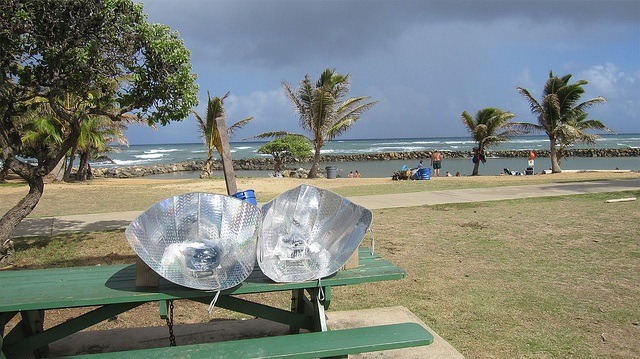
Solar ovens consist of a system of reflectors and a cooking pot. The rest is up to your imagination! Once you have assembled or purchased your solar oven, you can use it to prepare hot meals in the backyard, at a campground or wherever your heart desires — even a sunny beach. Photo: Flickr/EBKauai

Choosing & Using Your Solar Oven

Basically, a solar oven consists of a system of reflectors and a cooking pot. The setup coverts the sun’s rays into heat energy to bake, boil, or steam your next meal. In a solar oven, you can cook anything that you can cook in a conventional electric or gas oven and many meals that you can cook on the stove.

As an added bonus, heading outside to use a solar oven makes cooking your meals a fun-filled event for the whole family. The young (and young-at-heart) will love watching lunch slowly cook under the sun’s rays, and your meals will be even tastier after you’ve had to work a little for them. Solar ovens are also easily portable, meaning you can cook a hot meal at the beach, park, campground, or wherever your heart desires.

If you’re the DIY type, you can easily make your own solar oven out of items like cardboard, a thermometer, foil, glass, and black spray paint. Use these step-by-step instructions from Instructables, or check out this how-to video from aysproject to build your oven.

You can also opt for a store-bought solar oven. As you may expect, purchased models will cost a bit more than DIY alternatives, but they tend to heat up faster and reach higher temperatures. If you’d rather purchase a ready-made oven, check out the GoSun Sport or the Sunflair Mini Portable Solar Oven.

No matter which model you choose, the cooking method for your solar oven remains about the same. Start by placing your oven in direct sunlight, and allow the internal temperature to reach at least 200 degrees Fahrenheit before placing your meal inside.

Think cooking with the sun takes all day? Think again. If you refocus the oven to follow the sun’s rays every 30 minutes, your cooking time will be similar to cooking with a conventional oven or stove. You can also use a solar oven for recipes you’d use in a slow cooker (like a Crock-Pot). If your cooking pot does not have a lid, you may want to create some sort of makeshift cover to keep heat from escaping the pot, which can greatly increase cooking time.

Keep in mind that browning is unlikely in a solar oven due to lower temperatures and lack of air circulation. On the bright side, this means that you don’t have to worry about your food getting dried out or burned. On the not-so-bright side, you probably won’t achieve the crispiness or caramelization you could expect from a conventional oven. So, choose your recipes accordingly to avoid surprises.

As for the best solar cooking vessel, a dark, thin-walled pot with a lid works best, according to Solar Cookers International. Dark pots change the sun’s rays into heat energy, while shiny aluminum pots cause light to be reflected outward, reducing the oven’s temperature. Glass casserole dishes with lids will also do the trick.

5 Solar Oven Recipes

Photo flickr/Megan

1. Mediterranean Flatbread Recipe

What you’ll need:

1 cup olive oil
1/4 cup balsamic vinegar
1 teaspoon dried oregano
1 teaspoon dried thyme
Six pieces of flatbread
3/4 cup Kalamata olives, chopped
1 1/2 cups cherry tomatoes, halved
3/4 cup shredded mozzarella cheese
2 cups arugula, roughly chopped

For hummus:

1 can chickpeas, ½ cup liquid set aside
1/4 cup tahini
1 teaspoon kosher salt
1/2 teaspoon ground white pepper
1/2 teaspoon ground black pepper
1 clove garlic, peeled and minced
4 tablespoons extra virgin olive oil

How to make it:

1. In a small mixing bowl, whisk together olive oil, balsamic vinegar, oregano, and thyme. Salt and pepper to taste. Set your vinaigrette in the refrigerator for at least 30 minutes before cooking.

2. Meanwhile, start preparing your hummus spread. Add chickpeas, reserved chickpea liquid, tahini, salt, pepper, and garlic to a food processor or blender. Pulse lightly while drizzling in olive oil until smooth, about two minutes.

3. Arrange your flatbread pieces in the bottom of a large metal casserole dish with a lid. Spread about 2 tablespoons of hummus on each flatbread piece. Top with Kalamata olives, cherry tomatoes, and mozzarella cheese.

4. Cover the casserole dish with a lid, and place it in a pre-heated solar oven for about 20 minutes, or until cheese is fully melted.

5. Top with a small handful of arugula and a drizzle of balsamic vinaigrette before serving.

Solar cooking tips:

This simple preparation is ideal for your sun-powered oven. As is usually the case with solar cooking, it’s best to eyeball it or use a thermometer rather than sticking to a designated cooking time. This recipe should take 20 to 30 minutes in your solar oven, but cooking time will vary based on outdoor temperatures and sun exposure.

For best results, allow your solar oven to heat up to at least 250 degrees Fahrenheit before putting your flatbread inside. Check on your meal regularly, and remove it once the cheese is fully melted.

Keep in mind that your flatbread pieces will be warm and tasty, but you’ll have a hard time making them crispy in a solar oven. If you crave a crispy texture, brush your flatbread pieces with olive oil, and sear them in a cast-iron skillet on your stove for about a minute on each side before putting them in your solar oven.

Photo Flickr/Alan Levine

2. Whole Bean Enchiladas Recipe

What you’ll need:

16-ounce can of whole black beans
16-ounce can of sweet corn (or two cups of fresh corn)
3/4 cup of red onion, diced
1 large tomato, chopped
1/4 cup cilantro, chopped
2 teaspoons olive oil
16-ounce can of enchilada prepared sauce
Six whole wheat or corn tortillas
1 1/2 cups shredded cheddar cheese
Salt and pepper to taste

How to make it:

1. In a large mixing bowl, combine black beans, corn, red onion, tomato, cilantro, and olive oil. Salt and pepper to taste. Allow your mixture to marinate in the refrigerator for at least an hour before cooking.

2. When you’re ready to cook, retrieve your filling from the refrigerator, and add half of the enchilada sauce. Stir to combine.

3. Scoop your filling into a tortilla, about six tablespoons at a time. Roll up the tortilla and place it into a medium-sized glass casserole dish with a lid. Repeat until you’ve filled all six tortillas.

4. Pour the remaining enchilada sauce on top, and cover with cheese. Cover the casserole dish with a lid and place it in your solar oven for about 30 minutes, or until the cheese is melted and the filling is warmed through.

Solar cooking tips:

The one-pot nature of this tasty vegetarian recipe makes it perfect for solar oven cooking. For best results, cover your enchiladas with a lid before putting them in the solar oven. Place your oven in direct sunlight, and refocus as needed to keep it out of the shadows.

Ideally, allow your solar oven to heat to 350 degrees Fahrenheit before putting your enchiladas inside. If using a DIY model, allow your unit to get as hot as possible (probably between 250 and 300 degrees Fahrenheit) before you start cooking.

To make sure your meal comes out right, keep an eye on your enchiladas and take note when the cheese begins melting. When you suspect they may be finished, use a fork to gauge done-ness. Your tortillas should be soft, the cheese should be fully melted, and the filling should be heated through.

Although it may be tempting, avoid lifting the lid on your casserole dish too often; allowing heat to escape your cooking vessel will increase baking time.

Photo by weightwatchers.com via thedailymeal.com

3. Slow-Cooker Lentil Soup Recipe via The Daily Meal

What you’ll need:

2 carrots, chopped
2 stalks of celery, chopped
1 onion, chopped
2 cloves garlic, minced
2 cups dry lentils
3 bay leaves
1/2 teaspoon dried thyme, crushed
1/2 teaspoon salt, or to taste
1/4 teaspoon black pepper, or to taste
8 cups canned chicken broth (substitute vegetable broth for a vegan treat)
4 ounces Canadian-style bacon (optional)

How to make it: View full instructions and tips at The Daily Meal.

Solar cooking tips:

Slow-cooker recipes work wonderfully in solar ovens. To set-it-and-forget-it, simply position your oven in a clear area of the yard, place covered soup inside and allow it to cook all day. Your soup should be ready for dinnertime in about six hours using this method (the same as a standard Crock-Pot).

For a slightly speedier meal, refocus your solar oven throughout the day to follow the sun’s rays, which should shave at least an hour off your cooking time.

Photo Flickr/Ben Millett

4. Rockin’ Ratatouille Recipe

What you’ll need:

1 cup eggplant, chopped
1 cup zucchini or summer squash, chopped
1 cup red or green bell pepper, chopped
1/2 cup tomato, chopped
1/4 cup sweet onion, chopped
2 cloves garlic, minced
2 teaspoons ground cumin
8-ounce can of no-salt-added tomato puree
Salt and pepper to taste

How to make it:

1. Combine eggplant, zucchini, peppers, tomatoes, onions, garlic, cumin, and tomato puree in a large metal or glass pot. Salt and pepper to taste.

2. Cover and cook in your solar oven for 4 to 5 hours, or until vegetables are tender. For faster cooking, refocus your solar oven to follow the sun around your yard, which should shave at least an hour off your cooking time. Serve alone or with cooked brown rice, mashed potatoes, or quinoa.

Solar cooking tips:

Packed with vitamin-rich veggies like eggplant and zucchini, ratatouille carries troves of obvious health benefits. But it’s also a perfect energy-free entree that couldn’t be simpler to whip up in your solar oven.

For a fresh-from-the-farmer’s-market flavor, cook your ratatouille over medium-low heat (between 200 and 250 degrees Fahrenheit). Any hotter could cause vegetables to lose their crunch, and tomato sauce may begin to brown around the edges.

To maintain consistent internal temperature, refocus your solar oven to follow the sun’s rays, and avoid lifting the lid of your pot too often. It’s fine to stir your ratatouille occasionally, but removing the lid too frequently can increase cooking time.

If you plan to leave your solar oven unattended while slow cooking, you may want to place it on a table or weigh down the lid to dissuade curious critters.

Photo courtesy of Cooking Light via thedailymeal

5. Roasted Cauliflower, Chickpeas, & Olives Recipe via The Daily Meal

What you’ll need:

5 1/2 cups of cauliflower florets
10 green Spanish olives, halved and pitted
8 cloves garlic, chopped coarsely
15-ounce can of chickpeas, drained and rinsed
3 tablespoons olive oil
1/2 teaspoon crushed red pepper
3 tablespoons flat leaf parsley

How to make it: View full instructions and tips at The Daily Meal.

Solar cooking tips:

Rather than racking up your energy usage to prepare this tasty roasted cauliflower recipe from The Daily Meal, pop it in a solar oven to shrink your footprint (and your monthly electric bill).

This recipe takes about 20 minutes when prepared in a conventional oven heated to 450 degrees Fahrenheit. So, expect it to take about an hour in your solar oven. Refocusing the oven every 30 minutes to follow the sun’s rays will help you cut cooking time for an even speedier snack.

Since you’d like a bit of a crunch to your cauliflower, opt for a dark-colored metal roasting pan with a lid. Dark colors draw in heat, and metal creates that sizzly effect that leaves your meal with a crisp-tender consistency.

What are your favorite recipes for cooking in your solar oven? Share them with the community in the Earthling Forum.

Feature image courtesy of Erik Burton

Editor’s note: Originally published on January 23, 2016, this article was updated in July 2019. Pictured foods are not actual prepared recipes but rather representations of main ingredients.


You Might Also Like…

10 Delicious Vegan Slow Cooker Dishes

Vegan slow cooker meals have a positive one-two punch on …Kimberly ButtonJanuary 10, 2019

Solar Ovens Serve Up Yummy Food Almost Anywhere
For an Earth-friendly epicurean treat, switch off your stove and …Patti RothJuly 17, 2018

11 Ways to Use Solar Energy Besides the Home
Solar panels can be installed on your home and save …Jenna CyprusJune 21, 2017

earth911

Follow this link:

Cook With the Sun: Solar Oven Recipes

Posted in alo, Casio, eco-friendly, FF, food processor, GE, Instructables.com, LAI, LG, ONA, oven, Pines, Prepara, PUR, solar, solar panels, solar power, Uncategorized | Tagged , , , , , , , , , , , | Comments Off on Cook With the Sun: Solar Oven Recipes

Should I Replace My Roof Before Going Solar?

Share this idea!

Share

Pin

If you have decided to install a solar photovoltaic (PV) system on your roof, it is a good idea to do some advanced planning. Solar panels are designed to last 25 to 30 years. Some roofs only last 20 years or less depending on the climate. If you are going to install a solar system and the roof needs to be replaced soon, it is best to do this first.

Removing the solar panels to do roof work is a labor-intensive project in itself. A simple way to avoid this additional expense is by replacing an old roof before going solar.

Asphalt Shingle or Composite Roofs

Asphalt is the most common roofing material in the United States. These roofs are typically less durable than the solar panels and are designed to last 20 years. In fact, it is relatively common for solar panels to protect asphalt shingle roofs from hail damage. Attaching solar panels merely involves drilling into the roof and attaching the mounting hardware to roof studs. The roof penetrations are then sealed off to prevent water infiltration.

Tile or Ceramic Roofs

While it is possible to install solar panels on a ceramic roof, it requires care to avoid damage to the roof. First, the ceramic tiles are removed, then the brackets are installed with flashing to prevent roof leaks. Although there are other approaches, drilling through tiles can result in them breaking.

Standing-Seam Metal Roof

These are the best roofs for solar panels but do come at a higher upfront cost than asphalt shingle roofs.

Metal roofs are designed to last between 40 and 70 years, which is longer than solar panels. Because of their longevity, the roofs are inexpensive to maintain, resulting in long-term cost savings.

The seams in the roof can be used for mounting hardware for the panels, eliminating the need for roof penetrations. Because it is simpler and quicker than installing solar panels on other roof types, you might also have lower installation costs. If you do decide to replace your roof,  make sure the roof is designed for energy efficiency and indoor comfort.

Another advantage of metal roofs is that they are more eco-friendly than asphalt shingles. Metal roofs can also significantly reduce heating and cooling costs when a batten/counter batten system is used. This configuration promotes home efficiency because it helps stop heat from entering the home in the summer and prevents heat from escaping in the winter. Metal roofs last two to three times as long as shingles, thus they require fewer materials over the life of the roof. Another advantage is that they are recyclable at the end of life and commonly contain recycled materials. Metal roofs with gutters are also great for harvesting rainwater.

Like with any other major purchase, it is a good idea to do some advanced planning. Installing a solar energy system can result in significant cost savings, but needing to remove the panels a year or two after the installation to replace the roof would decrease your solar investment return.

You Might Also Like…

Earth911 Conscious-Shopping Guide: Best Solar Panels

Technological advances have transformed the solar energy industry in recent …Sarah LozanovaMay 14, 2019

Sustainable Roofing Buyers’ Guide

For most people, buying a new roof is one of …Gemma AlexanderApril 8, 2019

5 Strategies to Choose the Right Solar Panel Installer
As solar energy explodes in popularity, there are more solar …Sarah LozanovaSeptember 21, 2017

earth911

Original source:

Should I Replace My Roof Before Going Solar?

Posted in eco-friendly, FF, GE, LG, ONA, PUR, solar, solar panels, solar power, Uncategorized | Tagged , , , , , , , | Comments Off on Should I Replace My Roof Before Going Solar?