Tag Archives: alo

This group is teaching new sailors how to tackle plastic pollution

The Bronx’s City Island docks are a strange mixture of outer-borough New York and New England coast. There are crusty boatyards and pristine yacht clubs, seedy seafood joints and fancy oyster bars, “my she was yar” schooners and “I’m on a boat” party cruisers. But the love of the ocean has always had the ability to bring disparate-seeming forces together — including, in this case, climate activism and the American Sailing Association.

On a recent summer morning, I headed to the docks to watch Dave Jenkins prepare a small sailboat. Life vests and nautical maps in hand, Jenkins — a charismatic middle-aged man decked out in an appropriate sailing ensemble (boat shoes included) — boarded a vessel which was moored at the Harlem Yacht Club. We had been going back and forth for months trying to find the right time to head out on the water, only to be forced to reschedule several times due to unfavorable weather conditions. First it was the cold, then the heat, then torrential rain — the kinds of extremes that climate scientists say we should expect more of in the near future.

But on that day, with the sun shining bright and a slight breeze in the air, Jenkins assured me conditions were “ideal for sailing.”

“This is my playground,” Jenkins said of the open water. But it’s not just his alone — the way he sees it, the water belongs to everyone. He takes his sailboat, the Mary Lou, out regularly, showing students how to explore the five boroughs by way of its many waterways. While many people think of sailing as an exclusive endeavor, Jenkins says there are ways to keep the sport accessible. For example, there are a lot of old sailboats out there that sell for cheap and don’t require expensive fuel compared to one of those pesky motorboats.

“There’s so much to do in the city, they forget about the sixth borough — the water,” Jenkins said.

Jenkins’ love of the water is infectious. But in order for future generations to continue to enjoy it, he knows seafarers like himself need to do more than attract new talent. They also need to keep the ocean as clean as possible. And so every time he takes the sailboat out to open water, whether he’s hanging out with friends or instructing students, he keeps an eye open for any plastic debris.

Grist / Paola Rosa-Aquino

Jenkins says cleaning up trash while you are out on the water is something many sailors have been doing for a long time. But thanks to a new ocean cleanup program by the American Sailing Association, one of the world’s biggest coalitions of sailing enthusiasts, trainers, and charter companies, the habit is becoming formalized.

The group started the crusade, called Operation Plastic Pollution Purge, last year. The campaign, which, according to the American Sailing Association’s website, has exposed around 111 million people to the concept of ocean conservation, urges boaters to reduce or eliminate the number of plastic items they bring on their vessels and to collect and properly dispose of any trash they see while they’re out on open water. It’s an especially important value to instill in new sailing enthusiasts, and something organization says it is uniquely situated to do given its 300 schools and 7,000 instructors.

“It has to start with one person, and what better group of people than sailors,” Lenny Shabes, CEO and founder of the American Sailing Association, told Grist.

Granted, not all types of boats are great for the environment. Big cruise ships, for example, run off of diesel fuel and can actually end up being more harmful to the planet per mile even compared to air travel. But sailboats are largely wind-powered, and when decked out with solar panels like the one currently transporting 16-year-old Swedish climate activist Greta Thunberg to the U.N. Climate Summit in New York City, can provide a net-zero means of transportation even across long distances.

More than that, Shabes says sailing can benefit the planet because it can make people realize they have a special responsibility to the water. “It’s a very spiritual thing. There’s no propulsion involved, other than what the good earth gives you. The difference between living in New York City and going sailing in the Long Island Sound, which is one of the most beautiful places in the world to sail is immense. To see it become polluted because some yahoo doesn’t care and throws the plastic bottle overboard — it irks me.”

And between the planet’s warming waters and humanities’ growing trash problem, the oceans need all the love they can get. Scientists don’t know exactly how much plastic trash is in the ocean, but some estimates suggest that as much as 244,000 metric tons might bob on the surface. Another 8.5 million metric tons are though to settle on the ocean floor per year. The United Nations estimates that by the year 2050 there will be more plastic debris in our oceans than fish.

“It’s as if you took a New York City garbage truck and dumped it full of plastic into the ocean every minute of every day,” Jenkins said.

If that trash stays at sea, it could cluster up in trash hot spots, the most famous of which is a swirling mass of garbage twice the size of Texas. The patch is located somewhere between California and Hawaii called the Great Pacific Garbage Patch. There, currents deposit waste like abandoned fishing gear, bottles, and tiny pieces of pulverized plastics.


Back at the City Island docks, Jenkins and I were just about ready to set sail on our trash-finding venture. As the Mary Lou pulled out from the Bronx and into the open water, it felt like an escape from city life. To the east lay the Sound, Connecticut to the north and Long Island to the south. We headed toward the Long Island Sound.

Jenkins surveyed a nautical chart as we headed south and the ship neared the Throgs Neck Bridge. It wasn’t long before we spotted our first piece of refuse — a bright yellow bag floating on the waves. Jenkins quickly redirected the Mary Lou, grabbing a handy net. As we cruised by, he dipped it into the water and lifted it up to reveal a soggy bag of Funyons. After about three hours of sailing, we’d amassed a modest bag’s worth of trash. Jenkins said that if we’d gone sailing on a Monday after people were in surrounding beaches over the weekend, he would have expected even more prices of plastic surrounding the ship.

Grist / Paola Rosa-Aquino

Of course, it will take more than a few sailing trips to solve the ocean’s plastic problem. That’s why many countries are either restricting or even wholesale banning single-use plastics. But Bonnie Monteleone, executive director of the Plastic Ocean Project, says these small-scale clean-ups can still do a lot of good. As part of a separate cleanup effort, she hired charter fishermen to pick up trash they see offshore. “Just that exposure of getting people to become aware of how much trash is out there — I call it “the magic eye,” Monteleone told Grist. “Once you do you can’t unsee it. I think any opportunity that will get people out on the water [for this kind of effort] will cast a wider net and get more people proactive at picking up what they see. “

And the stakes are high: The billions upon billions of items of plastic waste choking our oceans, lakes, and rivers and piling up on land is more than unsightly and harmful to plants and wildlife. According to Lauren Coiro, the American Sailing Association’s marine conservationist, plastic Pollution is a very real and growing threat to human health. “In terms of the health of marine life, it’s not good,” Coiro told Grist. “In terms of our own health, it’s not good.”

Indeed, the toxic chemicals leach out of plastic and can be found in the blood and tissue of nearly every one of us. Exposure to these substances is linked to cancers, birth defects, impaired immunity, endocrine disruption and a whole slew of other ailments. What’s worse, instead of breaking down, plastic breaks into smaller and smaller pieces called microplastics, making it even harder to clean up.

But on a macro level, ocean cleanups can still do their part to help rid the ocean of its plastic scourge. And who better to lead the way than people who are already on the waves? “Sailors are naturally a really easily motivated group of people,” Coiro says. “When we asked sailors to start talking about this and take leadership … a lot of sailors [were] happy to do it..”

At the end of our rendezvous on open water, Jenkins packed the sails away, a process that requires the utmost care to avoid twists, tears, and tangles. With the lines finally coiled and the sails covered, and Mary Lou was tucked in for the day — but perhaps not for long.

If weather conditions are favorable, Jenkins says he’ll go back out and do the same thing all over again tomorrow.

Original article: 

This group is teaching new sailors how to tackle plastic pollution

Posted in Accent, alo, ATTRA, Everyone, FF, GE, LG, ONA, PUR, solar, solar panels, Uncategorized, wind power | Tagged , , , , , , , , , | Comments Off on This group is teaching new sailors how to tackle plastic pollution

Wetware – Dennis Bray

READ GREEN WITH E-BOOKS

Wetware

A Computer in Every Living Cell

Dennis Bray

Genre: Biology

Price: $12.99

Publish Date: May 26, 2009

Publisher: Yale University Press (Ignition)

Seller: OpenRoad Integrated Media, LLC


“A beautifully written journey into the mechanics of the world of the cell, and even beyond, exploring the analogy with computers in a surprising way” (Denis Noble, author of Dance to the Tune of Life ).   How does a single-cell creature, such as an amoeba, lead such a sophisticated life? How does it hunt living prey, respond to lights, sounds, and smells, and display complex sequences of movements without the benefit of a nervous system? This book offers a startling and original answer.   In clear, jargon-free language, Dennis Bray taps the findings from the discipline of systems biology to show that the internal chemistry of living cells is a form of computation. Cells are built out of molecular circuits that perform logical operations, as electronic devices do, but with unique properties. Bray argues that the computational juice of cells provides the basis for all distinctive properties of living systems: it allows organisms to embody in their internal structure an image of the world, and this accounts for their adaptability, responsiveness, and intelligence.   In Wetware , Bray offers imaginative, wide-ranging, and perceptive critiques of robotics and complexity theory, as well as many entertaining and telling anecdotes. For the general reader, the practicing scientist, and all others with an interest in the nature of life, this book is an exciting portal to some of biology’s latest discoveries and ideas.   “Drawing on the similarities between Pac-Man and an amoeba and efforts to model the human brain, this absorbing read shows that biologists and engineers have a lot to learn from working together.” — Discover magazine   “ Wetware will get the reader thinking.” — Science magazine

Original source: 

Wetware – Dennis Bray

Posted in alo, Anchor, FF, GE, LAI, LG, ONA, oven, PUR, Uncategorized, Yale University Press | Tagged , , , , , , , , | Comments Off on Wetware – Dennis Bray

Lights In the Sky & Little Green Men – Hugh Ross, Kenneth Samples & Mark Clark

READ GREEN WITH E-BOOKS

Lights In the Sky & Little Green Men

A Rational Christian Look at UFOs and Extraterrestrials

Hugh Ross, Kenneth Samples & Mark Clark

Genre: Astronomy

Price: $9.99

Publish Date: October 24, 2002

Publisher: Reasons To Believe

Seller: DIY Media Group DBA BookBaby


Lights in the Sky and Little Green Men presents a fresh look at UFOs and extraterrestrials.

See original article here: 

Lights In the Sky & Little Green Men – Hugh Ross, Kenneth Samples & Mark Clark

Posted in alo, Anchor, Anker, FF, GE, LAI, LG, ONA, oven, PUR, Uncategorized | Tagged , , , , , , , | Comments Off on Lights In the Sky & Little Green Men – Hugh Ross, Kenneth Samples & Mark Clark

Are farmers setting the Amazon ablaze in support of Bolsonaro?

Farmers are reportedly setting fire to the Amazon rainforest to show support for Brazilian President Jair Bolsonaro’s policy of opening up protected areas to private ownership. According to a widely disseminated article in a small newspaper, Folha do Progresso, the organizers of this “Day of Fire” are hoping that 2019 sets a record for burning.

Ranchers and farmers routinely use fire in tropical agriculture to clear land for planting and cattle pastures, but the practice had slowed before Bolsonaro took office in January. Brazil’s space research agency reported this week that fires have increased 84 percent this year compared to the dry season last year. On Monday, smoke from rampant fires plunged Sao Paulo into darkness in the afternoon.

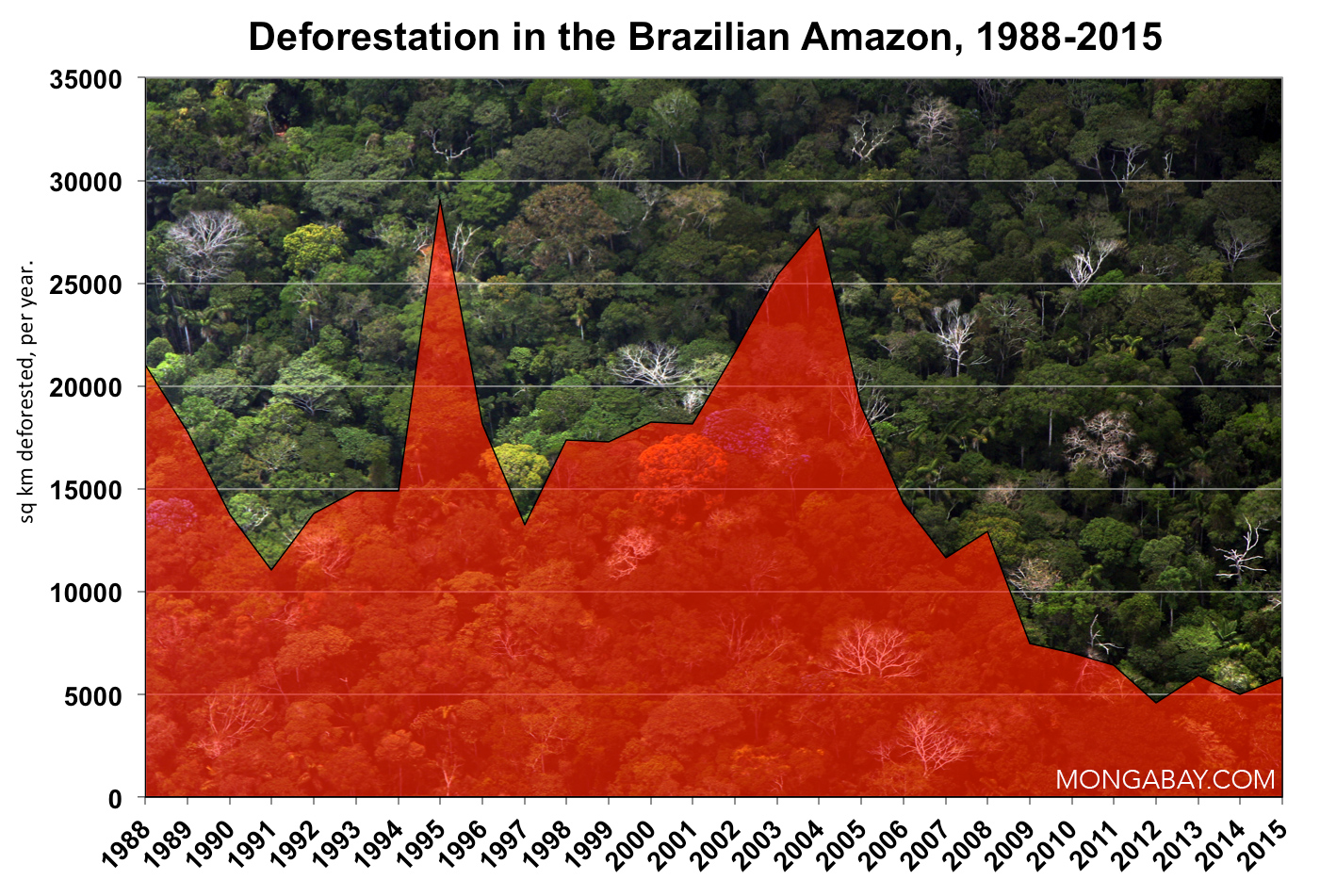
Many news outlets have said the 74,000 fires Brazil has seen this year sets a record, but that’s based on statistics that only date back to 2013. And deforestation is actually down from its peak in the 1980s. The real, undisputable news here is that there’s been a spike in fires and deforestation under Bolsonaro. And given the Amazon rainforest’s important role in capturing carbon emissions, the stakes seem much higher.

Christian Poirier, a program director for the nonprofit Amazon Watch, said that farmers were clearly emboldened by Bolsonaro to burn forests. “The fires currently ravaging the Amazon are directly related to President Bolsonaro’s anti-environmental rhetoric, in which he errantly frames forests and forest protections as impediments to Brazil’s economic growth. Farmers and ranchers understand the president’s message as a license to commit arson with wanton impunity, in order to aggressively expand their operations into the rainforest.”

Bolsonaro isn’t exactly taking credit, saying he had a “feeling” that the fires were set by nonprofit environmental groups trying to make his government look bad.

There’s been a huge growth in Brazil’s farms, especially after President Donald Trump’s trade war sent China — the top buyer of U.S. soybeans — shopping in South America. But the farm boom won’t improve the lives of poor Brazilians if it depends on dismantling environmental protections, said Toby Gardner, the director of nonprofit Trase. He sees Brazil trending toward “apparent disregard for devastating effects of environmental degradation seen from the recent and unprecedented spate of wildfires, set by landowners to clear forest for agriculture,” he said in an email.

Brazil’s massive forests are a critical part of the Earth’s life support system. The Amazon holds some 17 percent of the world’s plant-based carbon, and fires release that greenhouse gas. It’s home to millions of unique species and people. Fires are also burning in Brazil’s Cerrado — the central savanna — and its other forests.

“We think this Day of Fire really captures the craziness of what is going on in Brazil — deforestation for the sake of it, as an act of political demonstration,” said Alex Armstrong of the environmental group Mighty Earth in an email. Mighty Earth and other organizations think big corporations can prevent deforestation by promising not to buy crops from Brazilian farmers who burn forests. Some corporations, such as the grain-trading giant Cargill, say they need a supportive government in Brazil before they can act.

It’s worth noting that Grist could not independently confirm that farmers have set fires as a demonstration: Every story and source interviewed about the Day of Fire pointed to the same article based on an interview with an anonymous source. But the space agency observed a spate of fires in the region where farmers reportedly planned their protest. And a government prosecutor has opened an investigation into the reported Day of Fire.

Source article – 

Are farmers setting the Amazon ablaze in support of Bolsonaro?

Posted in Accent, alo, FF, G & F, GE, LG, ONA, Uncategorized | Tagged , , , , , , , , | Comments Off on Are farmers setting the Amazon ablaze in support of Bolsonaro?

Plants That Can Kill – Stacy Tornio

READ GREEN WITH E-BOOKS

Plants That Can Kill

101 Toxic Species to Make You Think Twice

Stacy Tornio

Genre: Nature

Price: $11.99

Publish Date: September 19, 2017

Publisher: Skyhorse Publishing

Seller: OpenRoad Integrated Media, LLC


A National Outdoor Book Award–winning author looks at the dangerously poisonous plants that may be in your garden—“a must-read for every gardener!” (Diane Blazek, executive director, All-America Selections and National Garden Bureau)   In this follow up to her fascinating book, Plants You Can’t Kill , journalist and gardening writer Stacy Tornio now takes a look at plants that can actually kill you if you’re not careful.   Here, gardening enthusiasts of all levels will learn about common plants that are toxic, dangerous, and even deadly. And some of them will surprise you, such as daffodils, irises, tulips, mistletoe, and even fruits and vegetables like cherries, rhubarb, and some tomatoes.   And while the level of toxicity may vary, all are considered deadly in one way or another to wild animals, family pets, and even humans. But with its colorful, easy-to-read format, Plants That Can’t Kill will introduce readers to what these plants look like, smell like, feel like, and sometimes even taste like.   Full of fun facts and fascinating history, this is “an essential guide to common garden plants that can cause harm―and even kill―so we can keep children, pets, and ourselves safe” (Stephanie Rose, creator of GardenTherapy.ca and award-winning author of Garden Made ).

Visit site – 

Plants That Can Kill – Stacy Tornio

Posted in alo, Anchor, FF, GE, LAI, LG, ONA, oven, PUR, Skyhorse Publishing, Ultima, Uncategorized | Tagged , , , , , , , , , | Comments Off on Plants That Can Kill – Stacy Tornio

How to Negotiate With a Contractor for Green Building Projects

Share this idea!

Pin0
Facebook0

0shares

If you’re planning a green renovation or remodeling project, you now have more green-friendly products and contractors available than ever before.

Although there are many important details to consider, finding the right contractor for completing the project is essential. Contractors with experience in making energy efficiency upgrades, using natural and local materials, and conserving resources will bring a lot to the table. Ideally, they will add synergy to your green home project and to make it a reality. Here are some tips for negotiating with contractors for green home projects.

Dream Green From the Start

To achieve the best results, we recommend you keep green features in mind from the project’s beginning, not merely as an afterthought. Look for contractors with an established track record of building using sustainable and recyclable materials, deep awareness of the insulation and natural lighting opportunities when remodeling, and the customer roster to prove they deliver. When you need to hire an architect or other design professionals for your project, make sure they are aware of your green project goals and that they are experienced.

If you are building an addition to your home, for example, strategically placing windows and doors can help save energy. If this isn’t planned early on, it can drive up project costs and create delays. During your walk-through with the contractor, listen to whether they make these suggestions or have to be asked. Make clear from the start you want a healthy and environmentally friendly outcome.

Do Your Homework

Although many experienced contractors will have ideas and suggestions, it is also helpful to conceptualize your project before meeting with them. Conduct research about the type of project and the materials, such as doors, window frames, or appliances involved before even the first planning session. This will help you bring specific goals to the table for the first meeting, making it more productive.

Take the time to meet several contractors, no matter how good the first one appears. Asking three contractors about the same project will produce three different approaches that may bring important issues to the surface. With those meetings behind you, pick the contractor with the best reputation who provides the most complete estimate and covers all, or at least most, of the concerns raised by the other contractors.

Consider the Long-Term Costs

Keep in mind that the upfront cost may be greater for green projects but will often save you money over time. For example, if you add insulation to the attic when finishing it out, it can reduce your heating and cooling costs for decades. Metal roofs cost more than their asphalt counterparts but are far more durable.

Consider both the project cost and potential cost savings to understand the big picture financially.

Find a Contractor With Green Renovation Experience

There are now many builders, electricians, carpenters, and even plumbers with vast knowledge and experience in completing green projects. Find a building professional with experience in the given type of project.

For example, if you want to add a graywater system to your home, find a plumber who has done this work before. Look at examples or at least photos of their work; speak with past clients and read online reviews to learn about their experience. Make sure they are licensed and insured to complete the work and that they will take care of any needed permits. There are several national certification programs that can be helpful in your search:

National Association of Home Builders (NAHB): — Certified Green Professional (CGP)
Leadership in Energy and Environmental Design (LEED) — LEED Accredited Professional
Green Advantage (GA) — Green Advantage Certified Practitioner (GACP)

Always Get Multiple Bids

It is typically recommended to get at least three bids for your project. It is hard to know if you are getting a fair price without shopping around. Some contractors will take different approaches to the same project, resulting in a different finished product.

The initial meeting is a great opportunity to pick their brains and get ideas. If your preferred contractor has a higher bid than others, you can ask him or her to match the price of a lower bid. Your goal is to get the best result for you, the planet, and your wallet.

Flesh Out the Details

The details can be extremely important, especially for green products.

Ask the contractor to specify what materials they will use. Whenever possible, use formaldehyde-free and recycled materials, locally and sustainably harvested wood products, nontoxic insulation, and low or no VOC finishes and adhesives. Buying these products yourself is a possible way to cut costs and ensure they have the green features you want.

Also, find out if the contractor will subcontract out some of the work. If so, research the reputation of the subcontractors as well. It’s the person doing the work who has to live up the the environmental expectations you set.

Have a Clear Contract

Make sure that the contract specifies all the important details, starting with a clear project description. Hold your contractor to their estimate, requiring they ask you before over-spending on materials or labor. The final cost of your project is your responsibility to manage and the contractor’s business to increase as much as you will allow.

Here are a few of the common questions to answer in the contract:

Who will purchase the materials and apply for needed permits?
What products will be used?
How long will it take the complete the project and is there a penalty if the project goes past the deadline?
What is the payment schedule and terms?
Is there a warranty on the work and for how long?

Make sure you get any promises the contractor makes in writing and don’t just rely on just a firm handshake. Keep your estimates, contract, and any receipts provided together both for your security and to share with a future home buyer.


You Might Also Like…

Infographic: Anatomy of a Green Home

Have you ever found yourself spending way more on a …Earth911July 29, 2019

6 Things to Consider Before Replacing Windows
Windows provide light, warmth, ventilation, and views of the outdoors. …Sarah LozanovaApril 2, 2019

7 Things to Consider for an Eco-Friendly Bathroom Remodel
When you’re remodeling any part of your home, most of …Shruti AgrawalDecember 20, 2016

earth911

Source – 

How to Negotiate With a Contractor for Green Building Projects

Posted in alo, ALPHA, eco-friendly, FF, G & F, GE, LG, Mop, Natural Light, ONA, organic, Oster, PUR, Radius, Uncategorized | Tagged , , , , , , , , , , , | Comments Off on How to Negotiate With a Contractor for Green Building Projects

The Fabric of the Cosmos – Brian Greene

READ GREEN WITH E-BOOKS

The Fabric of the Cosmos

Space, Time, and the Texture of Reality

Brian Greene

Genre: Science & Nature

Price: $2.99

Publish Date: February 8, 2005

Publisher: Knopf Doubleday Publishing Group

Seller: Penguin Random House LLC


From Brian Greene, one of the world’s leading physicists and author of the Pulitzer Prize finalist The Elegant Universe , comes a grand tour of the universe that makes us look at reality in a completely different way. Space and time form the very fabric of the cosmos. Yet they remain among the most mysterious of concepts. Is space an entity? Why does time have a direction? Could the universe exist without space and time? Can we travel to the past? Greene has set himself a daunting task: to explain non-intuitive, mathematical concepts like String Theory, the Heisenberg Uncertainty Principle, and Inflationary Cosmology with analogies drawn from common experience. From Newton’s unchanging realm in which space and time are absolute, to Einstein’s fluid conception of spacetime, to quantum mechanics’ entangled arena where vastly distant objects can instantaneously coordinate their behavior, Greene takes us all, regardless of our scientific backgrounds, on an irresistible and revelatory journey to the new layers of reality that modern physics has discovered lying just beneath the surface of our everyday world.

Source – 

The Fabric of the Cosmos – Brian Greene

Posted in alo, Anchor, FF, GE, Knopf, LAI, LG, ONA, oven, PUR, Ultima, Uncategorized | Tagged , , , , , , , | Comments Off on The Fabric of the Cosmos – Brian Greene

It’s official: Parts of california are too wildfire-prone to insure

California is facing yet another real estate-related crisis, but we’re not talking about its sky-high home prices. According to newly released data, it’s simply become too risky to insure houses in big swaths of the wildfire-prone state.

Last winter when we wrote about home insurance rates possibly going up in the wake of California’s massive, deadly fires, the insurance industry representatives we interviewed were skeptical. They noted that the stories circulating in the media about people in forested areas losing their homeowners’ insurance was based on anecdotes, not data. But now, the data is in and it’s really happening: Insurance companies aren’t renewing policies areas climate scientists say are likely to burn in giant wildfires in coming years.

Between 2015 and 2018, the 10 California counties with the most homes in flammable forests saw a 177 percent increase in homeowners turning to an expensive state-backed insurance program because they could not find private insurance.

In some ways, this news is not surprising. According to a recent survey of insurance actuaries (the people who calculate insurance risks and premiums based on available data), the industry ranked climate change as the top risk for 2019, beating out concerns over cyber damages, financial instability, and terrorism. While having insurance companies on board with climate science is a good thing for, say, requiring cities to invest in more sustainable infrastructure, it’s bad news for homeowners who can’t simply pick up their lodgings and move elsewhere.

“We are seeing an increasing trend across California where people at risk of wildfires are being non-renewed by their insurer,” said California Insurance Commissioner Ricardo Lara in a statement. “This data should be a wake-up call for state and local policymakers that without action to reduce the risk from extreme wildfires and preserve the insurance market we could see communities unraveling.”

A similar dynamic is likely unfolding across many other Western states, according to reporting from the New York Times.

To understand the data coming out of California we can use my own family as an example: A few months after Grist published a story about how my parent’s neighborhood is trying to fortify itself against future forest fires, my mom’s insurer informed her and my stepfather that they’d need to get home insurance elsewhere. For two months they called one insurer after another, but no company would take their premiums. So they turned to the state program as the insurer of last resort — which costs about three times more than they’d been spending under their previous, private insurer.

My folks have spent a lot of money clearing trees and brush from around their house. They’ve covered the walls in hard-to-burn cement panels, and the roof with metal. But insurance risk maps don’t adjust for these improvements. Instead, insurance companies seem to have made the call that the changing climate, along with years of fire suppression, have made houses in the midst of California’s dry forests a bad bet, and therefore uninsurable.

“For us, because we’ve done good financial planning and our house is paid off, it’s just an extra expense,” said my mom, Gail Johnson Vaughan. “But we have friends who have no choice but to leave.”

Source:  

It’s official: Parts of california are too wildfire-prone to insure

Posted in Accent, alo, Cyber, FF, GE, LG, ONA, Uncategorized | Tagged , , , , , , , | Comments Off on It’s official: Parts of california are too wildfire-prone to insure

22 states sue the Trump administration over its climate ‘plan’

Twenty-two states and seven cities sued the Trump administration on Tuesday over the Environmental Protection Agency’s new plan for power plants. The lawsuit alleges that the so-called Affordable Clean Energy rule would accelerate the impacts of the climate crisis and impose health and safety risks on Americans.

The challenge — led by the states of New York, Massachusetts, California, Rhode Island, Hawaii, and the cities of Chicago, Los Angeles, New York, and Philadelphia — comes two months after the EPA finalized the plan. The new rule replaced the Obama-era Clean Power Plan that set ambitious goals aimed at weakening carbon emissions coming from power plants. It gives a bit more elbow room to coal-powered stations and allows older ones to stay open longer.

“The science is indisputable; our climate is changing,” New York Attorney General Letitia James said in a tweet. “Ice caps are melting. Sea levels are rising. Weather is becoming more and more extreme. That’s why we are fighting back.”

A recent Harvard study shows that the EPA’s estimated carbon reductions from power plants under the new rule (which are pretty minor) wouldn’t hold up under changing market conditions. In addition, researchers say that the agency underestimated the health effects the rule would have in some states and overestimated its overall economic benefits.

Not that the EPA’s own projections looked pretty. The administration’s analysis found that the ACE rule, compared to the Clean Power Plan, would lead to 1,400 premature deaths by 2030 and would cost Americans $1.4 billion more per year than it saved.

Carbon dioxide emissions in the U.S. increased by roughly 3.5 percent last year. The Harvard analysis suggests that Trump’s new rule could drive emissions even higher by failing to nail down target reductions. Meanwhile, it may result in more cases of respiratory illness, heart attacks, asthma, and early death due to exposure to particulate matter and toxic air pollutants.

The new lawsuit parallels the Republican-led effort to stop the Clean Power Plan in 2015, when 24 states led by Oklahoma sued the Obama administration over the rule. The Supreme Court hit pause on the plan a year later. Soon after President Trump took office, the EPA started crafting a Trump-friendly alternative to the plan.

If you compare the states that sued over the Obama-era rule in 2015 and those that are suing the Trump administration now, it’s no surprise that you’ll see a partisan divide. Only Colorado, Michigan, and North Carolina were part of both lawsuits.

An EPA spokesperson told the New York Times, “EPA worked diligently to ensure we produced a solid rule, that we believe will be upheld in the courts, unlike the previous Administration’s Clean Power Plan.” Only time will tell — it’s possible that the challenge could go all the way to the Supreme Court.

Continued here:

22 states sue the Trump administration over its climate ‘plan’

Posted in Accent, alo, FF, GE, LG, ONA, Uncategorized | Tagged , , , , , , , , , | Comments Off on 22 states sue the Trump administration over its climate ‘plan’

The Constants of Nature – John Barrow

READ GREEN WITH E-BOOKS

The Constants of Nature

The Numbers That Encode the Deepest Secrets of the Universe

John Barrow

Genre: Science & Nature

Price: $2.99

Publish Date: March 9, 2004

Publisher: Knopf Doubleday Publishing Group

Seller: Penguin Random House LLC


Reality as we know it is bound by a set of constants—numbers and values that dictate the strengths of forces like gravity, the speed of light, and the masses of elementary particles. In The Constants of Nature , Cambridge Professor and bestselling author John D.Barrow takes us on an exploration of these governing principles. Drawing on physicists such as Einstein and Planck, Barrow illustrates with stunning clarity our dependence on the steadfastness of these principles. But he also suggests that the basic forces may have been radically different during the universe’s infancy, and suggests that they may continue a deeply hidden evolution. Perhaps most tantalizingly, Barrow theorizes about the realities that might one day be found in a universe with different parameters than our own.

Continue reading here – 

The Constants of Nature – John Barrow

Posted in alo, Anchor, FF, GE, Knopf, LAI, LG, ONA, oven, PUR, Uncategorized | Tagged , , , , , , , , , , , | Comments Off on The Constants of Nature – John Barrow