Tag Archives: april

Why This Year’s El Niño Could Grow Into a Monster

Mother Jones

<!DOCTYPE html PUBLIC “-//W3C//DTD HTML 4.0 Transitional//EN” “http://www.w3.org/TR/REC-html40/loose.dtd”>

This story originally appeared in Slate, and is republished here as part of the Climate Desk collaboration.

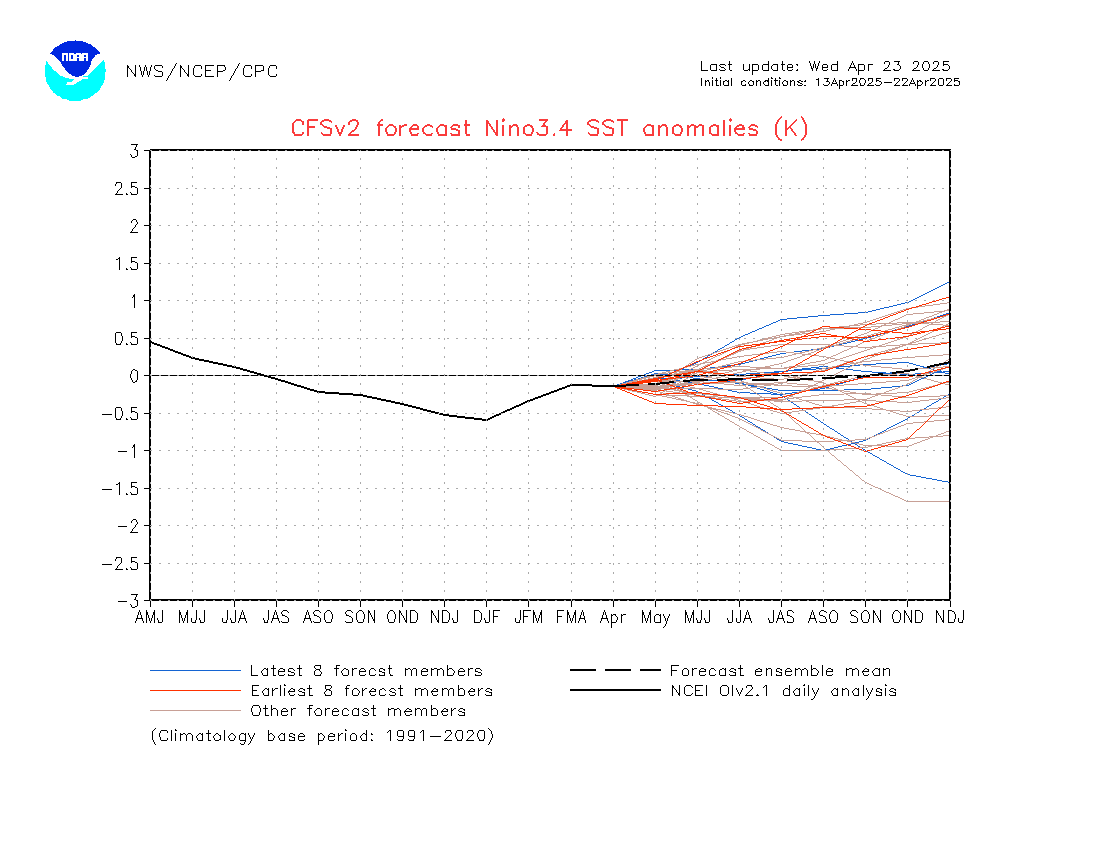
The odds are increasing that an El Niño is in the works for 2014—and recent forecasts show it might be a big one.

As we learned from Chris Farley, El Niños can boost the odds of extreme weather (droughts, typhoons, heat waves) across much of the planet. But the most important thing about El Niño is that it is predictable, sometimes six months to a year in advance.

That’s an incredibly powerful tool, especially if you are one of the billions who live where El Niño tends to hit hardest—Asia and the Americas. If current forecasts stay on track, El Niño might end up being the biggest global weather story of 2014.

The most commonly accepted definition of an El Niño is a persistent warming of the so-called “Niño3.4” region of the tropical Pacific Ocean south of Hawaii, lasting for at least five consecutive three-month “seasons.” A recent reversal in the direction of the Pacific trade winds appears to have kicked off a warming trend during the last month or two. That was enough to prompt US government forecasters to issue an El Niño watch last month.

Forecasters are increasingly confident in a particularly big El Niño this time around because, deep below the Pacific Ocean’s surface, off-the-charts warm water is lurking:

That giant red blob is a huge sub-surface wave of anomalously warm water that currently spans the tropical Pacific Ocean—big enough to cover the United States 300 feet deep. That’s a lot of warm water. Australia Bureau of Meteorology

As that blob of warm water moves eastward, propelled by the anomalous trade winds, it’s also getting closer to the ocean’s surface. Once that happens, it will begin to interact with the atmosphere, boosting temperatures and changing weather patterns.

There are signs that this huge pool of sub-surface warmth is starting to emerge on the surface in recent days:

Which means that April 2014 could be the month the mega El Niño gets officially underway.

Now, before we get ahead of ourselves, meteorologist Cliff Mass warns that this time of year is known for lower performance in forecasting El Niños. But in general, scientists who follow these things are anticipating what could become a strong event.

“We’re carefully watching the potential development of an El Niño later this spring and into summer,” said forecaster Tony Barnston of the International Research Institute for Climate and Society in a recorded briefing message. “Below the surface we have a lot of warming and that could eventually make its way to the surface and create an El Niño.”

The warm water just below the ocean’s surface is on par with that of the biggest El Niño ever recorded, in 1997-98. That event caused $35 billion in damages and was blamed for around 23,000 deaths worldwide, according to the University of New South Wales. The 1997-98 El Niño is also the only other time since records begin in 1980 that sub-surface Pacific Ocean water has been this warm in April.

Climate change skeptics point to El Niño-fueled 1998 as the year global warming “stopped.” Of course, global warming hasn’t stopped at all. The 10 hottest years on record have all occurred since 1998. The acceleration of that warming has slowed, though, compared with the previous breakneck pace during the late 20th century.

One of the theories put forth by the mainstream scientific community to explain the slow-down since 1998 has been increased storage of warm water in the Pacific Ocean. If that theory is true, and if a major El Niño is indeed in the works, the previously rapid rate of global warming could resume, with dramatic consequences.

As I wrote last fall, the coming El Niño could be enough to make 2014 the hottest year in recorded history, and 2015 could be even warmer than that. The 1997-98 super El Niño was enough to boost global temperatures by nearly a quarter of a degree Celsius. If that scale of warming happens again, the world could approach a 1ºC departure from pre-industrial times as early as next year. As climate scientist James Hansen has warned, that’s around the highest that temperatures have ever been since human civilization began.

Indeed, even the forecast is already having an effect: An index of global food prices reached a 10-month high in March, blamed in part on shortages an El Niño may exacerbate. Here’s what else we could expect:

A severe drought continues to rage in and around Indonesia, which an El Niño would likely worsen.

Peru’s anchovy catch may be significantly affected should a strong El Niño materialize.

Australia’s ongoing battles with bush fires may be intensified once its dry season resumes later this year.

But perhaps the strangest impact so far has been in India, where monsoon forecasting is at the heart of national politics. The meteorology department there has accused US weather forecasters of “spreading rumors” and colluding to ruin the Indian stock market by forecasting a return of El Niño.

There’s a bit of good news, too: Hurricane seasons in the Atlantic tend to be less severe under this kind of forecast. And people in drought-stricken California could be forgiven if they’re crossing their fingers for a strong El Niño, which is linked to some of the wettest years in state history. Still, it’s certainly no slam dunk that an El Niño would be enough to end the crippling drought there or even bring above normal rainfall. And if the El Niño ends up being as strong as current predictions indicate, there’s a chance it may even tip the scales from drought to deluge across the state, spurring damaging mudslides amid bursts of heavy rain. The two strongest El Niños in the last 30 years—1982-83 and 1997-98—both caused widespread damage from flooding in California.

The moral of the story here is: Be careful what you wish for.

Excerpt from: 

Why This Year’s El Niño Could Grow Into a Monster

Posted in alo, Anchor, Citizen, Eureka, FF, GE, LAI, LG, ONA, PUR, Radius, The Atlantic, Uncategorized, Venta | Tagged , , , , , , , , , , | Comments Off on Why This Year’s El Niño Could Grow Into a Monster

Quick Reads: "The Humor Code" by Peter McGraw and Joel Warner

Mother Jones

<!DOCTYPE html PUBLIC “-//W3C//DTD HTML 4.0 Transitional//EN” “http://www.w3.org/TR/REC-html40/loose.dtd”>

The Humor Code

By Peter McGraw and Joel Warner

SIMON AND SCHUSTER

Searching for the essence of humor is a delicate business: Dig too deep, and you kill the joke. Fortunately, Peter McGraw, an irrepressible psychology prof, and Joel Warner, his straight-man scribe, deliver entertaining answers to nagging questions like: Do unhappy people make better comedians? Are some things too horrible to laugh at? And how do you win The New Yorker cartoon contest? Despite getting heckled by colleagues in the surprisingly serious field of humor studies and bombing as a stand-up comic, McGraw lays out a convincing theory about how humor works and why it’s an essential survival mechanism.

This review originally appeared in our March/April 2014 issue of Mother Jones.

Continue reading: 

Quick Reads: "The Humor Code" by Peter McGraw and Joel Warner

Posted in Anchor, FF, G & F, GE, LAI, LG, ONA, Radius, Uncategorized, Venta | Tagged , , , , , , , , , , | Comments Off on Quick Reads: "The Humor Code" by Peter McGraw and Joel Warner

Frackers banned from New York for at least another year

Frackers banned from New York for at least another year

CREDO

Good news, New Yorkers. Your state has staved off the creepy advances of environment-trashing frackers for at least another year.

While neighboring states have allowed oil and gas companies to frack freely in their Marcellus shale deposits, the Empire State declared a statewide moratorium in 2008, saying it needed time to study the impacts to water supplies and human health. The ban has attracted lawsuits from the energy industry, but fracking is so unpopular in New York that dozens of local governments have put their own bans in place, just in case the state’s is lifted.

That doesn’t seem likely, at least not before April of next year. Here’s Bloomberg with Wednesday’s news:

Joe Martens, who heads the Environmental Conservation Department, told lawmakers in Albany today that [Gov. Andrew] Cuomo’s proposed $137 billion budget doesn’t have any funding for oversight of high-volume hydraulic fracturing.

Asked if he’ll end the more than five-year wait for fracking rules, Martens said, “We have absolutely no plans to do so” in the next fiscal year, which begins April 1.

Needless to say, the news triggered a fresh burst of histrionics from the energy sector. “The human cost in New York, due to arbitrary delays on this matter, is real,” a New York State Petroleum Council official told Bloomberg.

Human cost? We’re not sure exactly what that means. But we’re hoping it doesn’t mean frustrated frackers have begun human sacrifices to avenge the uncertainty they face over whether they will be allowed to plunder the state’s environment.


Source
New York Decision on Fracking Regulations Delayed, Bloomberg

John Upton is a science fan and green news boffin who tweets, posts articles to Facebook, and blogs about ecology. He welcomes reader questions, tips, and incoherent rants: johnupton@gmail.com.

Find this article interesting? Donate now to support our work.Read more: Climate & Energy

,

Politics

See more here:

Frackers banned from New York for at least another year

Posted in Anchor, ATTRA, FF, G & F, GE, LAI, LG, ONA, Uncategorized | Tagged , , , , , , , , , , | Comments Off on Frackers banned from New York for at least another year

Almost 5 Months Old, Bronx Native Makes Zoo Debut

A snow leopard was born in April to Maya and Leo, who was brought to New York from Pakistan. Originally from –  Almost 5 Months Old, Bronx Native Makes Zoo Debut ; ;Related ArticlesEntergy Announces Closing of Vermont Nuclear PlantThe Oceans: Vein of Iron in South AtlanticCave Collector in Minnesota Hunts for Additions to His Empire ;

Source article: 

Almost 5 Months Old, Bronx Native Makes Zoo Debut

Posted in alo, Citadel, eco-friendly, FF, G & F, GE, Monterey, ONA, Oster, solar, solar power, Uncategorized | Tagged , , , , , , , | Comments Off on Almost 5 Months Old, Bronx Native Makes Zoo Debut

Heady Colo. farmers plowing ahead with hemp farming

Heady Colo. farmers plowing ahead with hemp farming

What do you do when the federal government won’t let you plant a sustainable, super-useful crop on your own land? Well, if you’re Ryan Loflin, you do it anyway.

As of this week, Loflin has planted America’s first real crop of industrial hemp in more than a half-century.

The 40-year-old farmer from Springfield, Colo., has been scheming for months. “I believe this is really going to revitalize and strengthen farm communities,” Loflin told the Denver Post in April. Now he’s leased 60 acres of his father’s alfalfa farm to plant and tend the hundreds of hemp starters he’s already been grooming.

Hemp, for those who aren’t familiar, is a variety of cannabis that — sorry kids! — won’t get you high. Strong, nutritious, and super sustainable to grow, hemp is used for everything from rope to cereal. It requires few herbicides, and has even been called carbon negative by some boosters. And while it’s illegal to grow it in the U.S., it’s not illegal to sell. Right now imported hemp — the only legal kind — accounts for about $500 million in annual U.S. sales, according to the Hemp Industries Association.

So what if it were homegrown, Loflin-style?

Loflin’s not completely on his own here. Colorado legalized hemp, along with recreational marijuana, last November. Last week, Colorado passed a bill that would register hemp farmers with the state and create a committee that would work with farmers and the Department of Agriculture to (hopefully) keep plants in the fields and farmers out of jail.

“This is monumental for our industry,” Bruce Perlowin, chief executive of Hemp Inc., told the Denver Post. “It will unlock a clean industrial revolution that will be good for the economy, good for jobs, and good for the environment.”

In April, Kentucky passed a measure to legalize industrial hemp production, over the objections of local law enforcement who said it would turn the state’s residents into a bunch of stoners. Kentucky farmers are a bit more cagey about plowing ahead Loflin-style, though, and are instead lobbying the feds to just make this stuff legal already.

So far, though, the feds aren’t buying it. The Industrial Hemp Farming Act of 2013, first introduced in Congress in February, is currently chilling on a couch in committee, with no vote in sight.

Because that dank shit sustainable fiber is still straight-up Schedule I illegal, hemp farmers don’t qualify for federal crop insurance and other government benefits afforded to farmers of legal crops. And fear of reprisal is keeping many farmers and researchers away, even in states that say it’s OK.

“The law is clear on this matter,” a board member at Colorado State University, a top farming research school, wrote in a letter to U.S. Rep. Jared Polis (D-Colo.), “and we do not want to do anything that would unintentionally result in personal criminal liability for CSU employees or that would disqualify the institution from obtaining future government funding.”

Without movement in Washington, this fibrous future rests with folks like Loflin, who are willing to risk jail time for this plant. But even if Loflin lands behind bars, he’ll always be able to say he was the first. As he told Denver’s Westword, “It’s my crazy competitive nature.”

Susie Cagle writes and draws news for Grist. She also writes and draws tweets for

Twitter

.

Find this article interesting? Donate now to support our work.Read more: Business & Technology

,

Politics

Also in Grist

Please enable JavaScript to see recommended stories

Visit site:  

Heady Colo. farmers plowing ahead with hemp farming

Posted in alo, Anchor, FF, G & F, GE, LG, ONA, Uncategorized | Tagged , , , , , , , | Comments Off on Heady Colo. farmers plowing ahead with hemp farming

ExxonMobil’s tar-sands pipeline leaks again

ExxonMobil’s tar-sands pipeline leaks again

Lori Arbeau via KFVS

Crews responding Wednesday to an oil spill in Doniphan, Mo.

ExxonMobil’s 1940s-era Pegasus pipeline has been shut down since it ruptured more than a month ago in the Arkansas town of Mayflower, spilling tar-sands oil and making a big mess. But the company is legendary when it comes to spilling oil, and it wasn’t going to let a little pipeline shutdown hold back its oil-spilling ways.

The very same pipeline that blackened Mayflower has leaked oil into a yard and killed plants in Doniphan, Mo., some 170 miles northeast of Mayflower.

From KFVS Channel 12:

“My grandfather noticed an oil spill that was in the yard [on Friday, April 26,] and it got bigger so we were concerned that it was going to go into the well water because we have well water to drink,” said Lori Arbeau.

But the spill apparently was not reported until four days later.

Doniphan resident Robert Cooley reported the spill to Exxon Tuesday, April 30, after seeing oil and dead vegetation in front of his house that sits on about 18 acres of land owned by Arbeau’s parents, Guy and Pat Meadors.

From Reuters:

“The release occurred from the installation of a guide wire for a power line pipe that was installed approximately 30 years ago,” a spokeswoman for the Missouri Department of Natural Resources said on Wednesday. “The guide wire was located almost directly on top of the pipeline and has worn down over the years.”

Crews were working into the evening on Wednesday to excavate the spilled oil.

The magnitude of the Doniphan spill, estimated to be a barrel’s worth of oil, pales when compared with the 5,000 or so barrels that spilled in Mayflower, forcing evacuation of a neighborhood. But the latest leak is a reminder of the ubiquitous and hazardous nature of the subterranean labyrinth of infrastructure that moves fossil fuels around America. It’s a labyrinth that would only be expanded if Keystone XL is allowed to move ahead.

John Upton is a science aficionado and green news junkie who

tweets

, posts articles to

Facebook

, and

blogs about ecology

. He welcomes reader questions, tips, and incoherent rants:

johnupton@gmail.com

.

Find this article interesting? Donate now to support our work.Read more: Business & Technology

,

Climate & Energy

Also in Grist

Please enable JavaScript to see recommended stories

Read the article:  

ExxonMobil’s tar-sands pipeline leaks again

Posted in Anchor, FF, G & F, GE, ONA, Pines, solar, solar power, Uncategorized | Tagged , , , , , , , , , , | Comments Off on ExxonMobil’s tar-sands pipeline leaks again

Our statement in response to Rep. Sensenbrenner’s misguided legislation

back

Our statement in response to Rep. Sensenbrenner’s misguided legislation

Posted 11 April 2013 in

National

The bill introduced by Rep. Jim Sensenbrenner (R-WI) ignores the long track record of successful, rigorous testing that E15 has undergone. What the bill is clearly geared toward, however, is promoting the interest of oil companies looking to retain control over America’s fuel options.

E15 is the most tested renewable fuel in history and to suggest otherwise ignores a wealth of facts. In multiple tests, E15 has been put through the paces in more than 6 million miles of testing. The results of these tests were so satisfactory that E15 is used in NASCAR vehicles – high-performance racecars that can top 200 miles an hour – have opted to use E15.

The reality is that E15 provides options to Americans and the choice to power their cars with clean and renewable fuel. Unfortunately, Rep. Sensenbrenner’s legislation would limit that choice by favoring the oil industry over hardworking American families and businesses.

Fuels America News & Stories

Fuels
View article:

Our statement in response to Rep. Sensenbrenner’s misguided legislation

Posted in Anchor, FF, GE, ONA, Uncategorized | Tagged , , , , , , , , , , | Comments Off on Our statement in response to Rep. Sensenbrenner’s misguided legislation

We condemn anti-RFS legislation proposed today

back

We condemn anti-RFS legislation proposed today

Posted 10 April 2013 in

National

The bill introduced today by Rep. Goodlatte (R-VA) would impede the progress made by the renewable fuel industry and take choice out of the hands of consumers, all while protecting the virtual monopoly that oil companies have over America’s transportation fuels.

As this legislation is introduced, let’s remember that instead of protecting oil companies, Congress should address what is actually hurting America’s families and businesses: high gas prices and dependence on foreign oil. Continuing to develop our renewable industry is the only way to address both. Rep. Goodlatte’s bill would keep gas prices at the mercy of global oil markets and rob consumers of clean, competitive fuels.

The legislation also ignores the fact that renewable fuel is good for the country. Renewable fuel creates jobs, gives consumers savings and choice at the pump, promotes our nation’s energy security and brings environmental benefits.

We must avoid near-term energy policy changes that imperil America’s communities, families, and businesses. Maintaining the RFS ensures that America’s renewable fuel industry – from traditional, advanced or cellulosic sources – can continue to feed and fuel the country.

Fuels America News & Stories

Fuels
Read More:

We condemn anti-RFS legislation proposed today

Posted in Anchor, FF, GE, ONA, Uncategorized | Tagged , , , , , , , , , | Comments Off on We condemn anti-RFS legislation proposed today

NPR’s E15 article doesn’t pass the laugh test

back

NPR’s E15 article doesn’t pass the laugh test

Posted 1 April 2013 in

National

On April 1st, it’s usually a good idea to be skeptical of what you read in the news. After all, no one likes being taken for a fool. That’s why when we read this morning’s NPR story on renewable fuel, we thought they had to be joking. Here are some of our favorite laugh lines:

“Widespread support for ethanol, which is made from corn, appears to be eroding.”

To substantiate this claim, NPR quotes a single gas station owner, but unfortunately (for the oil companies), the plural of anecdote is not data. Instead, a recent poll of US adults found that 64 percent support the Renewable Fuel Standard, which calls for ethanol to be blended into the nation’s fuel supply.

“’The oil crisis is going away,’ Verleger says. ‘We have plenty of oil. We have too much oil.’”

If the oil crisis is going away, we imagine that consumers across the United States will take to the streets, rejoicing the end of high gas prices. Looking at recent trends, however, this does not seem to be the case.

“There is no guarantee that [E15] fuel will work properly in your vehicle.”

This quote comes directly from the Coordinating Research Council, an oil-funded group responsible for a series of “studies” purporting to show the dangers of E15. Here’s the reality: the EPA subjected E15 to over 6.5 million miles of testing, equivalent to 12 round trips to the moon, making it the most tested fuel, ever. By contrast, the CRC study doesn’t reflect a single mile driven, but rather, car components tested in isolation. Meanwhile, auto makers like Ford and GM have approved E15 for use in their new vehicles and some of the world’s most demanding cars and drivers at NASCAR use ethanol exclusively.

Here’s the lesson to be learned: as long as oil companies continue to rake in record profits, they’ll be able to keep distorting the news you read – even on days other than April 1st.

Fuels America News & Stories

Fuels
See the original post:

NPR’s E15 article doesn’t pass the laugh test

Posted in Anchor, FF, GE, ONA, PUR, Uncategorized | Tagged , , , , , , , , , , | Comments Off on NPR’s E15 article doesn’t pass the laugh test

Construction begins on new nuclear reactors in Georgia

Construction begins on new nuclear reactors in Georgia

Georgia Power Company

Where now there are two nuclear reactors, soon there will be four.

Advocates of building a low-carbon economy with nuclear power can rejoice: Construction is underway to build America’s first new nuclear reactors in 30 years.

But any residents of Waynsboro, Ga., who are concerned about the threat of radiation leaks or meltdown at the nearby nuclear plant will soon have twice as much reason to worry.

Plant Vogtle, where two nuclear reactors have operated since the late 1980s, is expanding. Two new reactors are scheduled to be up and running by 2018 — assuming there are no more delays, which would be an unwise assumption. The project is backed by an $8.3 billion loan guarantee from the Obama administration.

During a 41-hour construction spree last week, a six-inch deep concrete foundation measuring 250 feet by 160 feet was laid beneath the future site of Plant Vogtle Unit 3. “We are very proud of this accomplishment,” Georgia Power Nuclear Development Executive Vice President Buzz Miller said in a press release.

The plant was originally envisioned as a four-reactor facility, and opponents of the project are not thrilled to see this old vision become a modern reality. From the website of the Southern Alliance for Clean Energy, which opposes the project:

Plant Vogtle was one of the last and most costly nuclear plants built in the country. Original estimates for four reactors were $660 million. Eventually, only two reactors were built, costing more than $8 billion, resulting at the time in the largest rate hike in Georgia. Unfortunately, Georgia utilities are venturing down this costly and risky path again.

Concerns about costs are reemerging because utility company Southern Co. announced last month that construction had been delayed by a year and that costs were growing, prompting it to seek reimbursement from the state’s electricity customers. From the AP:

The Atlanta-based utility formally asked regulators to raise its budget to build two more nuclear reactors at Plant Vogtle (VOH’-gohl) by about $737 million to roughly $6.85 billion. Additional costs are possible. Companies designing and building the plant have sued the utility seeking $425 million for unexpected project costs, though the utility has filed its own suit and denies responsibility for those expenses. …

Delays have pushed back the timeline for completing the two reactors from April 2016 and April 2017 to late 2017 and 2018. Southern Co. said it was trying to determine whether the pace can be quickened.

Gregory Jaczko, former chair of the Nuclear Regulatory Commission, was the only member of the five-person commission to vote against approving the Vogtle plant last year. “I cannot support issuing this license as if Fukushima never happened,” Jaczko said at the time of the vote. But his colleagues disagreed, and now here we are.

John Upton is a science aficionado and green news junkie who

tweets

, posts articles to

Facebook

, and

blogs about ecology

. He welcomes reader questions, tips, and incoherent rants:

johnupton@gmail.com

.

Read more:

Business & Technology

,

Climate & Energy

Also in Grist

Please enable JavaScript to see recommended stories

Credit:

Construction begins on new nuclear reactors in Georgia

Posted in ALPHA, Anchor, FF, G & F, GE, ONA, Uncategorized | Tagged , , , , , , , , , | Comments Off on Construction begins on new nuclear reactors in Georgia