Tag Archives: california

Breathe easier: States are passing a buttload of clean-energy bills

More here:  

Breathe easier: States are passing a buttload of clean-energy bills

Posted in ALPHA, Cascade, FF, G & F, GE, solar, Uncategorized | Tagged , , , , , , , | Comments Off on Breathe easier: States are passing a buttload of clean-energy bills

The town that extended ‘smart growth’ to its water

This story was originally published by CityLab and is reproduced here as part of the Climate Desk collaboration.

As with so many towns in the West, the history of Westminster, Colorado, can be told through its water supply.

The turning point in that history was the hot, dry summer of 1962. Westminster was already embroiled in a debate over where to source its water when a drought choked the small city, forcing officials to impose a sprinkler ban. Soon enough, residents noticed that the water trickling from their taps was slightly discolored and didn’t smell right. The desperate city had started drawing water from the Kershaw Ditch, a pool it had recently abandoned over treatment issues.

Although the city said the water was “safe, but stinky,” fed-up local mothers were convinced it would make their children sick and raised hell. In what became known as the “Mothers’ March,” more than 100 women gathered at city hall to protest the city’s water management. City-council meetings were disrupted by protesters who would shout questions through open windows, and the mothers flogged petitions on street corners. They attracted enough attention that Dan Rather did a segment on the protests for CBS News.

The events of that summer ensured that water would become Westminster’s defining issue for years to come, until the city struck a deal with local farmers to share water from the artificial Standley Lake. But even with its supply settled, Westminster continued to focus on taming demand, most recently with a conservation and planning approach that’s become a regional model for managing growth without straining resources.

“Starting from such an uncomfortable place, we’ve kept our eyes on the prize,” said Stu Feinglas, who retired last year as Westminster’s senior water-resources analyst. “Sustainable development and sustainable water.”

Feinglas, who started with the city in 2001 (as another drought gripped northeast Colorado), approached the problem holistically, with a data-driven approach that has become influential for other cities in the West. By merging the city’s land-use plans with water data, Feinglas and colleagues ensured that Westminster wouldn’t run dry, even as its population boomed from less than 10,000 at the time of the water protests to 113,000 today. The surrounding county was even water-healthy enough to support Colorado’s first two water slides as part of the Water World theme park.

The state’s population is expected to keep growing — as much as 70 percent by 2040. At the same time, climate change is fueling persistent droughts. In 2018, parts of nine Western states, including Colorado, were in severe or extreme drought, according to the National Oceanic and Atmospheric Administration.

Conservation measures have helped many Western cities decouple population growth from water use, but that approach often puts the burden on businesses and residents to be more efficient. Taking a demand-focused approach to water from the earliest stages of planning is still rare, said Erin Rugland, a junior fellow at the Babbitt Center for Land and Water Policy in Phoenix.

“There’s always been a way to engineer around it,” Rugland said. “It’s been feasible to find a new supply. But I think we’re starting to reach a turning point.”

The recent sustained drought — which has left the critical storage facilities Lake Powell and Lake Mead at their lowest levels since they were being filled — has cemented the idea that Western states are going to have to try to do more with less water. On April 8, Congress approved a seven-state Drought Contingency Plan, which lays out shared cuts if supplies continue to stay low.

The plan builds on 2007 guidelines that helped manage the early years of the drought; now states, tribes, agriculture groups, and cities are negotiating a new set of guidelines set to take effect in 2026. Previous agreements have hit agriculture hard, since the industry is by far the biggest water user in the West, but most everyone agrees that the 2026 guidelines will require some sacrifices from cities, even as they grow as economic engines.

That’s where Feinglas thinks his approach — which current Westminster officials are sticking with — needs to become the norm.

Using Westminster’s comprehensive plan, which zones parcels for general use like multifamily housing or retail, Feinglas made a rough estimate of how much water each type of building would use. Then the city built GIS software that overlays water resources and infrastructure over the comprehensive plan — making it easy to see, for example, how much water a proposed strip mall might use.

It’s a step up from the typical water-per-capita measure that most cities rely on, which doesn’t reflect the fact that denser developments are typically more water-efficient than a single-family house with a green lawn. It also, Feinglas said, helps planners guide developers to smarter construction, even previewing what their water rates and tap fees might be.

“We didn’t want public works to determine how the city developed. We wouldn’t be the ones to say no,” Feinglas said. “What we could do is show how much water we have and ask them to be creative and make their development work with that.”

That meant city planners could identify where it might make more sense to zone for multifamily housing, or see where new pipes might be necessary. Developers could amend their permits to include more low-flow toilets or water recycling. On rare occasions, proposals have been scrapped because they’d need more water than the city could supply. Essentially, Westminster is planning for the worst, making sure that another drought won’t force anyone to turn off the taps.

It seems straightforward, and more or less mirrors what cities have been doing for years to align transportation and transit demand with new construction. But only a handful of other cities — notably Flagstaff, Arizona — have made it work.

“It requires operating between the silos of water management and planning, two disciplines that don’t have a lot of common language,” Rugland said. “Efforts for collaboration would have to be on top of day-to-day duties.”

Also, water data isn’t always easy to come by, especially on a lot-by-lot basis that breaks it down by business type. It’s even tougher for cities that draw their water from multiple sources, who may keep data in different forms (California, for instance, had to pass a law in 2016 requiring that the various state and local agencies be able to share their water data).

More states and cities are trying to make the water-land link. Colorado’s Water Plan calls for 75 percent of citizens to live in communities that have integrated water conservation into land use by 2025, and the state’s water conservation board has guidance to help local governments (the Keystone Policy Center has also held a dialogue with state and local partners). Arizona has a law that requires local jurisdictions to include available water supply and demand as part of a comprehensive plan, but not necessarily to make the link to planning (government cuts reduced state oversight for those comprehensive plans, as well). New software tools, like Razix Solutions, offer off-the-shelf guidance for local officials.

Ultimately, Feinglas said, the model requires city departments to talk to each other and plan for the worst, even if it means some short-term pain. “We know water is valuable, especially now,” Feinglas said. “The last thing you want is to lose your economy because you can’t supply your citizens.”

Read this article: 

The town that extended ‘smart growth’ to its water

Posted in Accent, alo, Anchor, ATTRA, Casio, Citizen, Everyone, FF, GE, Jason, LG, ONA, Ultima, Uncategorized | Tagged , , , , , , , , | Comments Off on The town that extended ‘smart growth’ to its water

What is your town’s risk of wildfire? New media tool lets you see for yourself

Which California town might be the next to burn? That’s the driving question behind Destined to Burn, the brand new media package produced via a partnership between the AP, Gannet, McClatchy, and others. The project examines how California can prevent wildfire devastation.

Wildfires have always been a risk in drought-prone California. But due to climate change’s drying effects on the soil and vegetation, burns are getting bigger, deadlier, and more expensive for the Golden State. Just last year, the Camp Fire killed almost 90 people and completely leveled the town of Paradise in Northern California. The climate-induced tragedy was 2018’s most expensive natural disaster.

Since then, many communities throughout California have been grappling with how to adapt to this type of threat.

And they may be right to worry. One in 12 homes in the state of California is at high risk from wildfires. Using data from the U.S. Census Bureau and Cal Fire Maps, the Sacramento Bee recently released a search tool, which Californians can use to find out how much of their towns might be in the danger zone.

Based on their analysis, there are more than 75 California towns and cities in which at least 90 percent of residents live in “very high fire hazard severity zones,” as designated by Cal Fire. As part of the Destined to Burn package, The Sacramento Bee highlighted 10 California communities from that list: Shingletown, Nevada City, Colfax, Kings Beach, Pollock Pines, Arnold, Wofford Heights, La Cañada Flintridge, Rancho Palos Verdes, and Harbison Canyon.

In 6 out of these 10 communities, 100 percent of residents live in very high fire hazard zones — at least, according to 2010 census info. In Nevada City, the hometown of Grist’s very own Nathanael Johnson, 3,064 out of 3,068 residents live in high hazard areas. (A number that may leave some wondering: What’s the deal with those four lucky people?)

But aside from their exceptionally high wildfire risk, there isn’t that much that unites the communities on the Bee’s list. Residents of the affluent Rancho Palos Verdes (the most populated city on the list), for instance, don’t seem to be sweating too hard about wildfires. Scott Hale, an assistant fire chief for Los Angeles County, told the Sacramento Bee: “This being a coastal community, we don’t get the type of brush and that kind of fire behavior that you might get in somewhere like Paradise.”

Kings Beach, on the north shore of Lake Tahoe, is a popular tourist destination. Because so many of the homes there are vacation rentals, it could be harder to mobilize the local community to push for more fire prevention measures.

In contrast, Nevada City is taking its fire prevention measures seriously. The city launched a Goat Fund Me campaign in December, hoping to raise enough funds to rent brush-clearing ruminants to maintain the city’s lands, a method that has caught on throughout California and beyond. Residents have also taken fire prevention into their own hands, creating citizen-led controlled burn squads and even helping out neighbors who may have trouble clearing dry brush near their homes.

The list isn’t exactly intended to predict the next “Paradise.” The data has its limitations — age being one of them. A new census is approaching in 2020, and Cal Fire is currently at work on a new set of fire hazard maps, which will incorporate wind patterns and other important factors. Instead, the tools put together by Gannett, McClatchy, Media News, and the Associated Press, are designed to be used as a resource as communities figure out how to prepare for their unique wildfire risks.

“Our goal with this collaboration is to put a spotlight on policy issues that can and should be raised in the halls of the state Capitol and by local communities,” wrote McClatchy Regional Editor Lauren Gustus of the project. “This is a wicked problem with no easy answers. And the more information we can share about where and how we’re falling short, the quicker we can come together on potential solutions.”

Link:

What is your town’s risk of wildfire? New media tool lets you see for yourself

Posted in Accent, alo, Anchor, Citizen, FF, GE, LAI, LG, ONA, Paradise, Pines, Uncategorized | Tagged , , , , , , , , , , , | Comments Off on What is your town’s risk of wildfire? New media tool lets you see for yourself

The Surprising Recycling Mistake You’re Probably Making

Who else has been proudly removing the cap from plastic bottles before tossing then into the recycling bin? After all, caps and bottles are generally made of different?types of plastic. Making sure that they are not stuck together is helpful, isn’t it?

It used to be. In the past, recycling plants didn’t have an?effective?way to separate the two different plastics, so capped bottles would jam up the entire system.?Recycling programs actually did ask us to start taking the plastic caps off our bottles (so good job remembering!).

But now, with our modern recycling methods, it appears the opposite is true. That’s right?most of us should be leaving the plastic caps ON our bottles before recycling them!

Why You Should Leave Bottle Caps on for Recycling

Modern processing involves?crushing the two types of plastic into particles and separating them in a water bath. The cap material sinks, while the bottle particles float, making it easy to keep them apart. And we’re not just talking water bottles. You should be leaving the caps on laundry detergent, shampoos, lotions, condiments, et cetera.

It makes the caps significantly easier to deal with and keep track of.

In fact, if you remove the caps, you might as well just be just tossing them straight into the landfill. Their small size often leads to improper sorting at the recycling center?likely, they’ll bypass processing altogether and just get tossed into the trash heap.

Of course, this isn’t true for 100 percent of recycling centers. Check in with your local center to make sure they’re equipped with modern sorting machinery. They’ll?definitively instruct you on whether to leave your cap on or off.

Another?Common Recycling Mistake

Don’t crush your plastic bottles before recycling. What?! But aren’t we helping to save space? The answer is no, and by flattening your bottles, they?are easier to missort, particularly at single-stream recycling plants. It’s generally easier for the machines to handle them if they are intact.

An estimated 5 billion plastic bottle caps pollute the shores of California alone. It’s important that we all do our part to clean this mess up.?Recycling centers already are dumping tons of our plastic recyclables into landfills?ever since China stopped?processing our low quality recycling for us?it’s a massive issue. Don’t let your bottle caps be part of the problem. Keep them screwed.

Related on Care2:

How I Learned to Love My Body, As-Is?
How to Discover Your Core Values
6 Tasty Infused Water Recipes for When You’re Sick of Lemon Water

Disclaimer: The views expressed above are solely those of the author and may not reflect those of Care2, Inc., its employees or advertisers.

Link:

The Surprising Recycling Mistake You’re Probably Making

Posted in alo, bigo, FF, GE, LAI, LG, ONA, Uncategorized | Tagged , , , , , , , , | Comments Off on The Surprising Recycling Mistake You’re Probably Making

For a warming world, a new strategy for protecting watersheds

Subscribe to The Beacon

This story was originally published by Yale Environment 360 and is reproduced here as part of the Climate Desk collaboration.

Long before an aspen tree fell on a power line in New Mexico’s Jemez Mountains in June 2011, triggering the biggest wildfire in the state’s history, fire managers knew that New Mexico’s forests were vulnerable. Climate change-induced drought and higher temperatures had dried out the trees and soil. And after more than a century of fire suppression, areas that supported 40 trees per acre in the pre-European era now were blanketed with up to a hundred times as many. This profusion of trees — as many as one per square yard — weakened all of them, and rendered them defenseless against megafires.

Even so, the fire managers weren’t prepared for the astonishing power of the 2011 conflagration, known as the Las Conchas Fire. During its first 14 hours, it sent walls of flame hundreds of feet high as it consumed nearly an acre of forest per second and threatened the city of Los Alamos. By the time it was extinguished five weeks later, it had burned an area nearly three times as big as the state’s largest fire before it, and left behind nearly 100 square miles so severely burned that even seeds to regenerate the forest were destroyed.

But the fire’s full impact didn’t register until nearly two months later, when a thunderstorm in the Jemez Mountains washed tons of ash and debris into the Rio Grande River, the water source for half of New Mexico’s population and for a major agricultural area. Only an inch of rain fell, but the debris flows the storm generated turned the river black and dumped ash, sediment, and tree and shrub remnants into a major reservoir⁠, requiring a costly cleanup.

To ward off damage to equipment, water treatment plants in Albuquerque and Santa Fe closed for 40 days and 20 days respectively while they drew down precious stores of groundwater. Farmers found that the polluted water clogged the nozzles of their drip irrigation systems, rendering them useless. Even worse, the most severely burned portions of the watershed continued discharging debris and sediment into water channels long afterward; a heavy rainstorm two years later generated enough sediment to entirely plug the Rio Grande.

Ash blankets the forest floor immediately following the Las Conchas fire in 2011.

What has unfolded in New Mexico is far from unique. In the last two decades, megafires in similarly dry and overgrown watersheds have ended up contaminating downstream water supplies in numerous areas throughout the western United States, including Phoenix; Denver; Flagstaff, Arizona; and Fort Collins, Colorado. Downstream water managers serving millions of urban residents have learned that the security of their water supplies is tied to the health of upland watersheds that may be hundreds of miles away.

“There’s been a real change in consciousness among urban water providers and water utilities,” said Gregg Garfin, director of the University of Arizona’s Southwest Climate Adaptation Science Center. “They’ve come to realize that management of watersheds and fire ecology issues is just as important as the direct impacts of drought on water availability.”

This development is part of a broader nationwide shift in forest management over the last generation, as degraded forests in watersheds and the resulting rise of megafires and pest infestation have helped generate a shift away from focusing on forests chiefly as sources of commercial timber and instead toward “ecosystem-based management,” in which forests’ natural processes are reinforced to reap benefits like clean water. Indeed, in some areas forest restoration has been shown to increase the amount of water flowing into reservoirs. The shift toward ecosystem management has occurred even in such regions as the U.S. Northeast and Mid-Atlantic states, where wildfires are uncommon, but where other watershed menaces, including development and toxic agricultural runoff, have led to contamination of downstream water bodies such as the Chesapeake Bay, Delaware Bay, and the Hudson River.

In the western U.S., watershed restoration chiefly consists of two steps: thinning of trees and shrubs, and prescribed burns. In the eastern U.S., it involves a bigger set of tools, including planting native trees, reducing the area of impervious surfaces, and slowing the speed of stormwater so that more water percolates into soil and aquifers. All these measures are designed to improve water quality.

Both the U.S. Congress and the U.S. Forest Service have supported the shift, providing programs and funding for watershed restoration in much of the nation. But forest restoration is expensive: It costs anywhere from $600 ⁠to $1,500 per acre, depending on the degree of steepness of the terrain (sometimes helicopters are required to remove logs in mountainous areas) and the harvested logs’ commercial value (usually low to zero). Budget constraints exacerbated by the soaring cost of fighting rapidly proliferating wildfires have meant that government agencies can fund restoration of only a tiny fraction of the nation’s roughly 150 million acres of forest that need it. The result is that while numerous pilot projects have shown the efficacy of restoration, agencies rarely have enough money to treat entire watersheds.

Today, 108,000 acres of burned forest in central and northern New Mexico have been restored through strategic thinning and prescribed burns.

Faced with this dilemma after the Las Conchas fire, residents in the Rio Grande watershed pioneered a path forward. Guided by The Nature Conservancy, the most active U.S. environmental organization in watershed restoration, in 2014 they launched a public-private partnership, the Rio Grande Water Fund, whose 73 contributing members⁠ include government agencies at all levels, foundations and other NGOs, local water utilities, and local businesses and residents. Together they raised enough money for a 20-year program to restore 600,000 forest acres — enough to support the resilience of the entire central and northern New Mexico portion of the Rio Grande watershed. They have already restored 108,000 acres, and are racing to complete the job before another megafire occurs.

The Rio Grande Water Fund’s public-private partnership model has become official federal policy. Last August, the U.S. Forest Service published a landmark report called “Toward Shared Stewardship Across Landscapes” that outlined the agency’s intention to convene watershed stakeholders of all kinds to plan and fund watershed restoration. “Because fire crosses back and forth across land ownership boundaries, the risk is shared,” the report said. “Accordingly, land managers cannot achieve the fire-related outcomes people want … without shared stewardship of the wildland fire environment.”

Always free, always fresh.

Ask your climate scientist if Grist is right for you. See our privacy policy

The benefits of watershed restoration extend far beyond water security. Most obviously, healthy forests deter megafires. Laura McCarthy, the Rio Grande Water Fund’s executive director, says that in three instances since restoration work began in New Mexico, wildfires that ran up against restored zones immediately died down. Healthy forests can tolerate low-intensity fires: They possess diverse understories of grasses, sedges, and forbs, and rich, microbe-laden soil, all of which supports wildlife, from insects to mammals. Watershed restoration can double the amount of carbon stored in the soil, which means that it’s a vital tool in fighting climate change. And watershed restoration creates jobs: In the case of the Rio Grande Water Fund, many of those jobs go to youths in traditional Hispanic and Native American communities where unemployment rates are 30 percent or higher.

In some regions, forest restoration even increases water supplies. Roger Bales, a hydrologist at the University of California, Merced, has shown that because watershed restoration requires the removal of vast numbers of young trees, loss of water into the atmosphere through evapotranspiration in those trees is eliminated. The water instead flows downward, into the soil, often on its way to the watershed’s rivers and reservoirs. Bales’ experiments in California’s Sierra Nevada show that restoration can increase water supplies in downstream reservoirs by 9 to 16 percent. That makes restoration a more cost effective (and vastly less destructive) water supply method in California than building dams. Restoration is also cheaper than fighting the megafires that are otherwise inevitable in the overgrown forests: Last year’s Camp Fire in Northern California alone caused $11 billion to $13 billion in damage.

Thinning of trees and shrubs is a labor-intensive (and, therefore, job-creating) process that may result in the removal of half or more of a degraded forest’s biomass in an effort to return the area to something like its pre-European ratio of trees to acreage. But unless it is followed by prescribed burns, undesirable trees and shrubs grow back. In that case, said Don Falk, a leading fire researcher at the University of Arizona, “You’re either committed to a perpetual Sisyphean cycle of thinning,” every 10 or 15 years, “or you’ve got to let fire back into the system.” Fire is an integral part of the functioning of many ecosystems: Blazes of less-than-megafire scale germinate seeds, keep native species in balance while warding off invasive species, and stimulate microbial activity that produces soil nutrients.

Prescribed burns are designed to do the job that naturally ignited fires once did, but they face certain obstacles. The seasonal window of opportunity for controlled burns is limited to a few months of the year, and conditions must be just right: high humidity, dry but not desiccated fuels, and some wind to disperse smoke high into the atmosphere, but not enough to risk losing control of the fire.

Laura McCarthy of the Rio Grande Water Fund points to a hillside near a Santa Fe, New Mexico reservoir where forest density has been reduced to fire-safe levels.

And even if conditions are perfect, firefighters trained in prescribed burn techniques may not be available. That’s because the lengthening of the fire season due to climate change has forced firefighters to spend more time away from home, trying to extinguish megafires throughout the West. To solve this problem, the Rio Grande Water Fund created a mobile team of prescribed-burn professionals who stay in the Rio Grande watershed.

When an unplanned fire occurs, fire managers must decide quickly whether an outbreak is modestly sized and unthreatening, in which case it should be allowed to burn as part of the desired reintroduction of fire into the watershed, or whether it’s a budding megafire, which must quickly be suppressed. A fire manager who lets a fire burn can face lawsuits or job loss if it goes out of control; for this reason, managers typically err on the side of fire suppression, sometimes setting back the cause of restoration.

As climate change intensifies, degraded watersheds will become more and more vulnerable to megafires, likely setting in motion a disastrous positive feedback loop: Megafires substantially increase greenhouse gas emissions, which heat the atmosphere and spawn more megafires. For this reason alone, watershed restoration is as urgent as any other kind of climate change remediation. Falk, the University of Arizona fire researcher, estimates that to have a chance of breaking this cycle, the area of watershed being restored in the U.S. must quickly increase by at least 10 times.

“Just as it’s imperative for us to begin addressing the underlying drivers of climate change at a much higher pace than we’ve been doing until now, in the same way we have to accelerate the work of restoring ecosystems,” he said. “These aren’t decisions we can sit around and ponder in an armchair for decades. We have to start acting now.”

Read this article: 

For a warming world, a new strategy for protecting watersheds

Posted in Accent, alo, Anchor, FF, G & F, GE, Landmark, ONA, Radius, Uncategorized | Tagged , , , , , , , , | Comments Off on For a warming world, a new strategy for protecting watersheds

What would a national emergency over climate change look like?

Subscribe to The Beacon

Well, it finally happened: President Trump declared a national emergency in order to secure funding for his barrier between Mexico and the United States. We are under virtually no threat from illegal immigration through the southern border. Phew! But don’t put up your feet just yet, the U.S. actually is facing a pretty terrifying threat, not from immigrants, but from climate change.

Now that Trump has set a precedent, some are raising the point that a different president could use the same maneuver to declare a national emergency over rising temperatures. After all, rising sea levels, worsening hurricanes, wildfires, invasive species, and droughts threaten millions of Americans. Talk about a national security crisis.

Shortly after Trump made his declaration, Minnesota Representative Ilhan Omar took to Twitter to call on the next president to declare climate change a national emergency upon taking office. If the idea catches on, 2020 Democrats might have to decide not only whether they support the Green New Deal, but also whether they would be willing to take that commitment to the next level.

Hold your horses, can a future president use emergency power to combat climate change? And if so, what would that even look like?

Always free, always fresh.

Ask your climate scientist if Grist is right for you. See our privacy policy

Dan Farber, professor of law at the University of California, Los Angeles, examined the idea of a climate change national emergency in a blog post. It turns out there are a few things a future president might be able to do to mitigate climate change through such a move. Here are the areas Farber thinks are worth exploring (these options are as of yet untested, could look different in practice, AND, as Farber told us in an earlier story, just ’cause it’s possible in theory doesn’t necessarily mean it’s a good idea):

Oil drilling could be put on pause. “Oil leases are required to have clauses allowing them to be suspended during national emergencies,” Farber writes. If climate change is causing the emergency, doesn’t it make sense to pump the brakes on the stuff causing it? Hmmm?
The Secretary of Transportation, who is in charge of transportation coordination during national emergencies, could restrict use of gas-powered vehicles.
The renewable energy industry could get an influx of financial support, because a provision allows “the President to extend loan guarantees to critical industries during national emergencies,” Farber writes.
There’s even an act that could be invoked to give the president power to “impose sanctions on individuals and countries.” In a national climate change emergency scenario, the act could be used to sanction oil-producing countries.

In a national emergency, the president gets nearly 150 special powers. The options listed above are just a few of the ways those powers could be used in the name of climate change mitigation.

Already, Oregon Representative Earl Blumenauer has announced he will be introducing a “congressional emergency declaration on the climate crisis” in Congress. Get ready, GOP! Even if the Supreme Court ends up striking down the border wall, Trump just opened Pandora’s Box.

Originally posted here: 

What would a national emergency over climate change look like?

Posted in Accent, alo, Anchor, FF, G & F, GE, LAI, ONA, OXO, Radius, Uncategorized | Tagged , , , , , , , , , | Comments Off on What would a national emergency over climate change look like?

It’s official: El Niño is back. Now what?

Subscribe to The Beacon

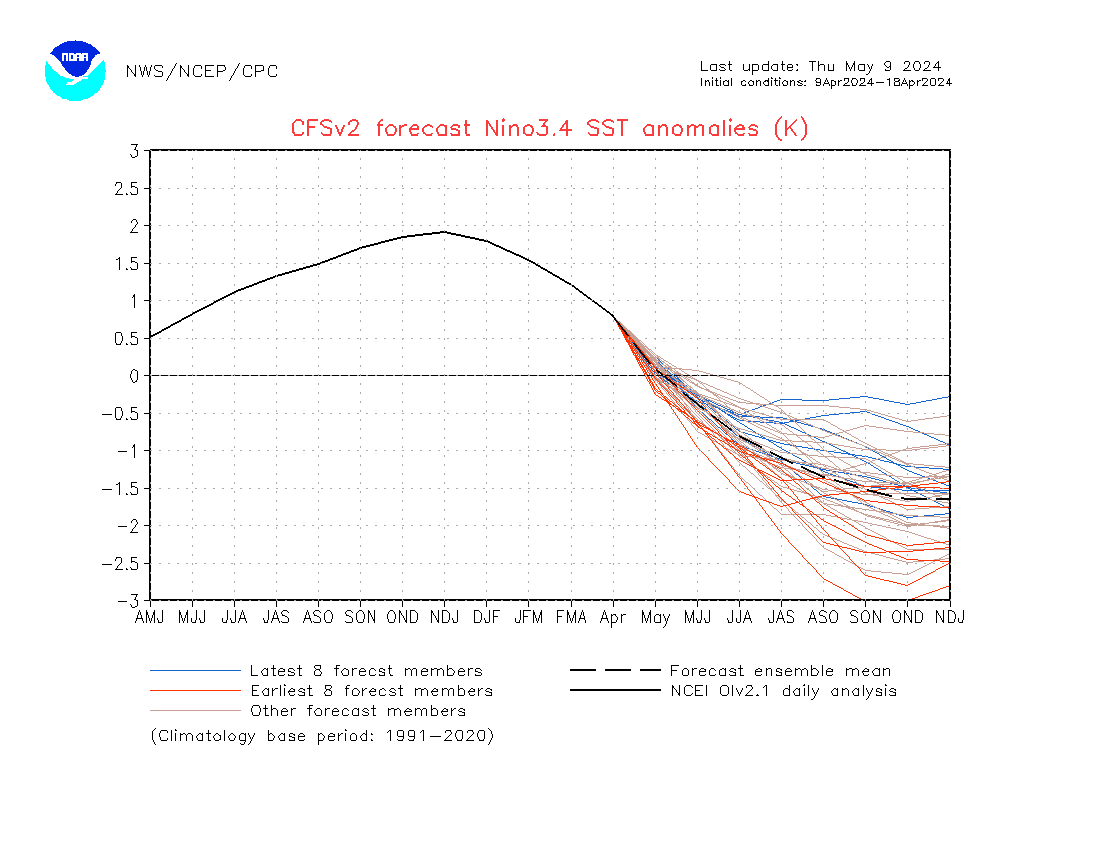
Thursday, the National Oceanic and Atmospheric Administration announced that El Niño — the periodic warming of the tropical Pacific Ocean, with weather consequences worldwide — has officially arrived.

El Niño typically peaks between October and March, so it’s pretty late in the season for a new one to form. This year’s El Niño is expected to remain relatively weak, but that doesn’t mean this one won’t be felt — in fact, its cascading consequences already in motion.

El Niños normally happen every two-to-seven years, but this is already the sixth El Niño of the 21st century. It’s also the first since the so-called “Godzilla” El Niño of 2015-2016, which boosted global temperatures to all-time records, snuffed out entire coral reef ecosystems, and created havoc for about 60 million people worldwide. There’s some evidence that El Niños are becoming more frequent and more intense due to climate change.

The advent of this El Niño means that 2019 is “almost certain to be another top-5 year,” wrote Gavin Schmidt director of the NASA Goddard Institute for Space Studies, in an email to Grist. He gave “roughly 1-in-3 odds” that 2019 will surpass 2016 as the warmest year on record, thanks in part to the boost from El Niño.

Most short-term climate models show Pacific Ocean temperatures remaining unusually warm for at least the rest of this year, and a few hint that a bigger El Niño could form within about six months — though forecasting that far ahead is notoriously tricky.

This winter has been warmer and wetter than usual for most of the West Coast — a classic sign of El Niño weather. After years of drought, California snowpack currently sits at about 130 percent of normal, and on Thursday, Los Angeles officially surpassed its “normal” annual rainfall threshold for the first time in years.

In the short term, this El Niño is likely to keep pushing stormy weather ashore out West, especially in Southern California. Judging by past weak El Niños, the rest of winter elsewhere in the country could be cooler and wetter than normal, especially for the Northeast where snow has been notably absent so far. El Niño could bring some late-season snowstorm doozies for the East Coast as well as severe weather and flooding in the Southeast. Later this year, it’s likely that widespread wildfires will return to portions of the West Coast (new grasses and brush from the wet weather will become kindling in dry weather) and Southeast Asia, and severe drought could afflict East Africa and Australia.

The biggest potential consequence of this El Niño is its effect on global temperatures. Carbon dioxide is driving the long-term acceleration of global warming, of course, but there’s evidence that El Niño droughts prevent carbon dioxide uptake and permanently worsen climate change. The five warmest years in history have occurred in the past five years, and odds are that 2019 temps will rank second in all-time weather records. Should El Niño intensify later this year, 2020 would be even warmer, and may even be the first year to breach the much-feared 1.5 degree Celsius mark.

Source:  

It’s official: El Niño is back. Now what?

Posted in Accent, alo, Anchor, FF, G & F, GE, LAI, LG, ONA, Radius, Uncategorized | Tagged , , , , , , , , | Comments Off on It’s official: El Niño is back. Now what?

Mitch McConnell — yes, that Mitch McConnell — wants the Senate to vote on the Green New Deal

Subscribe to The Beacon

Senate Majority Leader Mitch McConnell has previously said that he wouldn’t bring legislation to a vote in the Senate that the president wouldn’t sign. But the senator from Kentucky announced on Tuesday that he will force a vote on the giant effort to tackle climate change and overhaul the economy known as the Green New Deal.

Have rising sea levels and worsening forest fires convinced the Republican leader to reassess his position on climate change? Not quite.

McConnell is eager to get Senate Democrats on the record about their support for the resolution introduced last week by Senator Ed Markey of Massachusetts and Representative Alexandria Ocasio-Cortez of New York. Republicans see the proposal as a big liability for Democrats, portraying it as a socialist plot to ban airplanes and cows. It’s the old red-baiting line of attack.

Always free, always fresh.

Ask your climate scientist if Grist is right for you. See our privacy policy

The proposal includes progressive agenda items like universal healthcare and a federal jobs guarantee. An outdated and since taken down FAQ on AOC’s website confused things by promising economic security for those “unwilling to work.” For the likes of McConnell, that sounds like the kind of left-wing proposal that could alienate moderate voters and give President Donald Trump a boost in the 2020 presidential election.

Trump is already testing out this approach. “I really don’t like their policy of taking away your car, of taking away your airplane rights, of ‘let’s hop a train to California,’ of you’re not allowed to own cows anymore!” he said of the Green New Deal at a rally in El Paso, Texas on Monday night.

It’s no wonder McConnell seemed uncharacteristically gleeful when he said he’d be bringing the Green New Deal to the Senate for a vote. If you’ve never seen him smile before, take a look:

Markey quickly hit back at McConnell on Tuesday, releasing a statement blasting Republicans for failing to have a climate plan of their own. “The Green New Deal resolution has struck a powerful chord in this country, and Republicans, climate deniers, and the fossil fuel industry are going to end up on the wrong side of history,” he said.

Ocasio-Cortez issued her own rebuke hours later. “McConnell thinks he can end all debate on the Green New Deal now and stop this freight train of momentum … all he’s going to do is show just how out of touch Republican politicians are with the American people,” she said in a statement.

It’s hard to say whether McConnell will be successful in his bid to rattle Democrats on the fence about a resolution that promises so much so quickly. But the majority leader, and the rest of the GOP for that matter, might be too hasty in thinking it’s an Achilles heel for Democrats.

The deal is gaining popularity in the House, where more than 15 percent of representatives have signed on as sponsors. And it’s picking up momentum in the Senate, too, especially among White House contenders such as Kamala Harris, Cory Booker, Elizabeth Warren, Amy Klobuchar, and Kirsten Gillibrand.

To be sure, not all Senate Dems are as enthusiastic. When asked about the Green New Deal on Tuesday, Senator Sherrod Brown of Ohio, who is reportedly considering a presidential run, said that he supports a Green New Deal but is “not going to take a position on every bill that’s coming out.”

Whatever happens next, it’s becoming increasingly clear that the Green New Deal is turning into something the two parties think they can use to their advantage.

View original:  

Mitch McConnell — yes, that Mitch McConnell — wants the Senate to vote on the Green New Deal

Posted in Accent, alo, Anchor, Casio, Everyone, FF, G & F, GE, LAI, LG, ONA, Radius, Uncategorized | Tagged , , , , , , , , , , , | Comments Off on Mitch McConnell — yes, that Mitch McConnell — wants the Senate to vote on the Green New Deal

The Fire Outside My Window – Sandra Millers Younger

READ GREEN WITH E-BOOKS

The Fire Outside My Window

A Survivor Tells The True Story Of California’s Epic Cedar Fire

Sandra Millers Younger

Genre: Nature

Price: $1.99

Publish Date: September 3, 2013

Publisher: Globe Pequot Press

Seller: The Rowman & Littlefield Publishing Group


The Cedar Fire–at that time the largest wildfire in California’s recorded history–ravaged the San Diego area in late 2003, burning 280,000 acres, destroying more than 2,200 homes, and killing 15 people. Leaving her doomed home the night of the catastrophe with her husband, two Newfoundland dogs, and a cockatiel, Sandra Millers Younger drove through flames and was saved by a bobcat that showed her the road she couldn’t find in dense smoke. In this revealing narrative, she takes readers into the heart of an epic firefight, telling the stories of firefighters scrambling to combat a catastrophe bigger than they’d ever imagined, and recounting both survivors’ and victims’ desperate efforts to escape flames moving faster than fire engines can drive. The Fire Outside My Window is a riveting and nuanced tale that captures the intensity of a runaway wildfire, honors those lost to its fury, celebrates the human spirit’s innate capacity to triumph over adversity, and offers cautions and advice to anyone living in fire country.

See original – 

The Fire Outside My Window – Sandra Millers Younger

Posted in alo, Anchor, FF, GE, ONA, PUR, Uncategorized | Tagged , , , , , , , , , , , | Comments Off on The Fire Outside My Window – Sandra Millers Younger

Will this human dressed as a receipt convince Californians to ban paper receipts?

Subscribe to The Beacon

In the wild world of U.S. politics, it isn’t unusual for elected officials to use props to illustrate their points. As you might recall, Republican Oklahoma Senator Jim Inhofe brought a snowball onto the Senate floor to argue against the validity of global warming. But San Francisco Assemblyman Phil Ting might have just won the award for best political prop.

Earlier this month, while introducing a bill that would require California businesses to issue electronic receipts instead of paper ones (unless a customer specifically asks for a paper copy), Ting brought a dejected-looking adult man dressed up as a literal receipt onstage and made him stand there for the entire 20-minute announcement. (The cashier at CVS hands me a two-foot scroll every time I buy a roll of toilet paper, but God bless Ting for ensuring that none of us has to rely on that memory alone to conjure up the image of a freaking receipt.)

I promise you that whatever you’re imagining right now isn’t as good as the actual footage of this poor man standing in front of a crowd with his face sticking out of a receipt-hole: 

Oh yeah, about the actual bill: California Assembly Bill 161 is aimed at reducing paper waste in the state, because unlike a lot of other types of paper, receipts aren’t recyclable. Champions of the bill point out receipts are often printed on thermal paper, which is coated with chemicals, often including bisphenol A (BPA), a known endocrine disruptor that can be transferred to the skin in small amounts and is linked to some kinds of cancers.

Always free, always fresh.

Ask your climate scientist if Grist is right for you. See our privacy policy

BPA can contaminate recycling, so putting receipts in your blue bin (or, you know, excessively licking your fingers after handling them) is probably a bad idea. And considering California has already passed bills banning single-use plastic grocery bags and straws, making receipts an opt-in paper product could seem like a logical next step. If Ting’s new receipt reducing bill passes, businesses will have to go electronic by 2022 and would be subject to a small fine if they fail to do so.

But is a receipt-ban really the best way to go about reducing our environmental impact?

In the weeks since Ting brought his man-receipt on stage, critics have argued that, much like California’s plastic straw ban, the new bill isn’t exactly a ground-breaking win the environment. First of all, some businesses have pivoted away from BPA-coated receipts in recent years anyway. But more importantly, there isn’t a ton of evidence that receipts pose a huge environmental burden in the first place.

“Even 314,000 tons of paper receipts amount to less than .08 percent of the more than 400 million tons of all paper products — receipts to cardboard — used globally on an annual basis,” wrote Adam Minter of Bloomberg News. He argues spending time and energy on banning something as small as receipts “diverts attention and effort from bigger and far more pressing waste and recycling issues that are negatively impacting the state right now.”

Excerpt from: 

Will this human dressed as a receipt convince Californians to ban paper receipts?

Posted in Accent, alo, Anchor, FF, G & F, GE, LG, ONA, oven, OXO, Radius, Uncategorized | Tagged , , , , , , , , | Comments Off on Will this human dressed as a receipt convince Californians to ban paper receipts?