Tag Archives: wiley

As climate changes, polar bears switch to polluted food

As climate changes, polar bears switch to polluted food

Visit Greenland

A harp seal and her pup: adorable but chemical-laced prey for polar bears.

A warming world is a cruel world for polar bears. Not only is their terrain melting beneath their feet. Now comes news that climate change is pushing East Greenland’s population to switch prey and increasingly eat types of seals that are loaded with chemical contaminants.

Polar bears living in East Greenland feed mainly on ringed seals, harp seals, and hooded seals. They may all sound the same to inexperienced seal-meat eaters like you and me. But these species of seals have different lifestyles that lead to different levels of chemical pollution in their meat.

Scientists studied the dietary habits of East Greenland’s polar bears from 1984 to 2011 and discovered a 42 percent fall in the amount of relatively clean ringed seal that they ate. In its place, the bears substituted more harp and hooded seals — species whose flesh contain higher levels of long-lived contaminants known as persistent organic pollutants. That’s because these species of seals, which are larger than ringed seals, are higher up in the food chains. It’s also because they are “subarctic” seals — they travel further south, closer to the industrialized world, where they swim and feed in more human-produced filth.

The scientists believe the changing diet is climate-related, in part because the dietary changes were most stark in the warmest years.

“Our results suggest that [East Greenland] bears are using subarctic seals as an increasingly important, albeit more contaminated, food resource,” the researchers wrote in a paper published recently in the journal Global Change Biology. “A shifting diet may have health consequences.”

Yuck, time to get those dirty seals out of your diets, polar bears!

Or not. The good news here is also the bad news. As Arctic sea ice continues to melt, the bears will find it harder to hunt the harp and hooded seals, which use the ice as pup-rearing platforms. And once that contaminated source of food has dried up, it could become frightfully difficult for the bears to find any food at all.

“This additional food source, subsequent to declines in ringed seal in the diet, may only be a temporary one,” the scientists wrote.

John Upton is a science fan and green news boffin who tweets, posts articles to Facebook, and blogs about ecology. He welcomes reader questions, tips, and incoherent rants: johnupton@gmail.com.Find this article interesting? Donate now to support our work.Read more: Climate & Energy

View original:

As climate changes, polar bears switch to polluted food

Posted in ALPHA, Anchor, FF, G & F, GE, ONA, organic, solar, solar panels, Uncategorized, Wiley | Tagged , , , , , , , , , | Comments Off on As climate changes, polar bears switch to polluted food

Fracking triggered more than 100 earthquakes in Ohio

Fracking triggered more than 100 earthquakes in Ohio

Tom Wang

A single fracking wastewater well triggered 167 earthquakes in and around Youngstown, Ohio, during a single year of operation.

That’s according to a study published in the Journal of Geophysical Research by Won-Young Kim, a researcher at Columbia University. Earthquakes had never been recorded at Youngstown before 2010. Then, at the end of that year, frackers started pumping their waste from Marcellus Shale drilling projects into the 9,200-foot deep Northstar 1 injection well. Within two weeks, the area had experienced its first quake.

From January 2011 to February 2012, the area was jangled by an average of nearly 12 earthquakes every month. Many of them were imperceptible to residents, but they grew in intensity over time and ranged up to a home-rattling magnitude-3.9 temblor on the final day of 2011. That was one day after the injection well was last used for dumping waste; the Ohio Department of Natural Resources had ordered it shut down because of the escalating flurry of earthquakes. By that time, 495,622 barrels of wastewater had been crammed into it.

After the injection well fell into disuse, the string of earthquakes quickly tapered away.

Kim found that the frequency and intensity of earthquakes in the area was closely linked to the daily pressure levels in the well. He also compared the seismic profile of the region with the epicenters of each of the earthquakes and concluded they occurred either at the well or along a fault line to which it was connected.

“We conclude that the recent earthquakes in Youngstown, Ohio were induced by the fluid injection at a deep injection well due to increased pore pressure along the preexisting subsurface faults located close to the wellbore,” Kim wrote in the paper.

The discovery builds on a growing body of scientific evidence linking the use of fracking wastewater injection wells to earthquakes. That includes a string of quakes in central Oklahoma in late 2011, including the most powerful ever recorded in the state, a frightening magnitude 5.7.

John Upton is a science fan and green news boffin who tweets, posts articles to Facebook, and blogs about ecology. He welcomes reader questions, tips, and incoherent rants: johnupton@gmail.com.Find this article interesting? Donate now to support our work.Read more: Business & Technology

,

Climate & Energy

Source:  

Fracking triggered more than 100 earthquakes in Ohio

Posted in alo, ALPHA, Anchor, FF, G & F, GE, ONA, solar, solar panels, Uncategorized, Wiley | Tagged , , , , , , , , , , , | Comments Off on Fracking triggered more than 100 earthquakes in Ohio

Climate Change Is Sending Marine Life to the Poles in Search of Colder Waters

Many marine creatures, including whale sharks, are expect to move closer to the planet’s poles as the ocean waters warm because of climate change. Photo: Noodlefish

According to a new study, led by Australian researcher Elvira Poloczanska, marine creatures are heading to the poles. Of all the extra energy trapped on Earth because of global warming, more than 80 percent of it has gone into the world’s oceans. And the animals that live there? They’ve noticed. They’re swimming towards the poles, heading for colder waters, as the ocean warms around them.

Most studies looking at how changing ocean temperatures are affecting marine life have focused on specific animals or specific places, often over a limited time period. Poloczanska and her team were interested in a bigger view, so they pulled together all the information they could find—208 different studies, looking at 1,735 different populations of a total 857 different species of marine animal. (And, for the haters out there, the scientists “included responses irrespective of whether they were consistent with expectations under climate change or not, as well as null responses.”)

Then they looked for big picture trends.

Not every animal that was studied is responding to climate change, they found, but around 82 percent are. And those animals are moving. The team found that, because of climate change, the ranges of these animals are growing towards the poles at around 45 miles per decade, on average. The more mobile critters, like fish and phytoplankton, are moving at around 172 and 292 miles per decade, respectively. This is way, way faster than the 3.75 miles per decade on average that land animals are moving to escape the heat.

So, climate change is here, and the marine critters have noticed. What happens next is the big question. After all, what happens when you tug on the threads of the food web? Poloczanska and her colleagues sum it up:

In conclusion, recent climate studies show that patterns of warming of the upper layers of the world’s oceans are significantly related to greenhouse gas forcing. Global responses of marine species revealed here demonstrate a strong fingerprint of this anthropogenic climate change on marine life. Differences in rates of change with climate change amongst species and populations suggest species’ interactions and marine ecosystem functions may be substantially reorganized at the regional scale, potentially triggering a range of cascading effects.

More from Smithsonian.com:

Warming, Rising Acidity and Pollution: Top Threats to the Ocean
A Warming Climate Is Turning the Arctic Green
2012 Saw the Second Highest Carbon Emissions in Half a Century

Original article:

Climate Change Is Sending Marine Life to the Poles in Search of Colder Waters

Posted in FF, GE, ONA, Smith's, Uncategorized, Wiley | Tagged , , , , , , , , , , | Comments Off on Climate Change Is Sending Marine Life to the Poles in Search of Colder Waters

Huge Majority Thinks Arctic Warming Will Mess With the Weather

Mother Jones

<!DOCTYPE html PUBLIC “-//W3C//DTD HTML 4.0 Transitional//EN” “http://www.w3.org/TR/REC-html40/loose.dtd”>

From Superstorm Sandy to wildfires, droughts, and freakout temperatures, weather extremes have been hitting the United States hard. And simultaneously, a new scientific theory has emerged to explain much of this weather weirdness: Climate change is warming the Arctic more than the mid-latitudes, leading to a loopy jet stream and, in turn, all manner of weather extremes, including both heat waves and also excessive cold.

What’s striking is that even as scientists continue to debate this idea, the public seems to buy into it. Or at least, that’s the upshot of a new study in the International Journal of Climatology, reporting on a series of surveys of residents of the state of New Hampshire (whom, the paper notes, are pretty representative of Americans as a whole when it comes to their views on climate change). From Fall 2012 through Spring 2013, 1,500 Granite Staters were asked the following question: “If the Arctic region becomes warmer in the future, do you think that will have major effects, minor effects or no effects on the weather where you live?”

Here’s the stunning result: 60 percent of respondents answered “major effects,” and another 29 percent answered “minor effects”—leaving just 11 percent saying “no effects” or professing that they did not know. Overall, then, 89 percent of these New Hampshire respondents thought changes in the Arctic would reverberate far beyond that region, and would affect their weather in the mid-latitudes. “Research on an Arctic/weather connection is new, but it seems to be reaching the public,” says Lawrence Hamilton, co-author of the study and a sociologist at the University of New Hampshire.

The study contained two additional noteworthy findings. First, in a reprisal of the notorious “smart idiot” effect, Democrats and Republicans polarized over the issue of the Arctic’s influence on weather, and that polarization got worse with increasing levels of education. Thus, highly educated New Hampshire Republicans—GOPers with postgraduate degrees—were the least likely political group to accept the idea of an Arctic influence on their weather. Democrats with postgraduate degrees were just the opposite—they were the most likely to accept it.

Perhaps still more interesting, belief in an Arctic influence on the weather depended on…the weather. In the study, the researchers compared respondents’ answers with the temperature on the day in which they were surveyed, and the temperature on the preceding day. They found that belief in an Arctic-weather connection increased with both abnormal heat and also abnormal cold:

Belief in an Arctic influence on weather varies with…the weather. Lawrence Hamilton

One upshot of the research? That President Obama’s new climate communication strategy—focused on talking about the weather, rather than talking about “green jobs”—gains some more empirical support in its favor. “Our results indicate some degree of public acceptance for scientists’ global perspective in which Arctic change has consequences far outside the Arctic, and for studies showing that changing probabilities of extreme weather events are a key aspect of climate change,” says Hamilton.

In other words: It’s the weather, stupid. People get it—and so, it seems, do politicians.

Link to article: 

Huge Majority Thinks Arctic Warming Will Mess With the Weather

Posted in FF, GE, LAI, ONA, Uncategorized, Venta, Wiley | Tagged , , , , , , , | Comments Off on Huge Majority Thinks Arctic Warming Will Mess With the Weather

Plan a Psychedelic Wedding with Glowing Dresses Made from Material from Engineered Silkworm

Photo: Tansil et al., Advanced Materials

Bridesmaids often complain about the unsightly beige, tangerine or chartreuse dress they have to purchase for their friend’s big event, and will no doubt wear only once. Now, a Japanese designer has managed to add an additional layer of oddity to wedding and bridesmaid dresses: glowing materials made from silk produced by genetically engineered silkworms. Wired reports:

These silkworms, unlike others that have been fed rainbow-colored dyes, don’t need any dietary interventions to spin in color: They’ve been genetically engineered to produce fluorescent skeins in shades of red, orange, and green.

This isn’t the first time silkworms have been genetically engineered, Wired points out. Some silkworms’ had their genomes tweaked in order to produce spider silk or human collagen proteins.

In this case, the researchers looked to animals that naturally produce fluorescent molecules, including corals and jellyfish. Depending upon what colored glow they wanted their silkworms to produce, Wired explains, they took the corresponding animal’s DNA sequence that produced those glowing colors and inserted it into the silkworm genome.

The resulting silks glow under fluorescent light, and are only ever-so-slightly weaker than silks that are normally used for fabrics, scientists reported June 12 in Advanced Functional Materials. Already, the glowing silks have been incorporated into everyday garments such as suits and ties, and Japanese wedding dress designer Yumi Katsura has designed and made gowns that glow in the dark.

The team says they see potential for the glowing silk to be used for some medical technologies, though the rad fabric is likely to prove be a hit at quirky weddings well before.

More from Smithsonian.com:

Spin Cycle  
How Old Is That Silk Artifact?

View the original here:

Plan a Psychedelic Wedding with Glowing Dresses Made from Material from Engineered Silkworm

Posted in GE, ONA, PUR, Uncategorized, Wiley | Tagged , , , , , , , , , , , | Comments Off on Plan a Psychedelic Wedding with Glowing Dresses Made from Material from Engineered Silkworm

Pesticides May Be Harmful to Animals Even at “Safe” Levels

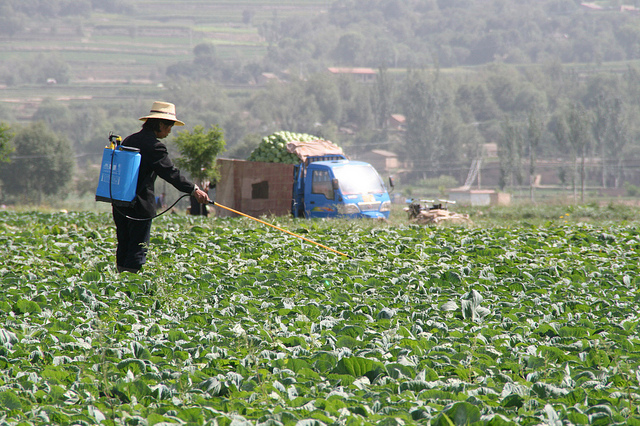
A Chinese farm worker sprays pesticides. Photo: IFPRI-Images

All things are poison, and nothing is without poison: the dose alone makes a thing not poison.” The wisdom of Paracelsus, a 16th-century physician and alchemist, has formed the backbone of modern toxicology. There is a safe dose of radiation, and you can be poisoned by water. Some substances, like medicine, can be incredibly helpful at low levels but deadly at high ones. A modern toxicologist’s job is to find this line, and it’s a government’s job to put limits on exposure levels to keep everything safe.

For some compounds, however, the balance between safe and deadly may not be possible. The European Union seems to believe this is the case for one set of pesticides, the so-called neonicotinoidsThe EU has recently banned their use. Writing for Nature, Sharon Oosthoek says that when it comes to certain pesticides, including these now-banned neonicotinoids, we may have missed the mark—at least in Europe and Australia.

Citing two recent studies, Oosthoek says that even when pesticides like neonicotinoids are used at a level that is deemed “safe,” there may still be deadly effects on local wildlife. Looking at streams in Germany, France and Australia, scientists found that “there were up to 42% fewer species in highly contaminated than in uncontaminated streams in Europe. Highly contaminated streams in Australia showed a decrease in the number of invertebrate families by up to 27% when contrasted with uncontaminated streams.” Pesticides can have outsized effects on some species, while others endure them just fine. And year-after-year applications can cause the pesticides to build up in the environment, making them deadly after a few years even if the amount sprayed each year is within guidelines. It’s not clear whether such strong losses are the case everywhere, but they were for the studied streams.

As Paracelsus taught us, there is a safe level for everything—even pesticides. The trick is finding the right balance such that we can still derive their benefits without the unintended consequences.

More from Smithsonian.com:

Another Downside to Your Classic Green Lawn
Crazy Lies Haters Threw at Rachel Carson

Original link:

Pesticides May Be Harmful to Animals Even at “Safe” Levels

Posted in alo, Brita, FF, GE, Uncategorized, Wiley | Tagged , , , , , , , , | Comments Off on Pesticides May Be Harmful to Animals Even at “Safe” Levels

Spaceships Made of Plastic Could Carry Us to Mars

If anyone wants to make it to Mars unharmed, they’ll need to solve the radiation problem. Photo: Mars One

There’s at least a small handful of teams—NASA, the Chinese Space Agency, SpaceX, Mars One, and others—looking to put people on Mars in the next few decades. Other than the trouble involved in getting people to the red planet, landing them on the surface, giving them enough food and water to survive and stopping them from going crazy with isolation, there’s another big hurdle to jump: radiation. And not just measly, harmless radiation like from your cell phone. Space is full of galactic cosmic rays, incredibly high energy particles–like lead that’s moving near the speed of light. Galactic cosmic rays can blast through your DNA, shredding the bonds and increasing your risk of cancer.

Stopping all this radiation is one of the challenges for anyone looking to send people far from Earth, and new research is pointing us in an unusual direction on how to do it: plastic spaceships.

Aluminum, being both strong and light, is the material of choice for spaceship building. But aluminum isn’t so hot at blocking radiation. Plastic, on the other hand, seems to be way better.

This isn’t an entirely new idea. Back in 2004 NASA wrote about how plastic could be used to protect the explorers of the solar system, speaking with NASA scientist Frank Cucinotta, who works on the Space Radiation Health Project:

Plastics are rich in hydrogen–an element that does a good job absorbing cosmic rays,” explains Cucinotta. For instance, polyethylene, the same material garbage bags are made of, absorbs 20% more cosmic rays than aluminum. A form of reinforced polyethylene developed at the Marshall Space Flight Center is 10 times stronger than aluminum, and lighter, too. This could become a material of choice for spaceship building, if it can be made cheaply enough. “Even if we don’t build the whole spacecraft from plastic,” notes Cucinotta, “we could still use it to shield key areas like crew quarters.” Indeed, this is already done onboard the ISS.

While plastic was already thought to be theoretically better than aluminum at protecting astronauts based on laboratory tests no one had ever tested it using a craft that is fully exposed to cosmic rays. That’s where the new research comes in, says Cary Zeitlin, the leader of the study:

This is the first study using observations from space to confirm what has been thought for some time—that plastics and other lightweight materials are pound-for-pound more effective for shielding against cosmic radiation than aluminum. Shielding can’t entirely solve the radiation exposure problem in deep space, but there are clear differences in effectiveness of different materials.

More from Smithsonian.com:

After Decades of Wishing for a Mars Colony, It May Finally Be Within Reach

Source – 

Spaceships Made of Plastic Could Carry Us to Mars

Posted in FF, G & F, GE, ONA, solar, Uncategorized, Wiley | Tagged , , , , , , , , | Comments Off on Spaceships Made of Plastic Could Carry Us to Mars

How Climate Change Makes Wildfires Worse

Mother Jones

<!DOCTYPE html PUBLIC “-//W3C//DTD HTML 4.0 Transitional//EN” “http://www.w3.org/TR/REC-html40/loose.dtd”>

Last year, Colorado suffered from a record-breaking wildfire season: More than 4000 fires resulted in six deaths, the destruction of 648 buildings, and a half a billion dollars in property damage. Still reeling, Coloradans are once again fleeing in their thousands from a string of drought-fueled fires. El Paso County Sheriff Terry Maketa said on Wednesday that the Black Forest Fire, northeast of Colorado Springs, had already destroyed between 80 and 100 homes. Three other fires, including one in neighboring Fremont County fire, also broke out this week.

So what role is climate change playing in the worsening wildfires? Here’s what we’ve learned:

Is climate change making wildfires worse?

Big wildfires like Colorado’s thrive in dry air, low humidity, and high winds; climate change is going to make those conditions more frequent over the next century. We know because it’s already happening: A University of Arizona report from 2006 found that large forest fires have occurred more often in the Western United States since the mid-1980s as spring temperatures increased, snow melted earlier, and summers got hotter, leaving more and drier fuels for fires to devour.

Thomas Tidwell, the head of the United States Forest Service, told a Senate committee on energy and natural resources recently that the fire season now lasts two months longer and destroys twice as much land as it did four decades ago. Fires now, he said, burn the same amount of land faster.

How many more fires are we talking about?

We can expect “as much as a fourfold increase in parts of the Sierra Nevada and California,” in fire activity across the rest of this century, says Matthew Hurteau, assistant professor of ecosystem science and management at Pennsylvania State University. It’s a trend likely to continue: A 2012 study in Ecosphere, the peer-reviewed journal of the Ecological Society of America, found a high level of agreement that climate change will fundamentally alter fire patterns across vast swaths of the globe by 2100: While some areas around the equator will see fewer fires, there will be striking increases in high altitude boreal fires in the Northern Hemisphere. Fire will even reach a thawing Arctic, which will be more capable of growing plants to burn.

Break it down for me. What’s driving the change?

Fires are much more likely to occur during periods of extreme heat. The draft National Climate Assessment report, prepared by more than 240 authors, says, “There is strong evidence to indicate that human influence on the climate has already roughly doubled the probability of extreme heat events like the record-breaking summer of 2011 in Texas and Oklahoma.”

Droughts are another major driver. Right now, nearly half the West remains locked in the worst drought in 60 years. The vast majority of Colorado—more than 70 percent—is experiencing “severe” or “exceptional” drought right now, setting the background to the current fires. Low levels of winter snow and spring rains in the Western states don’t bode well for this year’s fire season, either. “The forest is much more flammable,” Hurteau says. Heat sucks the moisture out of forests, making them more susceptible to ignitions from lightning. And there’ll be many more hot days to contend with: Research has shown that ratio could increase to about 20-to-1 by mid-century and 50-to-1 by 2100.

This is further complicated by the role of climate change on the Gulf jet stream, which government scientists said earlier this year failed to deliver moist air from the Gulf of Mexico northward like it normally does, denying much of the continental US of much-needed rains. Drought and subsequent wildfires may also be driven by weather systems thousands of miles away: A 2012 study also links a warming Arctic, and its affect on great global currents of air and water, with increased instances of extreme weather, including drought and heatwaves in the US.

There could be another nasty cycle at work here, too: US forests currently absorb about 16 percent of all carbon dioxide emitted by fossil fuel burning in the US. By destroying trees, wildfires not only release carbon dioxide, they potentially alter their ability to absorb carbon, in turn meddling with amount of carbon in the atmosphere that leads to global warming…and more wildfires.

81firegal/Photobucket/James West

Rising temperatures I get. But isn’t climate change meant to produce wetter conditions?

That’s true. As the air gets warmer, it can hold more water. But “we’re alternating between periods of extreme wetness and extreme dryness,” says Lee Frelich, director of the University of Minnesota Center for Forest Ecology. A warming world may produce a higher average precipitation and a higher average humidity, but fires perversely enjoy this, says Frelich: It means they can feast upon even more forest fuel once conditions snap back to dry and hot.

What about wind?

We do know with great certainty that when the wind is higher, fire behavior changes, whipping up embers through the forest canopy that can jump highways and even lakes. That’s certainly the case in the current Colorado fires, with the National Weather Service warning of gusts of up to 35 miles per hour.

But is there a link between climate change and windy weather? A Canadian study from 2009 found that projected increased fire correlated with a slight increase in wind speeds, but the exact climate connection isn’t known yet. We do know that intense storms will become more frequent due to climate change—and that increased likelihood of storms with high winds means more fallen branches. Fire ecologists call this debris “slash fuel.” Add some “ladder fuels”—understory plants that grow in the shade—and you have an easy pathway for fires to leap up into the forest canopy, where they gain momentum. Frelich says Minnesota is still seeing the effects of built-up fuel from a deadly 1999 derecho, a fierce wind storm that blows in a straight line across a landscape accompanying bands of thunderstorms and rain.

Couldn’t we prevent all these mega-fires by getting rid of the smaller ones earlier?

You might think that tackling fires before they roar out of control is the best way to prevent death and destruction. Last year, the US Forest Service briefly flirted with an “aggressive initial attack” plan. But evidence suggests the early intervention approach may actually produce bigger fires: By burning out dry undergrowth, small fires can actually help prevent large and deadlier blazes. Fighting every little fire might also put more firefighters at risk and deplete strained budgets.

Are we making it worse by building more houses in fire-prone areas?

Development doesn’t necessarily make fires worse, but it does put humans right in the path of destruction. I-News, an investigative journalism group in the Rocky Mountains, last year discovered that, “In the past two decades, a quarter million people have moved into Colorado’s red zones—the parts of the state at risk for the most dangerous wildfires… 1.1 million Coloradans live in more than half a million homes in red zones across the state.” The Forest Service’s Tidwell also told the Senate yesterday that more than 40 percent of US forests are in need of hazard reduction, but that’s a tall order in the era of sequestration.

I’ve also heard about beetle outbreaks making fires worse?

While the science is still being debated, the fear is that dry, beetle-ravaged trees combust more quickly than their non-infested counterparts. Over the last decade, higher temperatures caused by climate change have allowed the pine beetle and the spruce bark beetle to survive the winter, causing the biggest outbreak in the last 125 years, killing pine forests across extensive areas of western US and Canada. The beetles are also venturing to higher altitudes where trees are more susceptible to the infestations. Since 1996, spruce beetle has affected 1.2 million acres in Colorado and Wyoming. In Colorado, mountain pine beetle attacked more than 750,000 acres in 2011.

Jump to original:

How Climate Change Makes Wildfires Worse

Posted in FF, GE, ONA, Uncategorized, Venta, Wiley | Tagged , , , , , , , | Comments Off on How Climate Change Makes Wildfires Worse

Paleoista – Nell Stephenson

READ GREEN WITH E-BOOKS

Paleoista

Gain Energy, Get Lean, and Feel Fabulous With the Diet You Were Born to Eat

Nell Stephenson

Genre: Health & Fitness

Price: $11.99

Publish Date: May 1, 2012

Publisher: Touchstone

Seller: Simon and Schuster Digital Sales Inc.


THE PALEO DIET grows out of the belief that we were intended to eat off the land: what walks on it, grows from it, or swims in its waters. It’s about sticking to the kind of foods that human beings were born to ingest (fresh fruits and vegetables, seafood, lean meats, and natural fats), and excluding those that were developed later (grains, legumes, dairy products, salt, refined sugar, and processed oils). But who, exactly, is a Paleoista? She is the embodiment of the modern day Paleo lifestyle. She’s feminine, fit, and knows that eating Paleo will give her the boundless energy she needs to maintain her insanely busy lifestyle. As the ultimate Paleoista, Nell Stephenson knows exactly how to incorporate the Paleo diet into one’s day-to-day life with ease, efficiency, and style. Paleoista is an easy-to-follow guide for any woman interested in reaching her healthiest potential and includes: A Kitchen Makeover Guide , to get started on the right foot A Healthy Grocery Store Field Trip , to stock a Paleo-friendly kitchen Two Weekly “Hours in the Kitchen,” to prep a week’s worth of meals ahead of time A Move-to-Lose Plan , to show you what to do with all your extra energy Sticking with It Socially , including how to order at restaurants, go to a party, travel, keep your kids Paleo, and get together with friends without compromising your Paleo eating plan And More Than Fifty Simple, Delicious Paleo Recipes!

Continue reading:  

Paleoista – Nell Stephenson

Posted in alo, FF, GE, ONA, PUR, Uncategorized, Wiley | Tagged , , , , , , , , | Comments Off on Paleoista – Nell Stephenson

Hurricanes May Cause Earthquakes

Repair crews inspect for damage after the 2011 Virginia earthquake. Photo: National Park Service

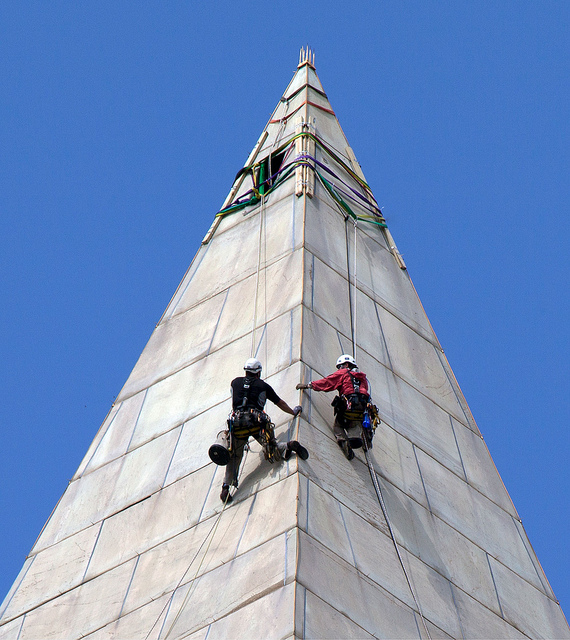
On August 23, 2011 a rare magnitude 5.8 earthquake hit Virginia. The shaking cracked the Washington Monumenttoppled part of the National Cathedral and shook around a third of the U.S. population. Later that week, Hurricane Irene moved into the region, wiping out power, downing trees and, according to new research presented at the meeting of Seismological Society of America, says Nature, triggering more small earthquakes in the recently ruptured fault.

The rate of aftershocks usually decreases with time, says study leader Zhigang Peng, a seismologist at the Georgia Institute of Technology in Atlanta. But instead of declining in a normal pattern, the rate of aftershocks following the 23 August, 2012 [sic], earthquake near Mineral, Virginia, increased sharply as Irene passed by.

The waves of the Virginia earthquake were felt far and wide.

Hurricanes are known to produce strong seismic waves all by themselves. Indeed, says Smithsonian‘s Surprising Science blog, Hurricane Sandy “generated seismic shaking as far away as Seattle.” But hurricane-triggered seismic waves these were not. These were real aftershocks. “Scientists did not initially notice the unusual pattern, Peng said, because the aftershocks were small (many below magnitude 2) and the hurricane itself produced a lot of seismic noise.” A careful analysis of the data, however, revealed that the aftershock activity actually rose around the time of the hurricane’s passing.

The scientists, says Nature, argue that “a decrease in pressure caused by the storm’s travel up the East Coast might have reduced forces on the fault enough to allow it to slip.” More research will be needed to definitively pin down the proposed tie between the hurricane and the earthquake. But the suggestion that the Virginia fault system would have been susceptible to the stresses caused by the hurricane aligns well with the idea that big natural systems, sometimes treated as if they act independently of the world around them, might actually all be connected.

The Irene-triggered aftershocks could have happened because the fault system that had ruptured in Virginia has memory—that is, the fact that it slipped so recently makes it easier for it to do so again. The idea of a natural system having memory is one that is becoming increasingly important for scientists trying to understand natural disasters. The idea is important to the field of complexity science. In a previous interview by this author with Surjalal Sharma, the University of Maryland astronomer explains this idea of memory:

“Memory is, essentially, a correlation in time or space. My memory of past events affects what I do now; that’s long range or long-term correlation. The bunching or clustering of events is, as we understand it, due to the memory of the events in a system. That is, a sequence of natural disasters may not be just a coincidence. [I]f we look at the data for floods, earthquakes, or solar storms, we see that their distributions are [not shaped like a bell curve.] This indicates that these are not random events. Rather, these systems have long-term memory.

So in the case of space weather, let’s imagine that a coronal mass ejection reached the Earth and disturbed the magnetosphere. There are two things about this disturbance that we need to characterize: one, how long does the visible or measurable effect of the disturbance last? The other is, how long would this system remember that the disturbance happened? If a second coronal mass ejection were then to come along within the memory time scale, the disturbance is likely to be much bigger and more prominent in some ways than the first, even if the two ejections are of similar intensity. It is in this context that we have to worry about long-term memory. As one might imagine, this is very important for extreme events.”

A fault that has slipped as an earthquake loads more stress. More research is needed, but if it turns out to be the case that hurricanes really can cause earthquakes, then Gaea just got a whole lot more dangerous.

More from Smithsonian.com:
Oklahoma’s Biggest-Ever Earthquake Was Likely Man-Made
Hurricane Sandy Generated Seismic Shaking As Far Away As Seattle

Visit link: 

Hurricanes May Cause Earthquakes

Posted in alo, FF, GE, ONA, solar, Uncategorized, Wiley | Tagged , , , , , , , , , , , | Comments Off on Hurricanes May Cause Earthquakes