Tag Archives: russia

Get Ready for Record Temperatures…for the Rest of Your Life

In 35 years, US cities consistently will be hotter than their hottest year on record. Mora Lab, Cimate Desk Within 35 years, even a cold year will be warmer than the hottest year on record, according to research published in Nature on Wednesday. The study, which used 39 climate models to make a single temperature index for places all over the world, estimates when major US cities’ average temps will never again dip below that of the hottest year in the past century and a half. As the above chart shows, that’s as early as 2043 for Phoenix and Honolulu, 2049 for San Francisco, and 2071 for Anchorage, Alaska. The study found that the tropics will reach the point when even a cold year is hot based on past temperatures, referred to by the researchers as “climate departure,” sooner than areas to the north. Climate departure will happen in 2025 in Port-au-Prince, Haiti, and 2034 in Mumbai, India, for example, compared to a global average year of 2047. In coral reefs, both pH and temperatures are climbing. “Our paper’s showing that pH is already well beyond the historical threshold,” coauthor Abby Frazier told reporters Tuesday. These estimates assumed that there is no major push to curb carbon emissions in the coming years. The study also predicted a second set of temperatures for an alternate future, in which there’s what lead researcher Camilo Mora calls a “strong and concerted” effort to reduce greenhouse gas emissions. That scenario would result in there being 538 parts per million of carbon in the atmosphere in 2100, which is significantly lower than the 936 ppm that the researchers estimate will be in the atmosphere without that effort. But this substantive action to curb carbon emissions would only buy us about 20 years. “The most striking thing for us is that we used a very conservative scenario,” Mora told Mother Jones. “Many people are already thinking that that just isn’t going to happen, considering the amount of effort that it requires to reach that. Even under those conditions, which are unlikely, we’re still going to face an unprecedented climates, just 20 years into the future. To me, that was pretty shocking.” Those are two scenarios that Mora and his colleagues consider realistic. Even 538 ppm of carbon in the atmosphere in 2100, the scenario in which we curb carbon emissions in Mora’s study, is significantly higher level of carbon than what many experts consider safe for the planet. Since the late ’80s, scientists and advocates such as Bill McKibben have pushed 350 ppm as a safe upper limit for CO2. We’re already passed that level: Earlier this year, the level of CO2 in the atmosphere passed the “grim milestone” of 400 parts per million (ppm)for the fist time in human history. The potential result of 936 ppm? As Mora puts it, “The coldest year in the future is going to be hottest year of the past.” Continue reading here:  Get Ready for Record Temperatures…for the Rest of Your Life ; ;Related ArticlesWhy Big Coal’s Export Terminals Could be Even Worse Than the Keystone XL Pipeline5 Ways Monsanto Wants to Profit Off Climate ChangeUnder Obama, U.S. Leads the World in Oil and Gas Production ;

Link to article:

Get Ready for Record Temperatures…for the Rest of Your Life

Posted in alo, Anchor, Citadel, eco-friendly, FF, G & F, GE, LAI, Monterey, ONA, OXO, solar, solar power, Uncategorized | Tagged , , , , , , , | Comments Off on Get Ready for Record Temperatures…for the Rest of Your Life

Russia Accuses Greenpeace Activists of Piracy

Prosecutors brought the charges against 13 Greenpeace activists and a journalist for trying to scale an oil platform in the Arctic. View post: Russia Accuses Greenpeace Activists of Piracy Related Articles Jellyfish Invasion Paralyzes Swedish Reactor In BP Trial, the Amount of Oil Lost Is at Issue Fuel From Landfill Methane Goes on Sale

Jump to original:  

Russia Accuses Greenpeace Activists of Piracy

Posted in alo, Citadel, eco-friendly, FF, G & F, GE, LAI, Monterey, ONA, solar, solar power, Uncategorized | Tagged , , , , , , , | Comments Off on Russia Accuses Greenpeace Activists of Piracy

Yarr! Russia says Greenpeace protesters are pirates

Yarr! Russia says Greenpeace protesters are pirates

Denis Sinyakov / Greenpeace

Russian Coast Guard officers responded to Greenpeace with water cannons, guns and a mass arrest.

Greenpeace activists last week scaled the Prirazlomnaya platform, the first of many offshore Arctic oil platform planned in Russian waters. The protesters, perched high above the frigid waters, were forced down with water cannons. Armed officers boarded Greenpeace’s icebreaker, and arrested all 30 activists.

The demonstration was designed to bring international attention to Russia’s burgeoning plans to allow Big Oil to drill in its offshore waters (onshore drilling is already widespread). ExxonMobil and Statoil are among the companies planning to take part in the precarious deepwater plunder.

Obviously, the 30 activists are not pirates. Pirates are seafaring robbers. Yet that’s what some Russian law enforcement authorities are claiming, and that’s how the Greenpeace arrestees may be charged.

“Yarr, maties, we’ve come to loot your oil drill! Wait, whar’s the treasure?”

The environmentalists could be sentenced to as much as 15 years in prison and fined $15,000 apiece if found guilty of trumped-up piracy charges. From Reuters:

Environmental activists who protested at an offshore oil platform in the Russian Arctic last week will be prosecuted, possibly for piracy which is punishable by up to 15 years’ jail, Russian investigators said on Tuesday.

They said the “attack,” in which Greenpeace activists tried scaling the Gazprom-owned Prirazlomnaya platform, Russia’s first offshore Arctic oil platform, had violated Russian sovereignty.

“When a foreign ship full of electronic equipment intended for unknown purposes and a group of people, declaring themselves to be environmental activists, try to storm a drilling platform there are legitimate doubts about their intentions,” the investigators said in a statement.

Even President Vladimir Putin spoke out against the ludicrous notion that these people are pirates. ”It is absolutely evident that they are, of course, not pirates, but formally they were trying to seize this platform,” Putin said at an Arctic forum, according to a separate Reuters report. “It is evident that those people violated international law.”

And while we’re discussing harebrained Russian claims, one official said Greenpeace had endangered the area’s wildlife and its ecology, which “is being protected zealously” by Russia. Right.

Greenpeace, meanwhile, decried the authorities’ treatment of the protesters. From the BBC:

The environmental organisation said its protest against “dangerous Arctic oil drilling” was peaceful and in line with its “strong principles.”

“Our activists did nothing to warrant the reaction we’ve seen from the Russian authorities,” it said.

The multinational makeup of the protesters is helping deliver a storm of worldwide press coverage. The protesters are from 18 countries, including the U.S., U.K., Canada, Australia, and Russia. Consular officials have interviewed some of those who were arrested.

Putin’s Russia is not the best place to be jailed for protest. While the Greenpeace drama unfolded, Nadezhda Tolokonnikova, one of the Pussy Riot members who was sentenced to two years in Russian jail for singing a song that asked the Virgin Mary to throw Putin out of power, has been moved to solitary confinement as punishment for a hunger strike. Tolokonnikova was protesting “slave labor” and the treatment of “women like cattle” in jail.

We’ll see whether pseudo-piracy provokes similarly disproportionate treatment.

John Upton is a science fan and green news boffin who tweets, posts articles to Facebook, and blogs about ecology. He welcomes reader questions, tips, and incoherent rants: johnupton@gmail.com.Find this article interesting? Donate now to support our work.Read more: Climate & Energy

Continue reading:

Yarr! Russia says Greenpeace protesters are pirates

Posted in alo, ALPHA, Anchor, FF, G & F, GE, LAI, ONA, PUR, solar, solar panels, Uncategorized | Tagged , , , , , , , | Comments Off on Yarr! Russia says Greenpeace protesters are pirates

Republicans See Keystone Pipeline as a Card to Play in Last-Minute Fiscal Talks

Activists who oppose the Keystone XL pipeline say they are increasingly alarmed that the project might become a bargaining chip in negotiations to avert a fiscal crisis. Continue reading –  Republicans See Keystone Pipeline as a Card to Play in Last-Minute Fiscal Talks ; ;Related ArticlesGreenpeace Activists May Face Russian Piracy ChargesGreenpeace Activists Face Possible Piracy Charges in RussiaTowers of Steel? Look Again ;

More here: 

Republicans See Keystone Pipeline as a Card to Play in Last-Minute Fiscal Talks

Posted in alo, Citadel, eco-friendly, FF, G & F, GE, horticulture, LAI, Monterey, ONA, Presto, solar, solar power, Uncategorized | Tagged , , , , , , , , , | Comments Off on Republicans See Keystone Pipeline as a Card to Play in Last-Minute Fiscal Talks

Greenpeace Activists May Face Russian Piracy Charges

Russian officials have opened a piracy investigation against Greenpeace members who scaled a Gazprom offshore oil platform in the Arctic. View original post here:  Greenpeace Activists May Face Russian Piracy Charges ; ;Related ArticlesGreenpeace Activists Face Possible Piracy Charges in RussiaRussia Seizes Greenpeace Ship and Crew for InvestigationIn the Shadow of ‘Old Smokey,’ a Toxic Legacy ;

Credit:  

Greenpeace Activists May Face Russian Piracy Charges

Posted in alo, Anchor, Citadel, eco-friendly, FF, G & F, GE, horticulture, LAI, Monterey, ONA, organic, Presto, solar, solar power, Uncategorized | Tagged , , , , , , , , | Comments Off on Greenpeace Activists May Face Russian Piracy Charges

Greenpeace Activists Face Possible Piracy Charges in Russia

Russian officials have opened a piracy investigation against Greenpeace members who scaled a Gazprom offshore oil platform in the Arctic. Original post:  Greenpeace Activists Face Possible Piracy Charges in Russia ; ;Related ArticlesRussia Seizes Greenpeace Ship and Crew for InvestigationIn the Shadow of ‘Old Smokey,’ a Toxic Legacy‘Old Smokey’ Is Long Gone From Miami, but Its Toxic Legacy Lingers ;

Excerpt from – 

Greenpeace Activists Face Possible Piracy Charges in Russia

Posted in alo, Citadel, eco-friendly, FF, G & F, GE, horticulture, LAI, Monterey, ONA, organic, Presto, solar, solar power, Uncategorized | Tagged , , , , , , , | Comments Off on Greenpeace Activists Face Possible Piracy Charges in Russia

World Briefing | Europe: Russia: Coast Guard Boards Greenpeace Ship in Arctic

Armed Russian officers boarded a Greenpeace ship that was circling an Arctic oil platform on Thursday after Moscow accused the environmentalist group of “aggressive and provocative” behavior. Visit site: World Briefing | Europe: Russia: Coast Guard Boards Greenpeace Ship in Arctic ; ;Related ArticlesWorld Briefing | Europe: Russia: Greenpeace Members Held at Arctic Oil RigThe Texas Tribune: Texas, Where Oil Rules, Turns Its Eye to Energy EfficiencyU.S. Revives Aid Program for Clean Energy ;

Continue reading:  

World Briefing | Europe: Russia: Coast Guard Boards Greenpeace Ship in Arctic

Posted in alo, Citadel, eco-friendly, FF, G & F, GE, LAI, Monterey, ONA, PUR, solar, solar power, Uncategorized | Tagged , , , , , , , , , , , | Comments Off on World Briefing | Europe: Russia: Coast Guard Boards Greenpeace Ship in Arctic

Obama signs on to three international climate pacts in three days

Obama signs on to three international climate pacts in three days

Barack Obama is walking the climate-change talk — all around the world. Or at least endorsing climate-change pacts.

Lawrence Jackson,

whitehouse.gov

Obama in St. Petersburg last week.

In June, the president unveiled a climate action plan that called, among other things, for the U.S. to establish itself as a global leader on climate issues. And over the past few days, he’s shown that it wasn’t just rhetoric. Though the U.N. treaty process is going nowhere fast, the Obama administration is moving forward with smaller international climate agreements.

commitment that Obama and Chinese President Xi Jinping made during private meetings in June to reduce climate-changing emissions of hydrofluorocarbons, or HFCs, evolved on Friday into a formal agreement between the two nations. From The Washington Post:

The United States and China announced Friday they would seek to eliminate some of the world’s most potent greenhouse gases through the 1987 Montreal Protocol, the landmark treaty that successfully phased out ozone-depleting substances decades ago.

The move, announced at the Group of 20 summit in St. Petersburg, is significant because it provides a clear path for curbing a major contributor to global warming in the near term as world leaders grapple with the more challenging task of cutting carbon dioxide in the coming decades.

And in news that’s so closely related you could be forgiven for thinking it’s exactly the same story, all of the countries at the G20 summit, including the U.S., reached a broader agreement to curb emissions of HFCs. From Reuters:

The White House cited the agreement to cooperate on phasing down the use of hydrofluorocarbons (HFCs), gases used in refrigerators, air conditioners and some industrial equipment, as one of the “most significant agreements” of the summit.

“This commitment marks an important step forward toward addressing HFCs — highly potent greenhouse gases that are rapidly increasing in use — through the proven mechanism of the Montreal Protocol,” the White House said in a fact sheet.

Meanwhile, half a world away from the G20 meeting in Russia, some encouraging news emerged from a summit of Pacific Ocean island states — some of which are at risk of sinking beneath rising seas. From Agence France-Presse:

A new Pacific regional pact calling for aggressive action to combat climate change has achieved a “major accomplishment” by gaining US support, officials said Sunday.

The Majuro Declaration, endorsed by the 15-nation Pacific Islands Forum (PIF) at their summit last week, contains specific pledges on cutting greenhouse gas emissions.

US Interior Secretary Sally Jewell announced during the session a new climate change fund for Pacific islands vulnerable to rising sea levels. …

Separately, the US was offering $24 million over five years for projects in “vulnerable coastal communities” in the Pacific, she said. …

Marshall Islands minister Tony de Brum said the US support was a “major accomplishment”.

It might be time to send the president down under to try to talk some sense into Australia’s new government.

John Upton is a science fan and green news boffin who tweets, posts articles to Facebook, and blogs about ecology. He welcomes reader questions, tips, and incoherent rants: johnupton@gmail.com.Find this article interesting? Donate now to support our work.Read more: Climate & Energy

,

Politics

Continue at source – 

Obama signs on to three international climate pacts in three days

Posted in ALPHA, Anchor, FF, G & F, GE, Landmark, ONA, oven, solar, Uncategorized | Tagged , , , , , , , , | Comments Off on Obama signs on to three international climate pacts in three days

How Russia’s Anti-Gay Law Could Affect the 2014 Olympics, Explained

Mother Jones

<!DOCTYPE html PUBLIC “-//W3C//DTD HTML 4.0 Transitional//EN” “http://www.w3.org/TR/REC-html40/loose.dtd”>

Saddled with allegations of forced evictions, labor rights abuses, graft, and corruption—along with an estimated record price tag of $50 billion—the 2014 Winter Olympics in Sochi, Russia, have been the source of international outrage for some time now. But when Russia’s Interior Ministry announced last week that the country’s so-called anti-gay law—which allows for fining and detaining gay and pro-gay people—would apply during the Games, gay rights and human rights activists around the world turned their focus to the small city on the coast of the Black Sea, one of the warmest corners of Russia.

We put together this backgrounder to help catch you up to speed on all things Sochi:

What’s the deal with Russia’s anti-gay law? Since President Vladimir Putin signed the new legislation—which passed the Duma with a 436-0 vote—on June 30, there’s been a steady stream of reporting on what this law means for the Russian people. In short, Article 6.21 of the Code of the Russian Federation on Administrative Offenses allows the government to fine people accused of spreading “propaganda of nontraditional sexual relations amongst minors” between 4,000 and 1 million rubles ($120 to $30,000). A law passed in 2012 also bans gay-pride events in Moscow for the next 100 years.

Recent attempts at gay-pride events have deteriorated into violence:

Gay rights protesters after being attacked at a June rally in St. Petersburg Ruslan Shamukov/ITAR-TASS/ZUMA

Protesters attack an LGBT activist during a St. Petersburg event in June. Roman Yandolin/Russian Look/ZUMA

Last weekend, Russian American journalist Masha Gessen—who started Russia’s pink-triangle campaign for LGBT acceptance—published a gut-wrenching account in the Guardian of her own decision to move her girlfriend and children back to the United States after years living in Russia. “In June, the ‘homosexual propaganda’ bill became federal law,” she wrote. “The head of the parliamentary committee on the family pledged to create a mechanism for removing children from same-sex families.

“Two things happened to me the same month: I was beaten up in front of parliament for the first time and I realized that in all my interactions, including professional ones, I no longer felt I was perceived as a journalist first: I am now a person with a pink triangle.”

What are some other tactics anti-gay activists are using in Russia? Though anti-gay actions and sentiment have been brewing for years—this federal rule comes on the heels of several similar regional laws, which have been enacted in St. Petersburg and other cities since 2006—this law has taken it to new heights: In July, the Spectrum Human Rights Alliance (SHRA), a US-based organization that advocates LGBT rights in Eastern Europe, helped bring international attention to a Russian group called Occupy Pedophilia. Led by notorious Russian neo-Nazi Maksim “Tesak” (“the Hatchet”) Martsinkevich, the group has been using social media, primarily VKontakte (Russia’s Facebook spinoff), to place fake dating ads to lure gay men. Once face-to-face with the men, group members interrogate and torture them, and a video of the encounter is put on YouTube. Here’s one such video from late July. (Warning: The content of the video is disturbing.)

Some of the videos are also placed on the group’s website, where victims are categorized by sexual orientation and users can rate the videos. As of this writing, Occupy Pedophilia has nearly 450 regional chapters listed on VKontakte.

Screenshot from VKontakte

Larry Poltavtsev, president and founder of SHRA, explains that months ago, Martsinkevich released a video declaring his own special plan for ending gay-pride events in Russia. Though it disappeared for a while, Poltavtsev says, it recently reappeared on YouTube (see below). In it, a shirtless Martsinkevich says this is his first time directly addressing the Moscow government. He explains that it’s a shame the government must sink so many resources into its gay-pride ban—dealing with civil rights lawsuits, paying out compensation, and the like. Instead, he suggests, why not simply make gay-pride events legal—but leave them without security or police presence? “This will be the first and last time,” Martsinkevich concludes, “that homosexuals will try to hold their parade in Russia.”

Poltavtsev also mounted a petition on Change.org to add Russian lawmakers Vitaly Milonov and Elena Mizulina, both of whom have sponsored anti-gay legislation, to the US Congress’ Magnitsky list of human rights violators. It currently has more than 11,000 signatures.

Meanwhile, an April 2012 TV appearance by Dmitri Kiselev—TV anchor and deputy director of VGTRK, Russia’s state-owned television and radio holding company—surfaced last week, showing Kiselev, a state employee, saying the following to a round of applause: “I think that just imposing fines on gays for homosexual propaganda among teenagers is not enough. They should be banned from donating blood, sperm. And their hearts, in case of the automobile accident, should be buried in the ground or burned as unsuitable for the continuation of life.”

In an interview this week on Moscow radio station Echo of Moscow, Kiselev defended his remarks, explaining that, to his knowledge, these practices are already employed in other Western countries, including the United States. (He cited the US Food and Drug Administration as a source.)

Continue Reading »

View post – 

How Russia’s Anti-Gay Law Could Affect the 2014 Olympics, Explained

Posted in alo, Anchor, FF, GE, LAI, LG, ONA, Uncategorized, Venta | Tagged , , , , , , , , , | Comments Off on How Russia’s Anti-Gay Law Could Affect the 2014 Olympics, Explained

Instead of Being Protected, Antarctica’s Oceans Will Be Open for Fishing

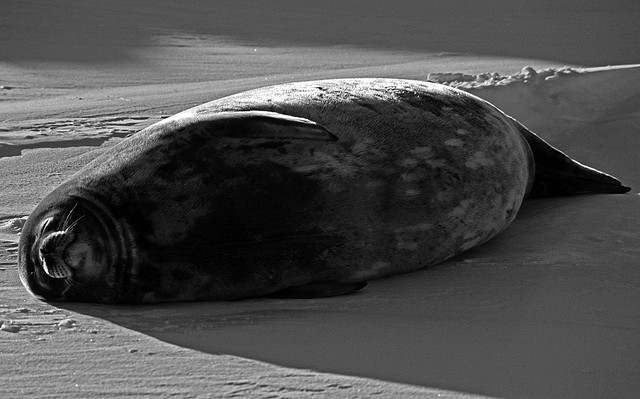
A Weddell Seal sunbathes near Antarctica’s Ross Sea. Photo: Leonardo Sagnotti

As Antarctica is undergoing massive changes—in its climate, because of rapidly melting ice shelves, and in its biology, because invasive species are moving into the warming waters—it’s also playing a new role in scientists’ understanding of how life on Earth gets by. The continent was long thought to be a mostly barren wasteland, home to penguins and seals and little else, but recent investigations in the surrounding oceans and in lakes deep beneath the glaciers have turned up a wealth of new life—a trove of thriving species likely found nowhere else on Earth.

Recognizing Antarctica’s status as one of the last largely untapped ecosystems on Earth, many members of an international government consortium, the Commission for the Conservation of Antarctic Marine Living Resources (CCAMLR), have been pushing hard to have 963 million acres of the Southern Ocean set off as a protected reserve. Pew Environment writes:

The proposed Southern Ocean protections included a Ross Sea marine reserve of 1.6 million square kilometres — where no fishing would be allowed — within a 2.3 million square kilometre marine protected area, and seven marine protected areas on the East Antarctic coast, covering an additional 1.6 million square kilometres. The Ross Sea plan was proposed by the United States and New Zealand; the East Antarctic protections were championed by Australia, France, and the E.U.

Scientists, say Pew, have “called the Ross Sea ‘The least altered marine ecosystem on Earth,’ with unusually large and closely interacting populations of several marine bird and mammal species.”

The Southern Ocean is home to thousands of unique species including most of the world’s penguins, whales, seabirds, colossal squid, and the remarkable but heavily fished Antarctic and Patagonian toothfish. The region is critical for scientific research, both for studying how intact marine ecosystems function and for determining the accelerating impacts of global climate change.

Unfortunately for those arguing for greater protections (which included representatives from the United States), the plan to set the Southern Ocean regions aside, free from fishing and other enterprises, has been nixed. At a meeting organized to discuss the plan, says Nature, a “surprise legal objection from Russian diplomats” stalled the plan.

[T]he Russian delegation questioned the very authority of the Commission for the Conservation on Marine Living Resources (CCAMLR), which regulates fishing in Antarctica, to create reserves.

… This has enraged NGOs, who pointed out that CCAMLR has already created one such ‘marine protected area’ and that all of the commission’s members had previously agreed in principle that it should create such zones. NGO representatives accused Russia of coming in bad faith to the meeting, which was convened specifically to discuss the marine reserves after they were not agreed to at another meeting last year.

With no legal restrictions in place, fisheries would be free to act in the Southern Ocean. Indeed, fishing has been a “major sticking point in the talks,” says the BBC:

[S]pecies like krill and patagonian toothfish prov[e] highly lucrative for boats from a range of countries, including South Korea, Norway and Japan.

The tiny shrimp like Antarctic krill are a key element of the ecosystem, as they are part of the diet of whales, penguins, seals and sea birds.

However demand for krill has risen sharply in recent years thanks to growing interest in Omega-3 dietary supplements.

The group, says Der Spiegel, plans to meet once more in October to discuss the marine protected area. “Although there is hope that they may be approved there,” says Nature, “Russia’s hardline approach to this week’s meeting casts a long shadow, and raises serious doubts about the chances of approval.”

More from Smithsonian.com:

‘Bone-Eating Zombie Worm’ And Eight Other New Species Live on the First Whale Skeleton Found in Antarctica
Thousands of Species Found in a Lake Cut Off From the World for Millions of Years
There Goes the Ecosystem: Alien Animals Invade Antarctica

More:

Instead of Being Protected, Antarctica’s Oceans Will Be Open for Fishing

Posted in FF, GE, global climate change, Omega, ONA, Uncategorized | Tagged , , , , , , , , , | Comments Off on Instead of Being Protected, Antarctica’s Oceans Will Be Open for Fishing