Tag Archives: wildlife

Instead of Being Protected, Antarctica’s Oceans Will Be Open for Fishing

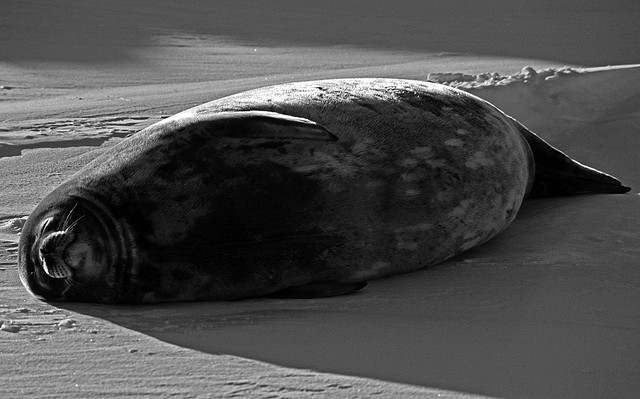
A Weddell Seal sunbathes near Antarctica’s Ross Sea. Photo: Leonardo Sagnotti

As Antarctica is undergoing massive changes—in its climate, because of rapidly melting ice shelves, and in its biology, because invasive species are moving into the warming waters—it’s also playing a new role in scientists’ understanding of how life on Earth gets by. The continent was long thought to be a mostly barren wasteland, home to penguins and seals and little else, but recent investigations in the surrounding oceans and in lakes deep beneath the glaciers have turned up a wealth of new life—a trove of thriving species likely found nowhere else on Earth.

Recognizing Antarctica’s status as one of the last largely untapped ecosystems on Earth, many members of an international government consortium, the Commission for the Conservation of Antarctic Marine Living Resources (CCAMLR), have been pushing hard to have 963 million acres of the Southern Ocean set off as a protected reserve. Pew Environment writes:

The proposed Southern Ocean protections included a Ross Sea marine reserve of 1.6 million square kilometres — where no fishing would be allowed — within a 2.3 million square kilometre marine protected area, and seven marine protected areas on the East Antarctic coast, covering an additional 1.6 million square kilometres. The Ross Sea plan was proposed by the United States and New Zealand; the East Antarctic protections were championed by Australia, France, and the E.U.

Scientists, say Pew, have “called the Ross Sea ‘The least altered marine ecosystem on Earth,’ with unusually large and closely interacting populations of several marine bird and mammal species.”

The Southern Ocean is home to thousands of unique species including most of the world’s penguins, whales, seabirds, colossal squid, and the remarkable but heavily fished Antarctic and Patagonian toothfish. The region is critical for scientific research, both for studying how intact marine ecosystems function and for determining the accelerating impacts of global climate change.

Unfortunately for those arguing for greater protections (which included representatives from the United States), the plan to set the Southern Ocean regions aside, free from fishing and other enterprises, has been nixed. At a meeting organized to discuss the plan, says Nature, a “surprise legal objection from Russian diplomats” stalled the plan.

[T]he Russian delegation questioned the very authority of the Commission for the Conservation on Marine Living Resources (CCAMLR), which regulates fishing in Antarctica, to create reserves.

… This has enraged NGOs, who pointed out that CCAMLR has already created one such ‘marine protected area’ and that all of the commission’s members had previously agreed in principle that it should create such zones. NGO representatives accused Russia of coming in bad faith to the meeting, which was convened specifically to discuss the marine reserves after they were not agreed to at another meeting last year.

With no legal restrictions in place, fisheries would be free to act in the Southern Ocean. Indeed, fishing has been a “major sticking point in the talks,” says the BBC:

[S]pecies like krill and patagonian toothfish prov[e] highly lucrative for boats from a range of countries, including South Korea, Norway and Japan.

The tiny shrimp like Antarctic krill are a key element of the ecosystem, as they are part of the diet of whales, penguins, seals and sea birds.

However demand for krill has risen sharply in recent years thanks to growing interest in Omega-3 dietary supplements.

The group, says Der Spiegel, plans to meet once more in October to discuss the marine protected area. “Although there is hope that they may be approved there,” says Nature, “Russia’s hardline approach to this week’s meeting casts a long shadow, and raises serious doubts about the chances of approval.”

More from Smithsonian.com:

‘Bone-Eating Zombie Worm’ And Eight Other New Species Live on the First Whale Skeleton Found in Antarctica
Thousands of Species Found in a Lake Cut Off From the World for Millions of Years
There Goes the Ecosystem: Alien Animals Invade Antarctica

More:

Instead of Being Protected, Antarctica’s Oceans Will Be Open for Fishing

Posted in FF, GE, global climate change, Omega, ONA, Uncategorized | Tagged , , , , , , , , , | Comments Off on Instead of Being Protected, Antarctica’s Oceans Will Be Open for Fishing

China’s Massive Algae Bloom Could Leave the Ocean’s Water Lifeless

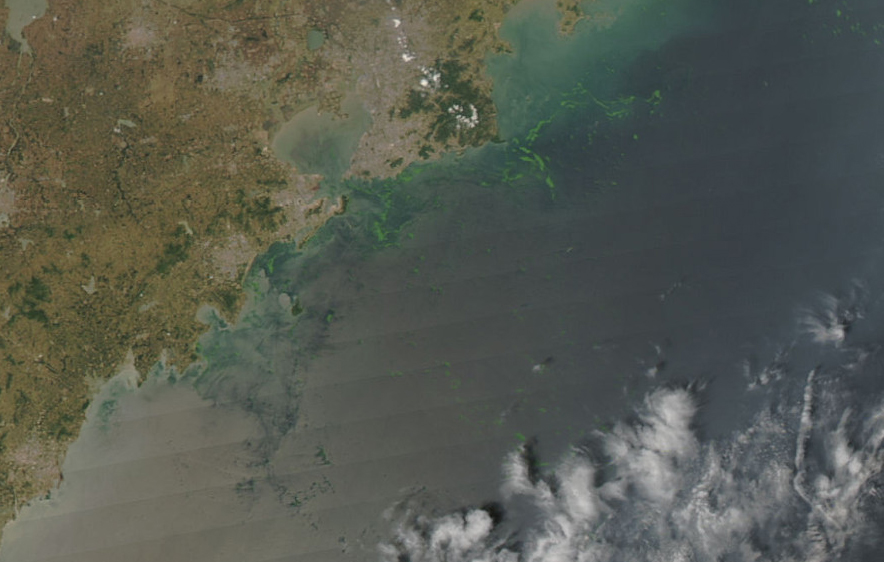
Algae in the Yellow Sea near Qingdao in 2008. Photo: MODIS Rapid Response Team / Earth Observatory

It’s become an annual affair, the rafts of green algae washing up on the shores of Qingdao, China. Since 2007, massive algae blooms in the Yellow Sea have been fueled, scientists think, by “pollution and increased seaweed farming” south of Qingdao. The mats of photosynthetic phytoplankton aren’t dangerous to people (unless you count ruining a day at the beach as dangerous), but the return of these massive algae blooms year after year could be troubling for the marine creatures living in the Yellow Sea.

“The carpet on the surface can dramatically change the ecology of the environment beneath it,” says the Guardian. “It blocks sunlight from entering the ocean and sucks oxygen from the water suffocating marine life.”

Vast blooms of algae can cause the water to become “hypoxic,” to have the concentration of oxygen in the water drawn down so low that it makes it uninhabitable for many marine creatures. A strong case of hypoxia can further lead to something called a “dead zone.” And, by drawing down the oxygen levels and messing with the chemistry of the water, algae blooms can temporarily amplify ocean acidification. The National Oceanic and Atmospheric Administration explains how algae blooms lead to dead zones:

Such recurring, annual algae blooms like the one in Qingdao aren’t limited to China’s Yellow Sea, either. According to Scientific American, there are at least 405 dead zones around the world. One of the worst in the world is the one in the Gulf of Mexico, where this year researchers with NOAA expect around 8,000 square miles of the Gulf to be oxygen depleted—a patch of ocean about the size of New Jersey, says National Geographic. If the bloom lives up to expectations, this year’s would be the largest dead zone in the Gulf on record.

So while China’s algae problem may be making a mess for swimmers, it’s the life beneath the waves that may be hurting the most.

More from Smithsonian.com:
A Swim Through the Ocean’s Future
Arctic Algae Infiltration Demonstrates the Effects of Climate Change

From:  

China’s Massive Algae Bloom Could Leave the Ocean’s Water Lifeless

Posted in FF, GE, LG, ONA, Uncategorized | Tagged , , , , , , , | Comments Off on China’s Massive Algae Bloom Could Leave the Ocean’s Water Lifeless

Does Climate Change Make Western Firefighting More Dangerous?

green4us

Tragic death of ‘Hotshot’ firefighting team in Arizona renews debate about global warming’s influence on wildfires. In the wake of the tragic news that 19 heroic members of an elite “Hotshot” firefighting team were killed in Arizona, there’s been renewed discussion about climate change and how it is worsening wildfires. In particular, there’s considerable evidence that western fire seasons are getting longer and more destructive, and that this is tied to more extreme heat and drought. But does the same dynamic make the act of wildland firefighting riskier? There are reasons to suspect that it does. Nick Sundt is a former western smoke jumper—a firefighter who literally parachutes in to combat blazes, often in remote locations, acting as a kind of first line of defense. He fought fires from Alaska to New Mexico for a decade during the 1980s. Now, he’s the communications director for climate change at the World Wildlife Fund. No wonder that he has focused much of his attention of late on how Western fires, and conditions for his fellow firefighters, are getting worse. Federal and state “HotShot” crews, explains Sundt, are composed of highly trained specialists who are at the top of their physical game—for instance, they have to be able to hike three miles in 45 minutes carrying a 45 pound pack. They are dispatched to fight fires that grow beyond the capacity of first arrivers—such as smokejumpers—to combat. What follows is often intense, dangerous labor for 16 hours at a time or even longer. As Sundt explains, members of these teams are “arguably the most physically fit and well organized crews of firefighters” that governments have at their disposal. But that doesn’t mean that they’re ready for every situation. In the case of the Arizona team, the emergency shelters that Hotshots take with them—to protect from heat, and preserve oxygen—appear to have been insufficient, for unknown reasons. Such shelters, it is important to note, are not able to resist direct exposure to flames. With fire dynamics changing and overall temperatures rising, meanwhile, even the best prepared firefighters may be facing greater risks. The first such risk involves a well-documented increase in average temperatures in fire-prone regions—punctuated by heat waves of the sort now underway in the West. Extreme heat is of course a physical danger in and of itself (for a video on heat risks to firefighters, see here or below), as well as a major stressor for firefighters who are often operating in intense conditions, with little sleep for days on end—all the while wearing heavy equipment and carrying gear, tools, and water. “I’ve fought fire in the Mojave Desert in 100 plus temperatures, and you grab a drink, it’s like drinking hot tea out of your canteen,” says Sundt. What’s more, these hotter temperatures make it harder for crews to sleep. Firefighters often work at night, according to Sundt, when weather conditions are more favorable. That means they have to go back to camp and try to sleep during the hottest hours of the day. Meanwhile, even the night shifts aren’t as cool as they used to be. The ‘C-N-A Crew’ would help us do our work at night,” Sundt says—explaining that “C-N-A” stands for “cool night air.” But nighttime average temperatures are also rising. That means fires are more likely to be active, and firefighters less likely to get a reprieve. The other new risk to firefighters? Simply that they’re tangling with a different beast than they may be used to. “Many firefighters have commented that they are facing more extreme fire behavior than they have witnessed in their lifetimes,” remarked Dr. Michael Medler, a former wildland firefighter and now a professor at Western Washington University, in 2007congressional testimony. If fires are behaving in different ways than expected—if they’re larger, if they’re unusually severe—that’s an added risk. Longer fire seasons also expose more firefighters to more potential hazards in general. (For more on how wildfires are changing see our explainer here.) That’s not to say that climate change is the only factor making wildfires worse or seemingly more destructive. Increased development in fire prone areas is also at play, as arequestionable past “fire suppression” practices. But we can’t ignore the climate factor. “Heat stresses firefighters like anyone else,” says Sundt.

See the article here: 

Does Climate Change Make Western Firefighting More Dangerous?

Related Posts

How Climate Change Makes Wildfires Worse
Experts See New Normal as a Hotter, Drier West Faces More Huge Fires
California Wildfires May Be Controlled This Weekend, Official Says
Can You Have Too Much Solar Energy?
A Clear View of Alaska

Share this:

View this article:  

Does Climate Change Make Western Firefighting More Dangerous?

Posted in ALPHA, eco-friendly, FF, For Dummies, G & F, GE, growing marijuana, horticulture, LG, Monterey, ONA, Pines, solar, solar power, Uncategorized | Tagged , , , , , , , | Comments Off on Does Climate Change Make Western Firefighting More Dangerous?

In win for fish, oil companies allowed to abandon old rigs

In win for fish, oil companies allowed to abandon old rigs

For all the harm that the oil and gas industry inflicts on wildlife in the Gulf of Mexico, it does offer the marine ecosystem at least one big benefit. Offshore oil-drilling rigs serve as artificial reefs, providing shelter for animals and an anchor for plants, coral, and barnacles. Yet once a well is tapped, the federal government has required the drilling company to uproot its rig to help clear clutter that could obstruct shipping.

Following complaints from fishermen and conservationists, however, the Obama administration is easing those rules. It announced this week that it is making it easier for states to designate abandoned drilling infrastructure as special artificial reef sites.

Chris Ledford, © Texas Parks and Wildlife Department

A barracuda hanging out at a Texas oil rig.

The move is a win-win. Fish, turtles, and other wildlife get to keep their underwater metropolises — and drilling companies can save on the costs of rig removal. From Fuel Fix:

The Bureau of Safety and Environmental Enforcement has revised the policies to encourage participation in its rigs-to-reefs program, which allows operators to leave non-producing platforms deep in the Gulf as artificial homes for underwater creatures.

So, um, thanks to all the penny-pinching oil companies out there that don’t want to pay to clean up their crap?

John Upton is a science fan and green news boffin who tweets, posts articles to Facebook, and blogs about ecology. He welcomes reader questions, tips, and incoherent rants: johnupton@gmail.com.

Find this article interesting? Donate now to support our work.Read more: Business & Technology

,

Climate & Energy

Also in Grist

Please enable JavaScript to see recommended stories

More:

In win for fish, oil companies allowed to abandon old rigs

Posted in Anchor, FF, G & F, GE, LG, ONA, PUR, solar, solar panels, solar power, Uncategorized | Tagged , , , , , , , , , , | Comments Off on In win for fish, oil companies allowed to abandon old rigs

Marijuana Crops in California Threaten Forests and Wildlife

California growers are acknowledging that like logging before it, their booming business is a threat to forests whose giant redwoods preside over vibrant ecosystems. Visit source:   Marijuana Crops in California Threaten Forests and Wildlife ; ;Related ArticlesTax Programs to Finance Clean Energy Catch OnFor Solazyme, a Side Trip on the Way to Clean FuelA Solution for a San Diego Cove’s Constant Odor: Bacteria ;

See original article:

Marijuana Crops in California Threaten Forests and Wildlife

Posted in eco-friendly, FF, G & F, GE, Monterey, ONA, PUR, solar, solar power, TOTO, Uncategorized | Tagged , , , , , , , | Comments Off on Marijuana Crops in California Threaten Forests and Wildlife

Dot Earth Blog: Exploring Environmental Issues and Communication With Students in Japan

High school students in Japan discuss journalism and the environment with a blogger in New York. Link –  Dot Earth Blog: Exploring Environmental Issues and Communication With Students in Japan ; ;Related ArticlesDot Earth Blog: DNA from Tiger Scat Aids Conservation Efforts in NepalExploring Environmental Issues and Communication With Students in JapanScientist at Work Blog: Empty Nets on the Mekong ;

Visit source: 

Dot Earth Blog: Exploring Environmental Issues and Communication With Students in Japan

Posted in Citadel, eco-friendly, FF, G & F, GE, Monterey, ONA, PUR, solar, solar power, Uncategorized | Tagged , , , , , , , , , | Comments Off on Dot Earth Blog: Exploring Environmental Issues and Communication With Students in Japan

Nature Wars: The Incredible Story of How Wildlife Comebacks Turned Backyards into Battlegrounds

[amzn_product_post]

Posted in Crown | Tagged , , , , , , , , , , , , , , , | Comments Off on Nature Wars: The Incredible Story of How Wildlife Comebacks Turned Backyards into Battlegrounds

The Definitive Guide to Bedbug Sex

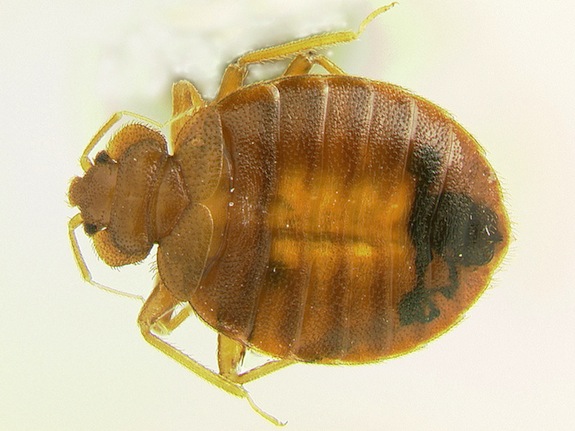
Image: Armed Forces Pest Management Board

The last thing you want in your bed is bedbugs. But here is an even grosser thought to handle: bedbugs have sex in your bed.

How do they do it? Turns out, we’re really interested in this. There are a lot of explainers out there. Here are three that will get you up to speed on the bedbug hanky-panky.

Anna Rothschild at NOVA knows you want to know:

As Rothschild explains, male bedbugs have saber-like penises, that they use to stab females in the abdomen. The male releases sperm into the females circulatory system, not into their reproductive tract which is used for outbound eggs only.

Here’s another take on bedbug sex, by the always weird-yet-entertaining Green Porno:

And if you want the real deal, here’s a video of real bedbugs having sex.

Like Rothschild says, good luck sleeping now that you know this might be happening in your bed.

More from Smithsonian.com:

Have Bedbugs Been Vanquished At Last?
Bean Leaves Don’t Let the Bedbugs Bite by Using Tiny, Impaling Spikes

Read more: 

The Definitive Guide to Bedbug Sex

Posted in GE, Uncategorized | Tagged , , , , , , | Comments Off on The Definitive Guide to Bedbug Sex

Fun DIY Bird Feeder Ideas

Veronique L.

on

Fun DIY Bird Feeder Ideas

7 minutes ago

customize your newsletter

causes & news
animal welfare
global warming
environment & wildlife
human rights
women’s rights
news
submit news story
healthy living
food & recipes
health & wellness
healthy home
family life
true beauty
pets
shopping
take action
browse petitions
create a petition
daily action
volunteer
jobfinder
click to donate
community & sharing
people
groups
singles
photos
blogs
polls
ecards
my care2
my account
my groups
my page
my friends
my petitionsite
my messages
join care2
about us
advertise
partnerships
careers
press
contact us
terms of service
privacy
subscription center
help
rss feeds

Copyright © 2013 Care2.com, inc. and its licensors. All rights reserved

healthy living
food
health
love + sex
nature
pets
spirit
home
life
family
green
do good
all recipes
appetizers & snacks
basics
desserts
drinks
eating for health
entrees
green kitchen tips
raw
side dishes
soups & salads
vegan
vegetarian
videos
ALTERNATIVE THERAPIES
AYURVEDA
CONDITIONS
DIET & NUTRITION
FITNESS
GENERAL HEALTH
HEALTHY AGING
Mental Wellness
MEN’S HEALTH
NATURAL REMEDIES
WOMEN’S HEALTH
VIDEOS
dating
friendship
relationships
sex
videos
environment
lawns & gardens
natural pest control
outdoor activities
wildlife
videos
Adoptable Pets
Animal Rights
Behavior & Communication
Cats
Dogs
Everyday Pet Care
Humor & Inspiration
Less Common Pets
Pet Health
Cute Pet Photos
Safety
Wildlife
Remedies and Treatments
Videos
Biorhythms
Deepak Chopra’s Tips
Exercises
Global Healing
Guidance
Inspiration
Peace
Self-Help
Spirituality & Technology
Videos
home
life
family
beauty
green
do good
crafts & designs
news
videos
conscious consumer
blogs
astrology
my favorites
my Care2 main
my account
my butterfly rewards
my click to donate
my eCards
my friends
my groups
my kudos
my messages
my news
my page
my petitionsite
my photos
my sharebook
my subscriptions

See the original post:

Fun DIY Bird Feeder Ideas

Posted in ATTRA, FF, GE, ONA, Uncategorized | Tagged , , , , , , , , , | Comments Off on Fun DIY Bird Feeder Ideas

8 Unbelievable Bridges (Slideshow)

Betsy Bee

on

8 Ways to be a Happier Person

57 minutes ago

customize your newsletter

causes & news
animal welfare
global warming
environment & wildlife
human rights
women’s rights
news
submit news story
healthy living
food & recipes
health & wellness
healthy home
family life
true beauty
pets
shopping
take action
browse petitions
create a petition
daily action
volunteer
jobfinder
click to donate
community & sharing
people
groups
singles
photos
blogs
polls
ecards
my care2
my account
my groups
my page
my friends
my petitionsite
my messages
join care2
about us
advertise
partnerships
careers
press
contact us
terms of service
privacy
subscription center
help
rss feeds

Copyright © 2013 Care2.com, inc. and its licensors. All rights reserved

healthy living
food
health
love + sex
nature
pets
spirit
home
life
family
green
do good
all recipes
appetizers & snacks
basics
desserts
drinks
eating for health
entrees
green kitchen tips
raw
side dishes
soups & salads
vegan
vegetarian
videos
ALTERNATIVE THERAPIES
AYURVEDA
CONDITIONS
DIET & NUTRITION
FITNESS
GENERAL HEALTH
HEALTHY AGING
Mental Wellness
MEN’S HEALTH
NATURAL REMEDIES
WOMEN’S HEALTH
VIDEOS
dating
friendship
relationships
sex
videos
environment
lawns & gardens
natural pest control
outdoor activities
wildlife
videos
Adoptable Pets
Animal Rights
Behavior & Communication
Cats
Dogs
Everyday Pet Care
Humor & Inspiration
Less Common Pets
Pet Health
Cute Pet Photos
Safety
Wildlife
Remedies and Treatments
Videos
Biorhythms
Deepak Chopra’s Tips
Exercises
Global Healing
Guidance
Inspiration
Peace
Self-Help
Spirituality & Technology
Videos
home
life
family
beauty
green
do good
crafts & designs
news
videos
conscious consumer
blogs
astrology
my favorites
my Care2 main
my account
my butterfly rewards
my click to donate
my eCards
my friends
my groups
my kudos
my messages
my news
my page
my petitionsite
my photos
my sharebook
my subscriptions

Read the article: 

8 Unbelievable Bridges (Slideshow)

Posted in FF, GE, ONA, Uncategorized | Tagged , , , , , , , , , , | Comments Off on 8 Unbelievable Bridges (Slideshow)